
Memoir discloses Gen Kayani’s role in facilitating Musharraf’s removal
Book reveals that Nawaz Sharif also aspired to presidency during PMLN and PPP alliance
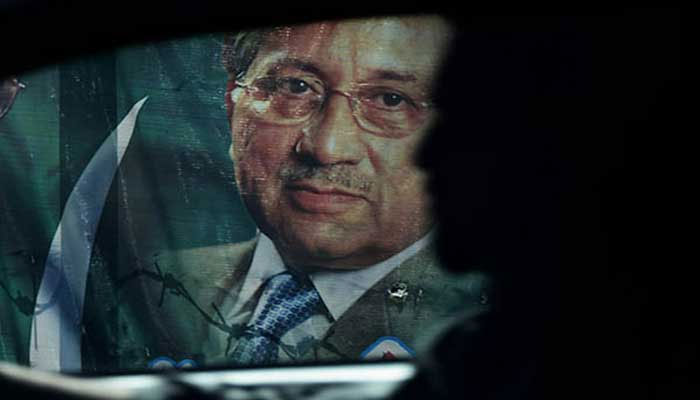
ISLAMABAD: Asif Ali Zardari compelled Gen Pervez Musharraf to resign after securing the consent of his successor, Gen Ashfaq Parvez Kayani, reveals Farhatullah Babar in his memoir.
The book also uncovers how pressure was mounted for the restoration of Chief Justice Iftikhar Muhammad Chaudhry through the deployment of the Triple One Brigade outside the presidency.
Titled ‘The Zardari Presidency,’ the book offers Babar’s firsthand account of events he witnessed as spokesperson to President Zardari during his first term (2008–2013). Regarding Musharraf’s removal, Zardari gauged Kayani’s reaction to the potential ousting of Musharraf, to which Kayani did not object and even suggested Aftab Shaban Mirani as the next president. Zardari then instructed his trusted party members to move resolutions in provincial assemblies demanding Musharraf’s impeachment and conveyed a message through Maj Gen (R) Mahmud Ali Durrani, urging Musharraf to resign or face impeachment. Initially dismissive, Musharraf eventually resigned weeks later.
The book reveals that Nawaz Sharif also aspired to the presidency during the PMLN and PPP alliance. In an informal conversation, Sharif remarked to Zardari, “My party thinks that I should become the President.” Zardari replied with a laugh, “My party also thinks that I should become the President.” The discussion ended there.
Divided into eight sections, the book’s fourth part delves into Zardari’s confrontation with the judiciary. According to Babar, neither Benazir Bhutto nor Zardari held favorable views of Justice Chaudhry, whom Zardari believed operated under the guise of independence while serving other interests. During the long march from Lahore advocating for Chaudhry’s restoration, Zardari faced pressure from his ministers and even the prime minister. However, he initially remained steadfast. A significant deployment of the Triple One Brigade occurred inside the presidency on the night the march approached Islamabad. Babar writes, “The maneuver may have created a perception of a military takeover, but it was not. It was optics for exerting pressure on Zardari to reinstate Chaudhry.”
While internal pressure mounted for Chaudhry’s reinstatement, Zardari urged caution. He told his advisers, “I know him inside and out. You people don’t. He will accept anything as long as he knows that he will be reinstated. He has been sending me messages. I know it. None of you knows about it.”
According to Babar, the message was conveyed through Latif Khosa. Justice Chaudhry visited Khosa, then attorney general residing in the Minister’s Enclave, on March 1, 2009. Babar notes that Chaudhry even offered a signed resignation letter in advance should he renege on his commitment. Chaudhry’s primary concern was his own reinstatement; he appeared indifferent to the reinstatement of other sacked judges.
Zardari played a pivotal role in initiating the China-Pakistan Economic Corridor (CPEC). Pakistan had an agreement with Singapore for the development of Gwadar Port, which saw no progress for five years. The Chinese were reluctant to intervene and advised Pakistan to negotiate directly with Singapore.
Terminating the agreement posed risks. Zardari assigned the task to his principal secretary, Salman Faruqui, who successfully persuaded Singapore to amicably end the agreement. Additionally, various legal issues concerning Gwadar Port were entangled in court cases with numerous stay orders halting work. Zardari tasked then foreign secretary Jalil Abbas Jilani, a close relative of Justice Tassaduq Hussain Jillani, to resolve these issues.
Once accomplished, Zardari called Chinese Premier Wen Jiabao, exclaiming, “Didn’t I tell you that I would do it in my own way,” thus paving the way for CPEC. A few months later, as his term ended and a military guard of honor saw him off from the presidency, the jewel of CPEC was part of his legacy.
Zardari also endeavored to mediate between Iran and Saudi Arabia. “When I met the Rahbar, I told him that I would sit in his office and not leave until he agreed… Pakistan can’t afford a war between Iran and Saudi Arabia,” Babar quotes Zardari after his meeting with Iran’s spiritual leader. He also attempted to involve China in these efforts. A decade later, in April 2023, the foreign ministers of both countries met in Beijing for the first time in seven years and agreed to reopen embassies and consulates.
Zardari supported Saudi Arabia in its war against Yemen’s Houthis. His rationale was that the triumph of rebels and militants anywhere signified a triumph of militants in Pakistan as well.
He also announced a ‘no first use’ policy regarding nuclear weapons against India in an interview with Karan Thapar. However, ironically, the Mumbai attacks occurred four days after this interview.


