
‘Karachi has everything it needs except collective love for its soil’
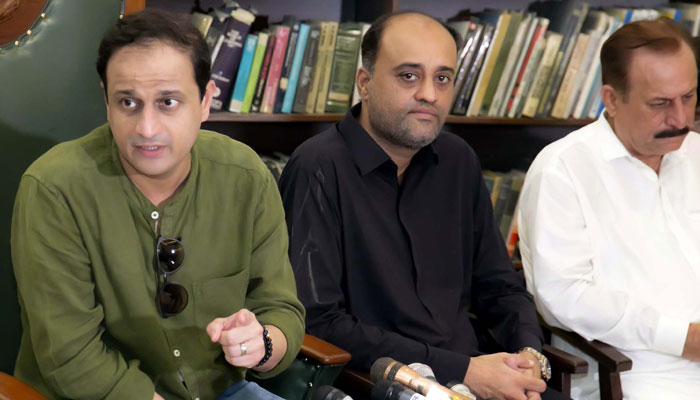
Karachi Mayor Barrister Murtaza Wahab has said that the restoration of the city’s historic buildings is in progress, and he reaffirmed his administration’s commitment to preserving the city’s rich heritage.
Following the restoration of the Khaliq Dina Hall, the Frere Hall and the Empress Market, the historic Denso Hall and Library were reopened after renovation. At the inauguration ceremony on MA Jinnah Road, Wahab stressed the importance of fulfilling promises, digitising all Karachi Metropolitan Corporation (KMC) assets, and educating the younger generation about the city’s historical legacy. He urged institutions, banks and multinational companies to join hands in serving the city.
He remarked that Karachi has everything it needs except a collective love for its soil. “Critics will continue to criticise, but the work will go on,” he said, adding that the ongoing restoration of historic structures reflects the city’s true essence.
The Denso Hall, built in 1886, was the first public library open to locals at a time when libraries and halls were reserved for British officials and their families.
Wahab expressed regret that the building was converted into a government office in the 1980s, depriving the locals, especially children and students, of access. In 2007 the building was handed over to a private party and remained closed until December 31, 2023. It has now been reopened for public use.
He encouraged residents to utilise the space for literary, academic and cultural events. He envisioned the venue hosting religious recitations, qawwalis, inter-collegiate debates, poetry readings and storytelling sessions. He made the assurance that the renovation was carried out transparently using the KMC budget.
He highlighted the spirit of philanthropy that once defined the city, noting that figures like Rao Ram Das donated a clock for the hall, while over 3,000 books were donated by members of the Persian and Khoja communities.
He also noted the historical significance of the KMC, which registered its first birth and death in 1872. “The city’s past glory will be revived, and decades of neglect will be addressed,” he said, adding that the hall now includes a digital library, a coffee shop and a well-equipped event space.
Replying to the media’s questions, he outlined two upcoming challenges: the proper disposal of animal waste during Eidul Azha, for which 100 collection points would be set up, and preparations for the monsoon season, with the cleaning of 45 major drains to begin in mid-June.
He pointed out on the occasion that the government had been requested to release the necessary funds two months ago, and that they are expected to be received soon. He also announced that the reconstruction of the historic Mohammad Ali Hoti Market, built in 1926 in Ranchore Line, has begun, with centennial celebrations planned for next year. Restoration plans are also under way for the Lea Market and the Machhi Miani Market.
He said he has also requested the Sindh government to allocate funds in the upcoming budget for upgrading commercial areas such as the Nursery furniture market, the Hussainabad food street and Saddar. He also thanked the Habib Bank for committing Rs100 million for the city’s development, and invited other institutions and corporations to follow suit to contribute to the city’s progress.







-
 Suspect Kills Six Across Florida Before Taking His Own Life
 -
 AI Helps Researchers Identify 2,000-year-old Roman Board Game Stone
 -
 Inside Kate Middleton, Prince William’s Nightmare Facing Andrew Mountbatten-Windsor
 -
 Margaret Qualley Shares Heartfelt Confession About Husband Jack Antonoff: 'My Person'
 -
 Savannah Guthrie Shares Sweet Childhood Video With Missing Mom Nancy: Watch
 -
 Over $1.5 Million Raised To Support Van Der Beek's Family
 -
 Paul Anthony Kelly Opens Up On 'nervousness' Of Playing JFK Jr.
 -
 Diana Once Used Salad Dressing As A Weapon Against Charles: Inside Their Fight From A Staffers Eyes
 -
 Video Of Brad Pitt, Tom Cruise 'fighting' Over Epstein Shocks Hollywood Fans
 -
 Jelly Roll's Wife Bunnie Xo Talks About His Huge Weight Loss
 -
 Margot Robbie Reveals Why She Clicked So Fast With Jacob Elordi
 -
 Piers Morgan Praised By Ukrainian President Over 'principled Stance' On Winter Olympics Controversy
 -
 Halsey's Fiance Avan Jogia Shares Rare Update On Wedding Planning
 -
 Instagram Head Adam Mosseri Says Users Cannot Be Clinically Addicted To App
 -
 James Van Der Beek Was Working On THIS Secret Project Before Death
 -
 Las Vegas Father Shoots Daughter's Boyfriend, Then Calls Police Himself