
Climate budget
Pakistan has been ranked as fifth most vulnerable country to climate change
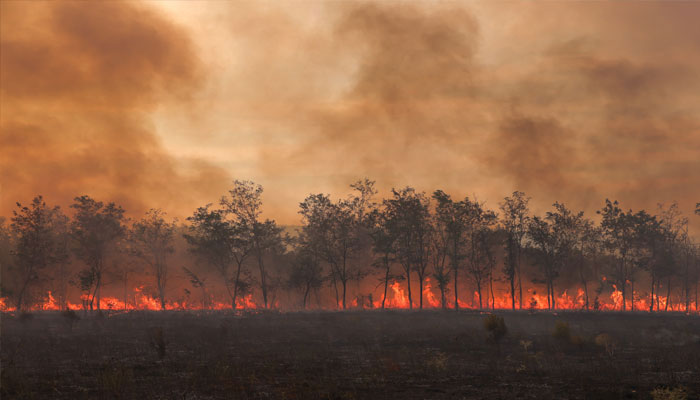
With much of the country going through a heatwave that has led to early summer vacations in Punjab and forest fires in Khyber Pakhtunkhwa, it only seems apt that last week also saw the announcement that the upcoming FY2025-26 budget is set to be Pakistan’s first-ever climate-focused budget. The budget will reportedly subject 30 per cent of all public development projects to undergo a Climate Public Investment Management Assessment (CPIMA), marking a significant shift towards incorporating climate considerations into national economic planning. This announcement was made by the minister of state for climate change and environmental coordination at a Pre-Budget Dialogue organised by the Sustainable Development Policy Institute (SDPI). Experts present at the conference highlighted the various environmental challenges facing Pakistan and how these were linked with and exacerbated by policy, political and geopolitical issues such as energy sector inefficiencies and circular debt, unjust resource distribution and India’s unilateral suspension of the Indus Waters Treaty. As per the IMF, CPIMA incorporates climate change in the PIMA framework and assesses countries’ capacity to manage climate-related infrastructure. The CPIMA is designed around five pillars of public investment management that are key for climate-aware infrastructure: planning, coordination across government, project appraisal and selection, budgeting and portfolio management and risk management.
Some reports have also implied that incorporating the CPIMA into the upcoming budget could help unlock more climate funds from international donors. While it is encouraging to see the government incorporating climate concerns into economic policy, it is hoped the CPIMA will not become yet another hurdle for the development projects Pakistan sorely needs. Earlier this month, the government conceded before parliament that development spending remained flat despite growing revenue collection, with debt-servicing consuming around 65 per cent of current government expenditures. The overwhelming imperative that has driven the country’s recent economic policy has been immediate stabilisation as opposed to long-term development. At the same time, while the country urgently needs more development projects and spending, this development has to be sustainable to deal with mounting environmental challenges. Pakistan has been ranked as the fifth most vulnerable country to climate change and the effects of climate change have now become a year-round concern for Pakistanis. The summer months keep getting hotter and now regularly bring heatwaves, glacial melt and water shortages. The monsoons that follow bring floods and water-borne diseases, and then comes winter with its smog and overall air pollution.
Any projects that ignore environmental impact are not likely to help the country. As such, the CPIMA should not be mere environmental window dressing or just a box-ticking exercise. Striking the right balance between environmental concerns and the imperative to accelerate development will be the crucial test for the government’s climate-focused budget. Pakistan needs an impactful environmental policy that encourages sustainable development and not yet more constraints on development spending or green gimmicks meant to satiate the environmental zeitgeist.


