
Murad stresses zero tolerance for skipping children in polio drives
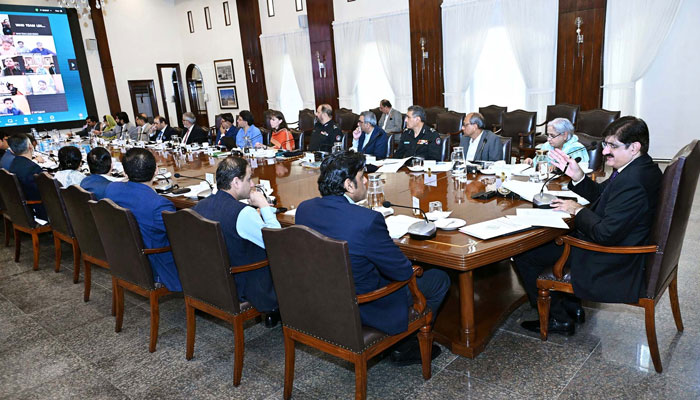
Sindh Chief Minister Syed Murad Ali Shah has called for targeted and urgent action to eradicate polio from the province, warning that every missed child can become a potential case. During a meeting of the provincial polio task force he chaired at the CM House, Shah stressed that routine efforts are not enough, and emphasised zero tolerance for missed children.
“Polio won’t be eliminated through routine; it requires targeted, urgent and collective action. We must ensure that no child in Sindh remains unprotected.” He reiterated the need for holding all tiers of the administration accountable, saying that the fight against polio is essentially a fight for trust, equity and access.
He reviewed recent epidemiological data, campaign preparations, and strategies for overcoming refusals and reaching missed children ahead of the next immunisation round scheduled to held from May 26 to June 1.
Health Minister Dr Azra Fazal Pechuho said Pakistan has reported 10 wild polio cases this year, including four in Sindh, while 11 of the 35 sewage samples collected in April tested positive for the poliovirus.
The campaign aims to vaccinate over 10.6 million children under five across all 30 districts of Sindh, covering 1,292 union councils (UCs). More than 80,000 trained frontline workers and over 25,000 law enforcement personnel, including female constables, will be deployed.
Additionally, children aged between six months and 59 months will be given vitamin A supplements to enhance their immunity during the high-transmission season. Special measures are being taken to tackle persistent refusals and sick children in high-risk urban areas. A total of 157 doctors will be tasked with visiting 6,780 “sick refusal” households, while police teams will assist in engaging 2,524 chronic refusal cases.
The CM instructed the health department to activate refusal conversion committees in all defaulting UCs. “We are making all-out efforts, and convening provincial task force meetings regularly to send a clear and loud message to the administration.” He also called for the mobilisation of parents, religious scholars, teachers and community leaders to build trust, and ensure comprehensive vaccination coverage.
SICVD upgrades
Shah later presided over a high-level review meeting to evaluate the progress of the Sindh Institute of Cardiovascular Diseases (SICVD), announcing major upgrades and new facilities across the province to expand free cardiac care services.
Praising the SICVD network’s services, which include emergency cardiac care, surgeries and paediatric cardiology, he said the government is committed to ensuring equitable health care access across the province.
The SICVD now operates 10 full-fledged cardiac hospitals and 29 chest pain units across Sindh. The CM announced that in the next phase the Zulfikar Ali Bhutto Institute of Cardiovascular Diseases, which is being termed the world’s largest cardiac hospital, would be constructed in Landhi, Karachi.
This 1,200-bed facility will include five operating theatres, four cath labs, a hybrid lab, modern diagnostic services, comprehensive paediatric care, and a research and nursing education centre.
Additional expansion plans were shared for facilities in Tando Mohammad Khan and Hyderabad. The new SICVD Tando Mohammad Khan will soon be equipped with a paediatric ICU, a surgical ICU and a central sterile services department.
Meanwhile, SICVD Hyderabad has already begun offering care through a newly renovated triage unit and a 19-bed emergency department designed for complex cardiac emergencies. Shah was also briefed on plans for a new eight-storey facility under the SICVD, comprising 300 inpatient beds, expanded cath labs and operating theatres, paediatric cardiology, and integrated imaging units.
He ordered that the construction be expedited with strict quality control and robust monitoring mechanisms to ensure that public spending delivers measurable improvements in patient outcomes.
“Health care is not a privilege but a fundamental right. Whether we are fighting polio or building the largest cardiac hospital, the aim is the same: to protect every life in Sindh with dignity and compassion.”


