
Indian minister under fire over ‘advance warning’ to Pakistan
Critics argue that by informing Pakistan in advance, Modi government risked compromising entire operation
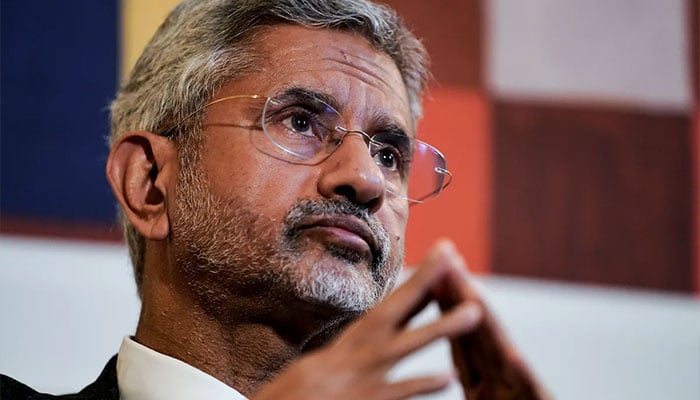
KARACHI: The Modi government faces fresh criticism after Indian External Affairs Minister S Jaishankar acknowledged that India had informed Pakistan in advance of its May 6 attack, with opposition leaders and analysts questioning the wisdom of tipping off the target.
Critics argue that by informing Pakistan in advance, the Modi government risked compromising the entire operation, effectively giving Pakistan time to activate its air defence systems and secure high-value targets.
Social media platforms have been flooded with outrage, with users accusing the government of prioritising optics over operational success. India’s opposition party Congress took the lead.
In its post on X (formerly Twitter), Congress Kerala said that since Jaishankar leaked [the attack’s] information, “he is not worthy of staying as external affairs minister.”
Jaishankar said on Wednesday that prior to launching Operation Sindoor, India had informed Pakistan that the strikes were targeted solely at “terrorist infrastructure, not military installations”. Speaking to reporters, Jaishankar added, “We gave Pakistan the option to remain a silent bystander and not intervene, but they chose to ignore this prudent advice.”
Pakistan’s armed forces successfully defended their airspace during Operation Sindoor and shot down five Indian fighter jets, including three advanced Rafale aircraft. As Pakistan demonstrated the effectiveness of its upgraded aerial defence capabilities, India chose silence, not sharing the details about losses incurred. Sentiments against the ruling party, the BJP, are already high. Congress has called out the failure of the Modi regime, repeatedly pointing out its failures.
Several analysts have echoed Congress’s claims. In his analysis published on Friday, Indian journalist and defence analyst Pravin Sawhney said what Modi and Jaishankar demonstrated before and during Operation Sindoor reflects a form of foreign policy driven by arrogance -- the kind that emerges when critical thinking is absent. This, he said, demands a serious reassessment of India’s foreign policy direction. Per Sawhney, the only two countries that came out in India’s support were Israel and the Taliban regime in Afghanistan -- a setup that has not yet been recognised by the world, including India. On Thursday, Jaishankar spoke with Acting Afghan Foreign Minister Mawlawi Amir Khan Muttaqi, expressing appreciation for his condemnation of the Pahalgam attack. In his post on X, Jaishankar welcomed Muttaqi’s rejection of attempts to create distrust between the nations through false reports. He emphasised India’s continued support for Afghanistan’s development and discussed future cooperation.







-
 Travis Kelce Plays Key Role In Taylor Swift's 'Opalite' Remix
 -
 How Jennifer Aniston's 57th Birthday Went With Boyfriend Jim Curtis
 -
 JoJo Siwa Shares Inspiring Words With Young Changemakers
 -
 James Van Der Beek Loved Ones Breaks Silence After Fundraiser Hits $2.2M
 -
 Disney’s $336m 'Snow White' Remake Ends With $170m Box Office Loss: Report
 -
 Travis Kelce's Mom Donna Kelce Breaks Silence On His Retirement Plans
 -
 Premiere Date Of 'Spider-Noir' Featuring Nicolas Cage Announced
 -
 Pedro Pascal's Sister Reveals His Reaction To Her 'The Beauty' Role
 -
 Kate Middleton Proves She's True 'children's Princess' With THIS Move
 -
 Paul Anka Reveals How He Raised Son Ethan Differently From His Daughters
 -
 'A Very Special Visitor' Meets Queen Camilla At Clarence House
 -
 Jodie Turner Smith Shares One Strict Rule She Follows As A Mom
 -
 Hailey Bieber Reveals KEY To Balancing Motherhood With Career
 -
 Photo Of Jay-Z, Other Prominent Figures With Jeffrey Epstein Proven To Be Fake
 -
 Hillary Clinton's Munich Train Video Sparks Conspiracy Theories
 -
 Fans Slam Talk Show Host For 'cringe' Behavior In Chris Hemsworth Interview