
Rawalpindi’s street food scene a living cultural record
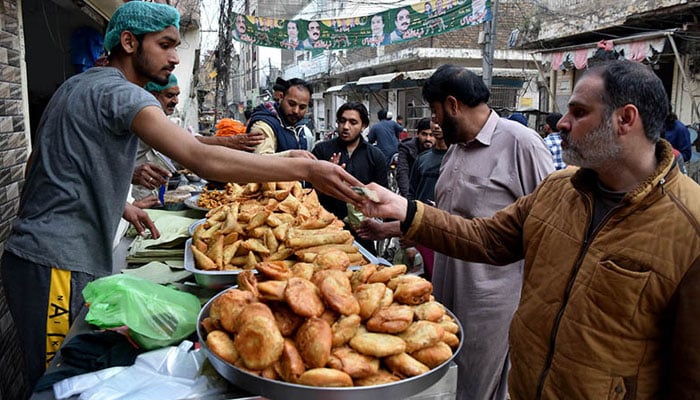
Rawalpindi:The smell of sizzling ‘pakoras’, the clang of ladles on ‘karahis’, and the steady hum of street vendors calling out to passersby are as much a part of Rawalpindi’s identity as its colonial-era buildings and chaotic bazaars. Yet, as the city rapidly urbanizes, its informal food sector stands at a crossroads.
In recent months, the Rawalpindi Municipal Corporation (RMC) has intensified efforts to clear illegal stalls from key arteries such as Raja Bazaar, Committee Chowk, and Saddar. Officials cite congestion, sanitation concerns, and unregulated encroachments. However, for many residents and urban experts, these crackdowns raise an uncomfortable question: Is the city losing its flavour in the name of order?
“We’re not criminals. This is how we feed our children. Where should we go? Like me, thousands of street vendors operate without permits, often facing harassment or sudden eviction. For many, street food is not just about convenience, it is survival,” says 43-year-old Ashiq Ali, who has sold ‘chana chaat’ on College Road for over a decade.
“According to the Urban Unit Punjab, informal street vendors make up a significant part of Rawalpindi’s urban economy, providing low-cost food to the working class while supporting entire families. Yet, most operate in a legal grey area, with no protections, no designated spaces,” says Noor Fatima.
“Rawalpindi was never designed to accommodate today’s population. But that doesn’t mean we should erase street life. We need to plan with it. She points to an example from Lahore’s Gawalmandi food street, where the city has integrated street food into urban planning through a designated vending zone, improved sanitation, and licensing schemes. The model is simple: formalize without displacing. The problem is not street vendors; it is how the city treats public space,” says Nafeesa Ali.
“Rawalpindi’s street food scene is not just a source of income; it’s a living cultural archive. From the steaming ‘halwa puri’ breakfasts of Bhabra Bazaar to the grilled corn stalls on Murree Road, these vendors serve as the city’s unofficial culinary ambassadors. There is a nostalgia attached to these places,” says Zafar Naqvi.
“In response to public pressure, RMC officials are considering a pilot program to test hawker-friendly zones in less congested city areas. However, details remain vague, and vendors worry that these zones will be too far from foot traffic to be viable,” says Rafiq Hussain.
“Critics argue that without a clear, inclusive policy, efforts to regulate street food may do more harm than good. You cannot plan a city by force. You have to plan it with the people living there,” adds Rafiq.
Zegham Abbas says, “Rawalpindi faces a critical choice: embrace the informality that gives the city its flavour or abandon it in the name of order. For now, the clash between street food and city planning continues.”







-
 King Charles Honours 20 Years Of Service With New Bronze Lion Monument
 -
 Meta To Launch Cloud Business To Monetize Excess AI Computing Power
 -
 Nikola Vucevic Heads Back To Orlando Magic After Rejecting Lucrative Offers
 -
 Andrew Mountabatten-Windsor Supports Duchess Sophie In Rare Appearance
 -
 Kemi Badenoch Challenges Starmer Over £298bn Defence Investment Plan At PMQs
 -
 Did Taylor Swift, Travis Kelce Wedding Change Michael Rubin's White Party Plans?
 -
 Meghan Markle Blamed For Serena Williams Wimbledon Defeat
 -
 King Charles Revives Historic Royal Tradition With Prince William By His Side
 -
 ‘Cruel’ Prince Harry Holds Despicable Set Of Cards Against King Charles: ‘He’ll Shatter!
 -
 Sony Is Ending PlayStation Game Discs: Here's When
 -
 Kroger To Acquire Giant Eagle For $1.65 Billion In Market Expansion Push
 -
 Danny Glover Reveals Years-old Secret Health Battle For The First Time
 -
 Andrew Mountbatten-Windsor’s Epstein Links Haunt King Charles In Scotland
 -
 Russia Approved Secret China Military Training At Top Level, Sources Reveal
 -
 Prince William Lines Up Threats As Sussex Return Nears: ‘Knows Betrayal Is Coming For Pa’
 -
 GTA 6 Developers Make Fresh Claims Against Rockstar