
Threading the future: Pakistan’s prospects in technical textiles
Technical textile has a market value of about US$190 billion and consumes 22% of total fibres globally
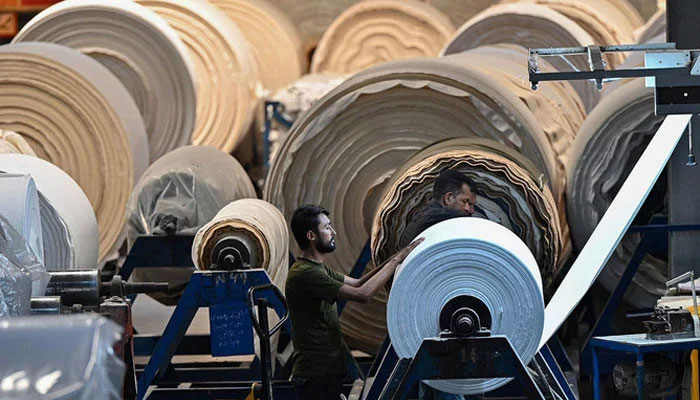
Pakistan, traditionally known for its dominance in cotton-based apparel and home textiles, is now turning its gaze towards a high-potential but underdeveloped frontier: technical textiles. Textile products are one of the basic necessities of human life. The need for performance-based textiles has given birth to technical textiles which have shown important innovations over the past few decades. Their utility to varied sectors such as agriculture, industries, and healthcare, can be judged from the fact that they are increasingly being used to replace conventional textiles because of their specified features.
The technical textile industry is one of the fastest growing industries in the world. It is a highly innovative and versatile industry, serving a wide range of end markets with less competition and higher added value compared to the conventional textiles. These attributes have led many countries to shift their textile industry from conventional to technical textiles.
Technical textile has a market value of about US$190 billion and consumes 22 per cent of the total fibres globally.
As the global market for functional, high-performance fabrics continues to grow—estimated to surpass $200 billion by 2030—Pakistan’s textile industry faces both a challenge and an opportunity to evolve beyond conventional segments.
Realizing the significance and impacts of technical textile, including an increasing business volume and variety of applications, it is important for the textile and allied industries to prepare for the changing and an emerging market. Stepping from conventional to specialized textile is a venture needed to be addressed both at the private and the public level.
In terms of global consumption of fibres for technical textiles, polyester is the leading fibre with a volume share of 26 per cent
In Pakistan, there are two types of technical textile industries; dedicated/specialized technical textile industry clusters and conventional textile industry producing technical textiles. With respect to its applications, technical textiles are divided into 12 main categories.
The technical textile industry exists in Pakistan as small industrial clusters of small and medium enterprises (SMEs).
The demand for technical textiles is likely to gain traction across Asia-Pacific countries. Mobiltech, Indutech and Sportech account for 52 percent of the total market.
Europe and China together account for more than 50 per cent of global technical textile production, while India accounts for approximately five per cent of the production. Contrary to conventional textiles with a cumulative annual growth rate of one per cent, the growth rate of technical textiles in the world is about 4.6 per cent.
Mobiltech is the biggest application segment of technical textiles with a US$42 billion value and 22 per cent share in the global market. It is followed by Indutech and Sportech with a share of US$30 billion (16 per cent) and US$27 billion (14 per cent) respectively.
These three categories account for 52 per cent of the total technical textiles market. For a developing country such as Pakistan, technical textile is emerging as an important innovation for the country’s economy.
Not only is there potential in the local marketplace, but there is potential in export market as well. There is a growing demand in the regions such as Gulf countries and African countries and there are government incentives to increase exports.
Pakistan faces major challenges that prevent the technical textile industry from reaching its full potential. One of the key competitive advantages in the technical textile business is having a unique product that is based on proprietary technology, which comes from extensive investment in research and development and product development activities. The lack of technical expertise and exclusive technology is hindering the growth of this industry.
There is a lack of specialized training centers in technical textiles and nonwoven fabrics and a lack of expertise that can provide technical support to businesses. There is an overall lack of awareness about technical textile materials, applications and benefits and a high rate of staff turnover. Another limitation is the lack of high-performance fiber, yarn and specialty fabrics providers.
Local suppliers may have access to these types of raw materials, but they may have non uniform quality and delayed deliveries. There is a lack of testing facilities that can do advanced testing and validation of technical materials such as antimicrobial activity, fire retardant, porosity, filtration efficiency, and others.
Coupled with the absence of local standards for technical textiles, this results in a high degree of uncertainty in the market. In most cases, capital investment in technical textiles in Pakistan is high because of the high capital cost of machinery, particularly in upstream processes.
The severity of this issue has increased because of lack of finances. Moreover, most technical textile companies in Pakistan are small and medium-sized enterprises with small economies of scale.
Pakistan benefits from the GSP+ status, which makes it an ideal procurement platform for technical textiles, semi-processed and finished products for the European Union (EU) countries.
There are some risk factors posed to the technical textiles value chain in Pakistan. Increasing competition from countries such as India, Vietnam and Turkey.
The technical textiles sector in India has become one of the fastest growing segments of the Indian economy and may see double-digit growth in the coming years. Vietnam is emerging as one of the largest exporters of technical textiles, while Turkey is a key participant in the global technical textile market and occupies a strategic location in terms of its proximity to Europe, familiarity with the securities industry and secure links.
Fast technological changes, an increasing protection on know-how and proprietary technologies and difficulty in gaining the technical know-how, is increasing the reluctance of local companies to invest in this sector.
The technical textile industry of Pakistan suffers from a plethora of issues, mainly dearth of proprietary technology, unavailability of high-performance and specialized raw material, and high capital cost of machinery for technical textiles.
There is an overall lack of awareness about technical textile materials, applications and benefits and a high rate of staff turnover. Pakistan has unique strengths in technical textiles. It is a great location for business due to cheap labor in labor intensive processes, for example knitting, weaving, braiding, processing, and product development.
Moreover, Pakistan houses a lot of small industries for low quantity product manufacturing. There are also large businesses with economies of scale that can compete with global competitors.
The industry in Pakistan is very diverse, with a broad range of products that can meet the diverse local demand for technical textiles. There is high local demand for technical textiles in Pakistan, including Medtech, Clothtech and Buildtech, which is a significant strong point that can help support the growth of this industry.
Establishment of a specialized research Centre of excellence and technology incubator, which can support all research and development activities, technology commercialization, technical training, and technical consultation.
Creation of a supply chain training with an emphasis on technical textiles and major global suppliers. Facilitate the import of high performance and specialized fibers, yarns and fabrics and reduce the import tariffs on raw materials.
Provision of awareness and training programmes to textile companies in Pakistan on fundamentals, applications, and market potential of technical textiles
Establishment of pilot plants and prototyping facilities to support scaling-up of new technical textile developments.
Revision of the textile engineering curriculum to include a major or concentration on technical textiles. Addition of special topics on technical textiles in the curriculum of other engineering majors.
Pakistan’s technical textile sector is at a crossroads. While the road is riddled with challenges—from outdated infrastructure to limited expertise—the potential rewards are too significant to ignore. With the right policy support, investment climate, and innovation ecosystem, Pakistan can position itself as a competitive player in the global technical textile arena.
Navigating these challenges wisely can turn the current limitations into long-term strengths—unlocking a new era of textile growth for the country.







-
 Royal Family's Approach To Deal With Andrew Finally Revealed
 -
 Super Bowl Weekend Deals Blow To 'Melania' Documentary's Box Office
 -
 Meghan Markle Shares Glitzy Clips From Fifteen Percent Pledge Gala
 -
 Melissa Jon Hart Explains Rare Reason Behind Not Revisting Old Roles
 -
 Meghan Markle Eyeing On ‘Queen’ As Ultimate Goal
 -
 Japan Elects Takaichi As First Woman Prime Minister After Sweeping Vote
 -
 Kate Middleton Insists She Would Never Undermine Queen Camilla
 -
 King Charles 'terrified' Andrew's Scandal Will End His Reign
 -
 Winter Olympics 2026: Lindsey Vonn’s Olympic Comeback Ends In Devastating Downhill Crash
 -
 Adrien Brody Opens Up About His Football Fandom Amid '2026 Super Bowl'
 -
 Barbra Streisand's Obsession With Cloning Revealed
 -
 What Did Olivia Colman Tell Her Husband About Her Gender?
 -
 'We Were Deceived': Noam Chomsky's Wife Regrets Epstein Association
 -
 Patriots' WAGs Slam Cardi B Amid Plans For Super Bowl Party: She Is 'attention-seeker'
 -
 Martha Stewart On Surviving Rigorous Times Amid Upcoming Memoir Release
 -
 Prince Harry Seen As Crucial To Monarchy’s Future Amid Andrew, Fergie Scandal