
2022 floods caused over $30bn losses, NA told
Ministry states these losses extend beyond immediate casualties, impacting agriculture, infrastructure and overall economic growth
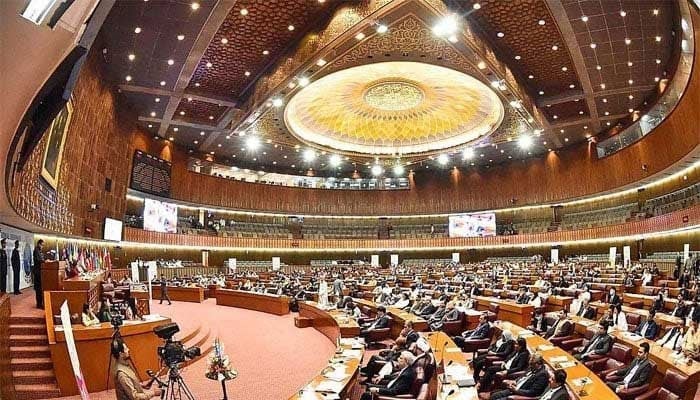
ISLAMABAD: The 2022 floods resulted in over US$ 30 billion in damages and economic losses affecting millions and causing thousands of deaths, the Ministry of Climate Change and Environmental Coordination told the National Assembly.
In the last three years, the ministry said, Pakistan suffered significant economic and human losses due to climate change, particularly from extreme weather events like floods.
The Ministry of Climate Change and Environmental Coordination presented a report in the National Assembly in reply to a question by Tahira Aurangzeb with regards to the losses suffered by Pakistan in the wake of climate change during the last three years.
The ministry stated that these losses extend beyond immediate casualties, impacting agriculture, infrastructure and overall economic growth.
Since 2022, Pakistan has experienced substantial financial losses due to climate change, primarily from the devastating 2022 floods. Estimates place the total damage at over USD 14.9 billion except 2022 Floods in the 2022-2024.
Giving the details of the losses, the ministry stated that the 2022 floods considered the worst in Pakistan’s history, caused an estimated USD 30 billion in damages and economic losses.
The floods are projected to reduce Pakistan’s GDP by around 2.2 per cent in FY22, with the agriculture sector contracting the most at 0.9 per cent. On human impact, it stated that over 1,700 people lost their lives, and nearly 8 million were displaced, according to the National Disaster Management Authority.
The agriculture, livestock, and fisheries sector suffered the highest damage, estimated at Rs. 429 billion (USD 5 billion). The floods have led to a surge in malaria and other waterborne diseases, causing a significant strain on the healthcare system.
Climate change is exacerbating water scarcity in Pakistan, with per capita surface water availability declining significantly.
2023 Heatwave (March–June): Pakistan endured an intense heatwave, leading to at least 22 mortalities from heatstroke, particularly in Mardan and Islamabad.
The Amnesty International highlighted the country’s vulnerability, noting that over 40 million Pakistanis lack access to electricity, making them more susceptible to extreme temperatures.
2024 Heatwave (May–July): Southern Pakistan, especially Sindh, faced extreme temperatures exceeding 49C (120.2F). From June 20 to 26, over 568 deaths were reported, with Karachi alone accounting for 427 fatalities.
The heatwave overwhelmed hospitals, leading to power shortages and exacerbating food insecurity for over 8.6 million people across 26 districts.
This heatwave also negatively impacted the agriculture sector. Sesame yields dropped from10-12 mounds per acre to 2-3 mounds, rice yields plummeted from 80-120 mounds to 5-50 mounds, and cotton production in Punjab halved from 636,848 bales to 392,768 bales.
Nationally, cotton production decreased from 2.11 million bales to 1.07 million bales. 2022 Drought: Severe drought conditions in Sindh led to a 70 per cent water scarcity, reducing wheat and cotton cultivation areas. There has been a decline in the area covered by and yields of cotton and wheat, both major export crops. Wheat production fell 17 per cent below targets, with a 2 per cent decrease in the area sown.







-
 Kylie Kelce Explains Why She Avoids Raising Kids With 'silver Spoon'
 -
 Meghan Markle Is Above Royal Family ‘empty Threats,’ Says Insider
 -
 Anne Hathaway Opens Up About 'defeated' Feeling As Working Mom
 -
 Shamed Andrew Should Testify In Epstein Case As ‘act Of Service’
 -
 What Really Happened Before Nicholas Brendon Was Found Dead At Home?
 -
 Sarah Ferguson Branded ‘most Famous Missing Person’ In UK Right Now
 -
 Why King Charles Does Not Need A Driving License? Expert Reveals
 -
 Did Graham Norton Really Sign NDAs For Taylor Swift’s Wedding?
 -
 ‘Polite’ King Charles Treats Staff Better Than ‘boorish’ Andrew
 -
 Princess Beatrice's Husband Raises Eyebrows With Deleted Instagram Post
 -
 Dua Lipa 'snubs' Priyanka Chopra
 -
 Will Taylor Frankie Paul Still Get Her 'Bachelorette' Salary?
 -
 'Harry Potter' Returns: First Glimpse Of HBO's New Series
 -
 Ryan Gosling Credits His Kids For Key Detail In New Role
 -
 Prince William, Kate Middleton Mark 'historic Moment'
 -
 Why Roberts Pattinson Says Couples 'ruin' Their Big Day Amid Suki Waterhouse Wedding Rumors?