
Strategic adaptation
Closer look at crisis after Pahalgam shows three scenarios that have noticeably gone in Pakistan’s favour
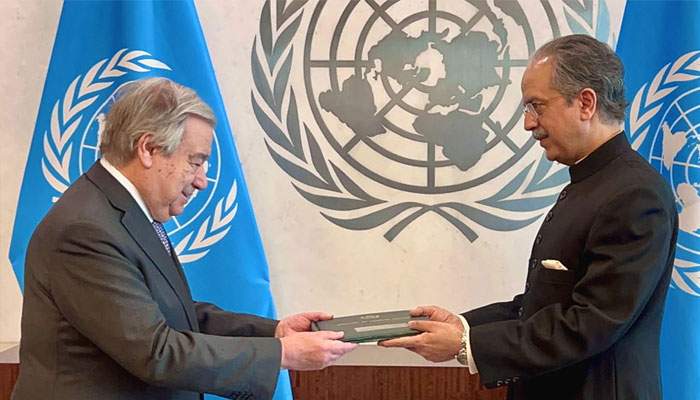
Pakistan is now perceived globally and regionally as a country that has mastered the art of strategically adapting to modern warfare, global diplomatic alignment, and regional support – something India seems to be clearly lacking.
A closer look at the crisis after Pahalgam shows three scenarios that have noticeably gone in Pakistan’s favour. One, a diplomatic win for Pakistan globally. The international community closely watches any war or crisis, and their nod, rejection or interest in the issue matters the most for the opposing parties. Take the case of Ukraine and Russia. Under the Biden administration, Russia was clearly put on the spot. The global public opinion was turned against Russia, and diplomatic manoeuvres were made to frame Putin and Russia as aggressors and violators of international norms. Diplomacy and public opinion were at play.
So, whenever a crisis occurs, it must be viewed in the context of global public opinion and the international community’s interest in it. After the hue and cry that India made after Pahalgam, blaming it on Pakistan without any evidence, India finds itself isolated and snubbed by the global community. This development has exposed India’s diplomatic standing.
No substantial comment, statement or support has come out in India’s favour. It must also be kept in mind that Canadian and American officials recently condemned India for having carried out subversive activities on their soil. Therefore, the international community is aware that if India can flaunt and violate global norms on Canadian and American soil, it can clearly do much worse in the South Asian region.
On the other hand, Pakistan has emerged as a power that has shown restraint, self-confidence and strength in the face of adversity. It has carved out its place by attempting to bring stability in South Asia, especially after the fall of Kabul. It was invested in brokering peace between the Afghan Taliban and the US. It steered its way through the great power competition between China and the US by maintaining a balance. As a result, it has garnered the support of great powers and from the region too. The recent warming of relations between Bangladesh and Pakistan is another example of a dynamic diplomatic win.
On the military side, Pakistan has shown resilience and confidence. It has developed the ability to engage in limited warfare as well as unconventional warfare. Over the years, Pakistan has strengthened its relations with China and other major powers to update and upgrade its military prowess and weapons. Pakistan has also strengthened its defence relations with several other countries. Pakistan’s air force and navy have shown equal efficiency and preparedness. This, collectively, has brought the country to a point where it fashions itself as a significant and strong military power.
Pakistan has strategically adapted to its political environment. Strategic adaptation refers to a country’s ability to adapt to changes occurring in its surroundings. State institutions have observed the strategic power dynamics closely and have adapted to the diplomatic, economic, technological, and military strategies accordingly.
However, Pakistan needs to step up its strategic focus in the following domains. First, it must diversify its foreign policy conduct and strategies to garner the support of the international community. Foreign affairs ‘strategy’, not mere policy, must be the primary focus of Pakistani institutions, especially the Foreign Office. I have repeatedly emphasised that foreign policy strategy is not all about money and financial resources, as generally believed, but about ideas and strategic understanding of issues. Any country, organisation or business can run without money, but they can never run without a strategy and a clear vision. Pakistan needs that.
Second, Pakistan must diversify and work on its economic ability and strength on a war footing. Financial prowess can never be overstated, especially in a world order that is becoming multipolar. There are many opportunities, but Pakistan must adapt to the changes that are taking place in the region and align its resources to devise a plan for a robust economy.
Lastly, institutional inertia. Bureaucratic structures and a lack of will can hinder the plan and prospects for an efficient state. Pakistan’s number one focus must be to make Pakistan an efficient state, where things get done and opportunities are seized promptly and efficiently.
All this will add to Pakistan’s ability to transform itself into a more powerful and efficient state. Strategic adaptation requires political will, which is the need of the hour. A concentrated political effort coupled with efficient bureaucracy and fresh ideas can take Pakistan to new heights imagined by its founders.
The writer holds a PhD in international relations. He is based in New York and tweets/posts @ShamilTaimur


