US-Russian space crew returns to Earth after eight-month mission on the International Space station
The crew will be flown by helicopter to Karaganda where Williams board a return flight to NASA’s Johnson Space Center in Houston
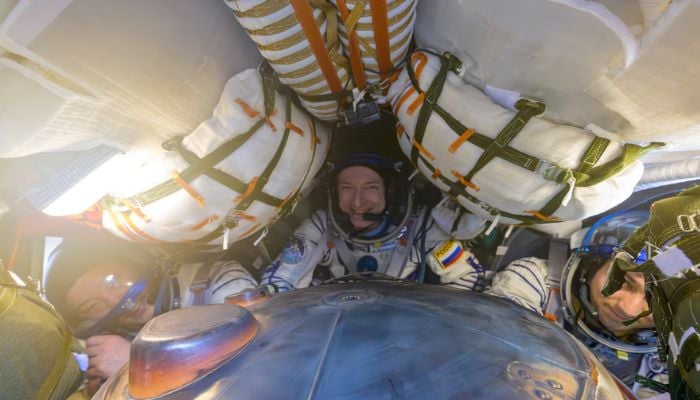
According to the Roscosmos space agency a Russian Soyuz MS-28 spacecraft carrying cosmonauts Kud-Sverchkov and Sergei Mikayev landed safely in the steppes of Kazakhstan on Sunday after completing an eight-month stint on the International Space Station.
Their 241- day space mission marks the first for Williams and Mikaev and the second for Kud-Sverchkov. The crew will be flown by helicopter to Karaganda where Williams will take a return flight to NASA’s Johnson Space Center in Houston while Kud-Sverchkov and Mikaev will take a flight to their training base in Star City outside Moscow.
Once rivals to achieve specific milestones first during the Cold War, Russia and the US later cooperated on the space station and other key projects.
Their relationship was affected by tensions after Moscow sent troops into Ukraine in 200. On the contrary, Washington and Moscow have continued to work together with the US.
For those unfamiliar, the crew of NASA astronaut Anil Menon and Roscosmos Pyotr Dubrov and Anna Kikina arrived at the International Space Station for an eight-month mission following its launch from the Russia-leased Baikonur cosmodrome in Kazakhstan on July 14.
The freshly arrived trio has joined NASA astronauts Jessica Meir and Jack Hathaway, Sophie Adenot and Roscosmos Andrei Fedyaev as part of Expedition 75.






-
 US finally confirms weapons in orbit: What it means for space warfare
 -
 How China's FAST telescope is mapping the cosmic gas behind star birth
 -
 Did Sun eat super-Earth? New study says maybe
 -
 Did Sun swallow a super-Earth? Scientists search for its ‘fingerprints’
 -
 Blue Origin sets sights on Mars with new NASA network
 -
 NASA, IBM launch open-source lunar foundation AI model to help map ice, craters on moon
 -
 Bacteria can remember without brain, new study finds
 -
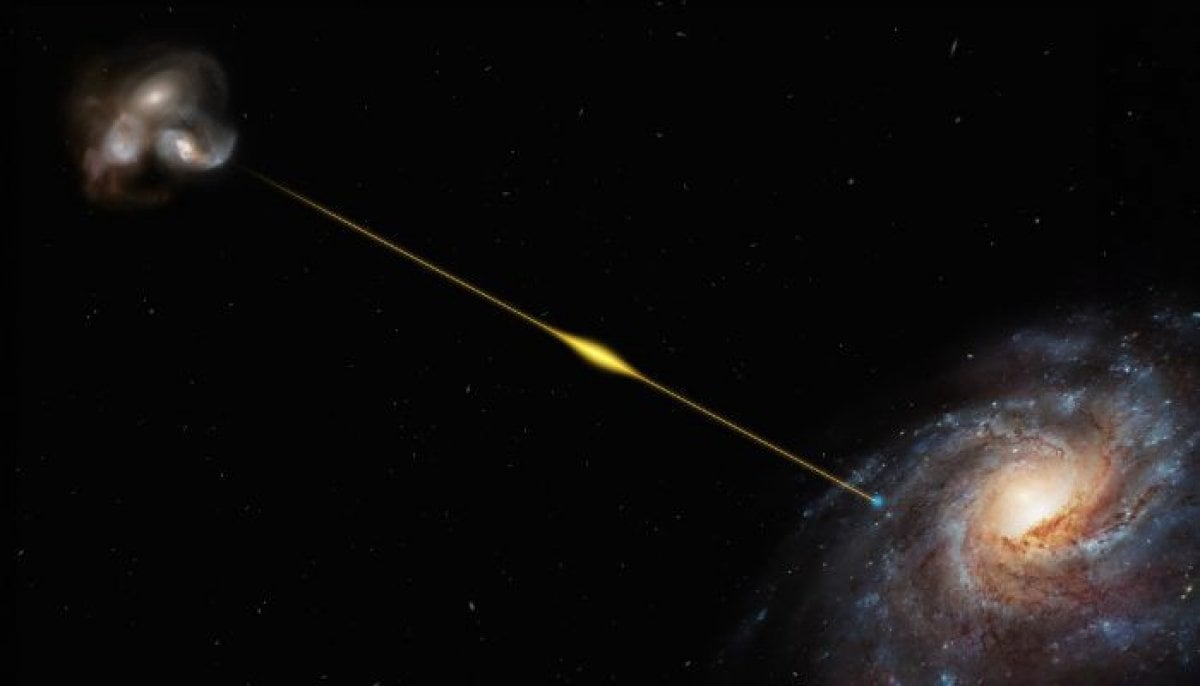 Fast radio bursts may unlock secrets of dark matter, energy and neutrinos