Space datacenters could catastrophically pollute Earth, groups warn
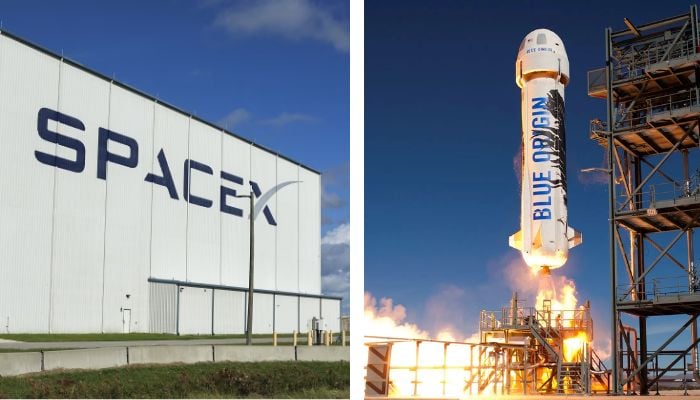
Environmental groups demand FCC review of space datacenters proposed by SpaceX and Blue Origin
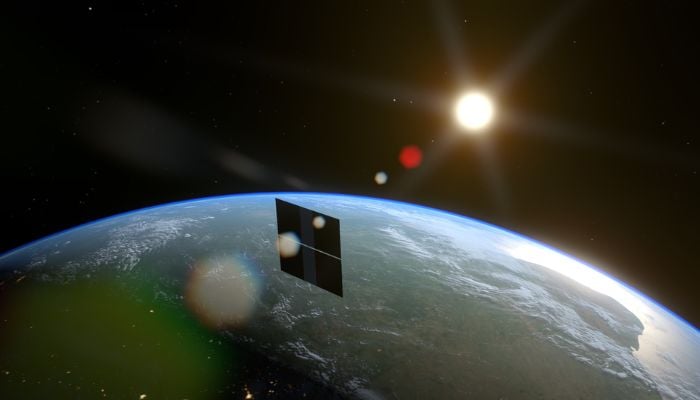
Environmental groups have filed a petition demanding the Federal Communications Commission pause approvals for space data centre projects, warning that millions of orbiting data centres would release "staggering levels of pollution" that could "catastrophically" alter Earth's atmosphere.
The complaint, brought forth by the Public Employees for Environmental Responsibility (PEER), Earthjustice, and DarkSky International, challenges proposals for launching computing infrastructure to space by SpaceX, Blue Origin, and other companies.
The complaint claims that these proposals "violate federal law" and calls on an assessment of the full impact of these proposals on the environment in accordance with the National Environmental Policy Act (NEPA).
There have been reports of pollution caused by the satellite and rocket exhaust gases gathering in the stratosphere at "alarming levels". This occurs as the spacecraft burn upon their return to Earth, releasing black soot, rare metals, aluminium oxides, and other chemicals.
A 2023 NOAA-sponsored stratospheric measurement flight revealed metals embedded in sulphuric acid aerosols, the layer scientists believe functions as Earth's planetary "sunscreen" by reflecting solar radiation. How spacecraft metals interact with this delicate system remains "largely unknown", researchers said.
Environmental groups warn the accumulation could destroy the ozone layer, expose populations to higher ultraviolet radiation, and destabilise the climate during an existing crisis.
Light pollution from millions of satellites threatens ecosystems; researchers link light pollution to firefly and insect population collapse.
Active satellites in orbit have grown exponentially from about 1,400 in 2015 to roughly 15,000 currently. As many as 100,000 are expected within a decade, not including data centre constellations.
SpaceX's Starlink and Amazon's broadband "mega constellations" currently account for most satellite pollution, comprising about 10,000 satellites.
Cowboy Space Corporation, founded by Robinhood co-CEO Vlad Tenev, seeks FCC approval for a 20,000-satellite system launching in 2028. SpaceX claims its orbital datacentres will "ensure humanity's multi-planetary future", but its FCC filing provides minimal environmental detail beyond a vague commitment to "brightness mitigations".
Steve Volz, former head of NOAA's satellite office, told The Guardian: "There is a lot of complex material in these things, and even if they do burn up, you do not want to be filling up the atmosphere with refuse from these any more than you would want it coming from a smoke stack."
Former NOAA space policy expert Cole Donovan warned that space datacentres would demand rare metals already in short supply, creating additional environmental damage on Earth's surface.
The petition states that no proponent has "provided satisfactory detail to explain how it will mitigate the cumulative environmental harms flowing from the foreseeable operation of more than a million satellites orbiting our planet, colliding and disintegrating and plummeting back to Earth."






-
 US finally confirms weapons in orbit: What it means for space warfare
 -
 How China's FAST telescope is mapping the cosmic gas behind star birth
 -
 Did Sun eat super-Earth? New study says maybe
 -
 Did Sun swallow a super-Earth? Scientists search for its ‘fingerprints’
 -
 Blue Origin sets sights on Mars with new NASA network
 -
 NASA, IBM launch open-source lunar foundation AI model to help map ice, craters on moon
 -
 Bacteria can remember without brain, new study finds
 -
 Fast radio bursts may unlock secrets of dark matter, energy and neutrinos