
Trump’s use of Alien Enemies Act for Venezuela deportations is unlawful, rules judge
Rodriguez, who was appointed by Trump during his first term, said gang’s actions failed to meet that bar
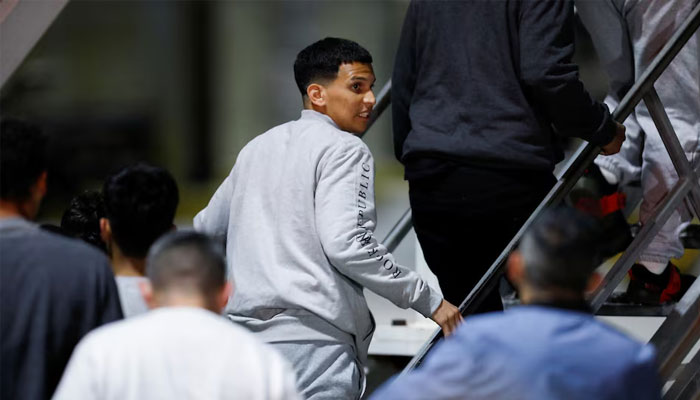
NEW YORK: A US judge on Thursday blocked President Donald Trump’s administration from using an 18th-century wartime law to deport some Venezuelan migrants, in the most sweeping ruling thus far against a key part of the Republican president’s aggressive immigration crackdown.
In a 36-page opinion, U.S. District Judge Fernando Rodriguez in Brownsville, Texas, ruled that the Trump administration exceeded the scope of the Alien Enemies Act by using it to speed up the deportations of alleged members of the Venezuelan gang Tren de Aragua. The judge’s permanent injunction against the use of the law applies to migrants detained in the Southern District of Texas.
Trump’s mid-March proclamation invoking the 1798 law said the actions of Tren de Aragua members in the U.S. amounted to an “invasion” or “predatory incursion” and therefore justified the use of the law for rapid deportations.
Rodriguez, who was appointed by Trump during his first term, said the gang’s actions failed to meet that bar.
“The President’s invocation of the AEA through the Proclamation exceeds the scope of the statute and, as a result, is unlawful,” wrote Rodriguez.
The White House and Justice Department did not immediately respond to requests for comment.
The Alien Enemies Act is best-known for being used to intern and deport people of Japanese, German and Italian descent during World War Two.
Lee Gelernt, a lawyer with the American Civil Liberties Union who is representing the Venezuelan migrants, said Congress did not intend for the law to be used in the manner in which Trump has deployed it.
“The court critically held that the president cannot simply declare that there’s been an invasion of the U.S. and then unilaterally invoke an 18th century wartime authority during peacetime,” Gelernt said.
At least 137 Venezuelans were deported from the El Valle Detention Center in Raymondville, Texas, under the law on March 15. Relatives of many of the men and their lawyers deny they were Tren de Aragua members, and say the deportees were not given the chance to contest the administration’s allegations.
The U.S. Supreme Court on April 7 ruled that the Trump administration must give migrants the chance to contest any future Alien Enemies Act deportations in court.
Rodriguez, whose district includes El Valle, and other federal judges in Colorado, Manhattan and Pennsylvania have since issued temporary orders blocking such deportations in their districts.
Rodriguez’s injunction issued on Thursday goes further by permanently blocking the government from using the law within his district. The administration is likely to appeal.







-
 Kylie Kelce Explains Why She Avoids Raising Kids With 'silver Spoon'
 -
 Meghan Markle Is Above Royal Family ‘empty Threats,’ Says Insider
 -
 Anne Hathaway Opens Up About 'defeated' Feeling As Working Mom
 -
 Shamed Andrew Should Testify In Epstein Case As ‘act Of Service’
 -
 What Really Happened Before Nicholas Brendon Was Found Dead At Home?
 -
 Sarah Ferguson Branded ‘most Famous Missing Person’ In UK Right Now
 -
 Why King Charles Does Not Need A Driving License? Expert Reveals
 -
 Did Graham Norton Really Sign NDAs For Taylor Swift’s Wedding?
 -
 ‘Polite’ King Charles Treats Staff Better Than ‘boorish’ Andrew
 -
 Princess Beatrice's Husband Raises Eyebrows With Deleted Instagram Post
 -
 Dua Lipa 'snubs' Priyanka Chopra
 -
 Will Taylor Frankie Paul Still Get Her 'Bachelorette' Salary?
 -
 'Harry Potter' Returns: First Glimpse Of HBO's New Series
 -
 Ryan Gosling Credits His Kids For Key Detail In New Role
 -
 Prince William, Kate Middleton Mark 'historic Moment'
 -
 Why Roberts Pattinson Says Couples 'ruin' Their Big Day Amid Suki Waterhouse Wedding Rumors?