
Saudi govt reports 1,296 Afghans holding fake Pakistani passports
Meeting of Senate standing committee was held under Senator Faisal Saleem Rehman at Parliament House
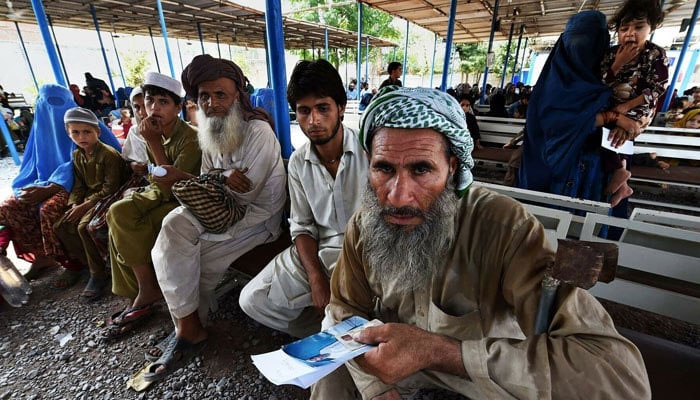
ISLAMABAD: The Senate Committee on Interior and Narcotics was informed on Thursday that the Saudi government has reported a total of 1,296 individuals holding bogus Pakistani passports, who were later identified as Afghan nationals.
Chairman Senate Committee on Interior Senator Faisal Saleem Rehman directed Nadra to update the committee in the next meeting about the actions taken against corrupt employees involved in bogus registrations and tampering with the database.
The meeting of the Senate standing committee was held under Chairman Senator Faisal Saleem Rehman here at the Parliament House.
In the meeting, Senator Irfan Siddiqui asked how many passports were made in the last 5 years that did not belong to Pakistanis. DG Passport Mustafa Jamal Qazi said a total of 1,296 individuals holding bogus Pakistani passports were later identified as Afghan nationals. “Apart from this, 45 more cases have come,’ he said. DG Passports said that it has been reported that these people have been deported to Afghanistan. “Of those who were punished for making fake passports, 35 are assistant directors,” he said.
Also thousands of bogus Pakistani passports were made and most of these passports are from KP and Gujranwala, Gujarat. “There are 4,500 passports for which we do not have data while 3,000 passports were made by photo-swapping, 6,000 were fakes made by intruding into Nadra data. These 12,000 bogus passport holders are not in Pakistan.”
The committee also discussed reforms regarding the expiry of CNICs. The chief operating officer, Nadra explained that, according to Nadra rules, every CNIC must be renewed every ten years. During the meeting, the chairman raised the issue of the inclusion of unrelated individuals in the family trees of genuine CNIC holders. To counter such fraud, Nadra has now adopted a policy requiring physical verification of the applicant’s blood relatives, along with biometric capture of the family member.






-
 Prince William Should Focus On 'family Business' After Andrew Blunder
 -
 Katherine Schwarzenegger Pratt 'brought To Tears' By Sister-in-law's Gesture
 -
 Prince William Makes Bold Claim About Britain's Creative Industry At BAFTA
 -
 Andrew Mountbatten Windsor Insulting 'catchphrase' That Degarded Staff
 -
 Kate Middleton, Princess Beatrice 'undercurrent Tension' Comes To Surface
 -
 'Grey's Anatomy' Alum Katherine Heigl Reveals Why She Stayed Silent After Eric Dane Loss
 -
 Host Alan Cumming Thanks BAFTAs Audience For Understanding After Tourette’s Interruption From Activist
 -
 Jennifer Garner Reveals Why Reunion With Judy Greer Makes Fans 'lose Their Minds'
 -
 Chris Hemsworth Makes Shocking Confession About His Kids' Reaction To His Fame
 -
 Wiz Khalifa Reveals Unconventional Birthday Punch Tradition With Teenage Son In New Video
 -
 BAFTAs 2026: Kerry Washington Makes Debut In Custom Prada Gown
 -
 Jennifer Lopez Gets Emotional As Twins Max And Emme Turn 18
 -
 Andrew Mountbatten Windsor Blunders Are Result Of 'conspiracy Of Silence'
 -
 Keith Urban Fires Entire Management Team After Divorcing Nicole Kidman
 -
 Kylie Jenner Marks Death Anniversary Of Hairstylist Jesus Guerrero With '222' Tribute
 -
 Daniel Radcliffe On How It's Like Seeing New Harry Potter Cast Years Later