
CRIME DIARY: Top ranks’ role crucial in eradicating corruption
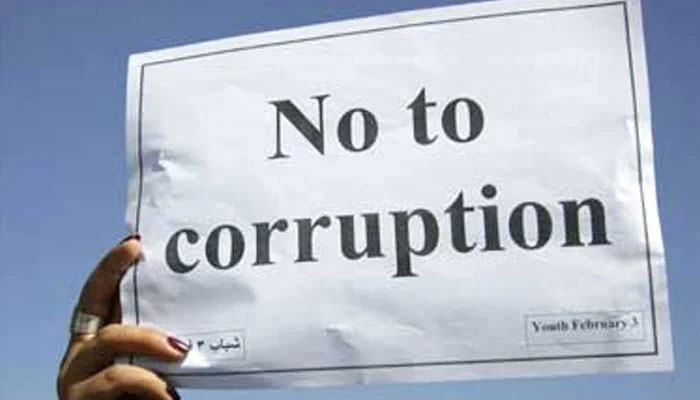
Islamabad : The corruption within some Pakistan's institutions casts a long shadow, relegating the nation to a precarious standing on the international index of governance and rule of law. In this environment, the very principles of justice are rendered transactional, accessible primarily to those who possess the financial leverage to circumvent legal frameworks. Bribery, far from being a clandestine act, has seemingly metastasised into an accepted, almost de facto, aspect of bureaucratic and judicial processes.
The historical narrative of Pakistan is replete with instances underscoring the selective and often politically motivated application of justice. Accountability for the powerful remains elusive unless it aligns with the vested interests and retaliatory motives of an equally powerful ruling faction. The sanctity of institutions charged with upholding fairness and equity is compromised by a culture where integrity is supplanted by venality. Law enforcement agencies, most notably police stations, have devolved into open marketplaces for illicit transactions, while the hallowed halls of justice echo with the unchecked commerce of judicial outcomes. This malaise permeates nearly every echelon of governance, from the local police to the apex federal investigative bodies like the FIA and even anti-corruption agencies themselves. The notable exception of the Motorway Police serves as a stark contrast, highlighting the potential for probity within the system, given the requisite will and leadership.
Experts on governance and institutional reform concur that the onus of rectifying this deeply rooted corruption rests squarely upon the shoulders of the leaders within these compromised organizations. Tragically, these very individuals often find themselves entangled in the web of corruption, becoming key facilitators and beneficiaries of the system they are ostensibly meant to reform. This complicity at the highest levels breeds a culture of impunity, emboldening corrupt elements throughout the hierarchy. The lack of meaningful strategies to counter blatant bribery within police stations, beyond superficial public relations exercises, further exacerbates the problem. The anecdote concerning a senior police officer’s ill-conceived attempt to project an image of efficiency underscores the depth of the dysfunction. Ordering night patrol officers to stand idle before CCTV cameras to appear diligent, while a significant robbery unfolded nearby, is a stark illustration of misplaced priorities and a leadership more concerned with optics than actual crime prevention. This climate of institutional decay and compromised law enforcement has a direct and devastating impact on public safety, manifesting in a steadily increasing graph of street crime.
The horrifying hike in criminal activity is not merely coincidental; it is a direct consequence of a system where law enforcement is weakened by corruption and distracted by self-serving directives. As police resources are diverted towards symbolic gestures and as bribery becomes a routine aspect of the system, the ability of law enforcement to effectively deter and respond to crime diminishes significantly. This creates a vacuum that emboldens criminals, leading to a surge in petty theft, robbery, and more violent offenses.
The public, witnessing this erosion of law and order and the apparent complicity of state institutions, loses faith in the system's ability to protect them, further contributing to a sense of insecurity and lawlessness. The vicious cycle of corruption leading to ineffective policing, which in turn fuels an increase in crime, paints a grim picture of a society where the social contract between the state and its citizens is severely strained. The promise of security and justice, cornerstones of any stable society, remains tragically unfulfilled for a significant segment of the Pakistani populace.







-
 JoJo Siwa Shares Inspiring Words With Young Changemakers
 -
 James Van Der Beek Loved Ones Breaks Silence After Fundraiser Hits $2.2M
 -
 Disney’s $336m 'Snow White' Remake Ends With $170m Box Office Loss: Report
 -
 Travis Kelce's Mom Donna Kelce Breaks Silence On His Retirement Plans
 -
 Premiere Date Of 'Spider-Noir' Featuring Nicolas Cage Announced
 -
 Pedro Pascal's Sister Reveals His Reaction To Her 'The Beauty' Role
 -
 Kate Middleton Proves She's True 'children's Princess' With THIS Move
 -
 Paul Anka Reveals How He Raised Son Ethan Differently From His Daughters
 -
 'A Very Special Visitor' Meets Queen Camilla At Clarence House
 -
 Jodie Turner Smith Shares One Strict Rule She Follows As A Mom
 -
 Hailey Bieber Reveals KEY To Balancing Motherhood With Career
 -
 Photo Of Jay-Z, Other Prominent Figures With Jeffrey Epstein Proven To Be Fake
 -
 Hillary Clinton's Munich Train Video Sparks Conspiracy Theories
 -
 Fans Slam Talk Show Host For 'cringe' Behavior In Chris Hemsworth Interview
 -
 Woman Jailed Over False 'crime In Space' Claim Against NASA Astronaut
 -
 James Van Der Beek’s Close Pal Reveals Family's Dire Need Of Donations