
Iran, US hold ‘productive talks’ in Oman
Araqchi said his delegation had brief encounter with its US counterpart headed by Trump’s Middle East envoy Steve Witkoff
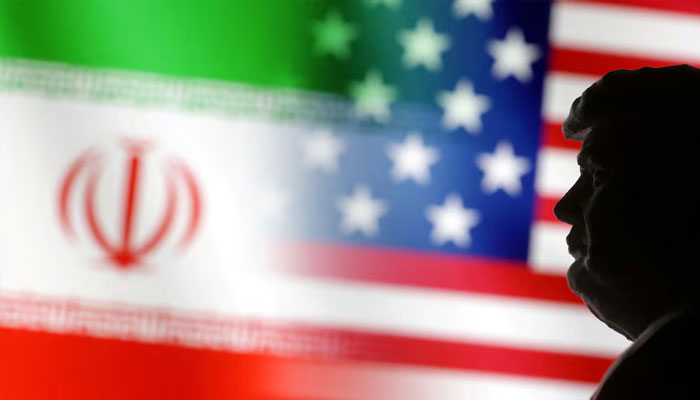
MUSCAT: Iran and the US held “productive” talks in Oman on Saturday and agreed to reconvene next week, Tehran said, a dialogue meant to address Tehran’s escalating nuclear programme with President Donald Trump threatening military action if there is no deal.
“I think we are very close to a basis for negotiations and if we can conclude this basis next week, we’ll have gone a long way and will be able to start real discussions based on that,” Iranian Foreign Minister Abbas Araqchi told state television.
Araqchi said the talks -- a first between Iran and a Trump administration, including his first term in 2017-21 -- took place in a “productive, calm and positive atmosphere”.
“Both sides have agreed to continue the talks ... probably next Saturday ... Iran and the US side want an agreement in the short term. We do not want talks for (the sake of) talks,” Araqchi added.
There was no immediate US comment on the talks.
Saturday’s exchanges were indirect and mediated by Oman, as Iran had wanted, rather than face-to-face, as Trump had demanded. Each delegation had its separate room and exchanged messages via Oman’s foreign minister, according to Iranian Foreign Ministry spokesman Esmail Baghaei.
Araqchi said his delegation had a brief encounter with its US counterpart headed by Trump’s Middle East envoy Steve Witkoff, after they exited the talks.
“After the end of more than 2-1/2 hours of indirect talks, the heads of the Iranian and American delegations spoke for a few minutes in the presence of the Omani foreign minister as they left the talks. It (the encounter) was based on our political etiquette,” Araqchi said.
“The current focus of the talks will be de-escalating regional tensions, prisoner exchanges and limited agreements to ease sanctions (against Iran) in exchange for controlling Iran’s nuclear programme,” an Omani source told Reuters.
Baghaei denied this account but did not specify what was false.
“This is a beginning. So it is normal at this stage for the two sides to present to each other their fundamental positions through the Omani intermediary,” Baghaei said.
However, failure would aggravate fears of a wider conflagration across a region that exports much of the world’s oil. Tehran has cautioned neighbouring countries that have US bases that they would face “severe consequences” if they were involved in any US military attack on Iran.
“There is a chance for initial understanding on further negotiations if the other party (US) enters the talks with an equal stance,” Araqchi told Iranian TV.
Iran’s Supreme Leader Ayatollah Ali Khamenei, who has the final say on key state matters, has given Araqchi “full authority” for the talks, an Iranian official told Reuters. Iran has ruled out negotiating its defence capabilities such as its ballistic missile programme.







-
 Trump Passes Verdict On Bad Bunny’s Super Bowl Halftime Show
 -
 Super Bowl 2026 Live: Seahawks Defeat Patriots 29-13 To Win Super Bowl LX
 -
 Kim Kardashian And Lewis Hamilton Make First Public Appearance As A Couple At Super Bowl 2026
 -
 Romeo And Cruz Beckham Subtly Roast Brooklyn With New Family Tattoos
 -
 Meghan Markle Called Out For Unturthful Comment About Queen Curtsy
 -
 Bad Bunny Headlines Super Bowl With Hits, Dancers And Celebrity Guests
 -
 Insiders Weigh In On Kim Kardashian And Lewis Hamilton's Relationship
 -
 Prince William, Kate Middleton Private Time At Posh French Location Laid Bare
 -
 Stefon Diggs Family Explained: How Many Children The Patriots Star Has And With Whom
 -
 Shamed Andrew ‘mental State’ Under Scrutiny Amid Difficult Time
 -
 ‘Narcissist’ Andrew Still Feels ‘invincible’ After Exile
 -
 Bad Bunny's Super Bowl Halftime Show: What Time Will He Perform Tonight?
 -
 Where Is Super Bowl 2026 Taking Place? Everything To Know About The NFL Showdown
 -
 Chris Pratt Explains Why He And Katherine Schwarzenegger Did Premarital Counseling
 -
 Drake 'turns Down' Chance To Hit Back At Kendrick Lamar At Super Bowl
 -
 Sarah Ferguson Had A ‘psychosexual Network’ With Jeffrey Epstein