
Married daughter eligible for job under quota of deceased govt employee: SC
Women are autonomous, rights-bearing citizens in their own right, not by virtue of their relationship to man
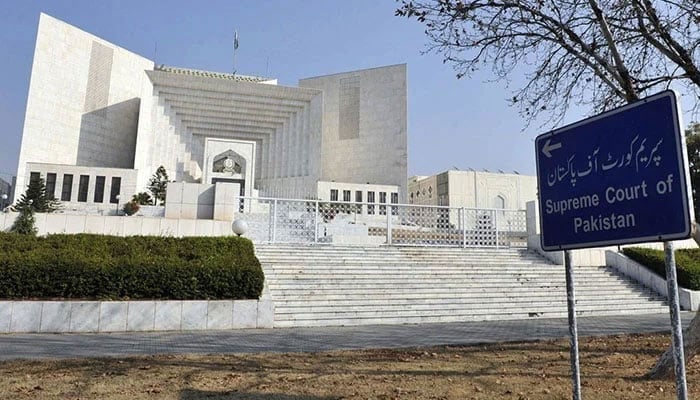
ISLAMABAD: The Supreme Court has nullified the decision to terminate a married woman from her position as a primary schoolteacher, declaring her eligible for employment under the deceased government employee’s quota.
The top court’s two-member bench, including Justice Mansoor Ali Shah and Justice Athar Minallah, issued a written verdict on an appeal of a woman whose appointment had been withdrawn by an education officer in Khyber Pakhtunkhwa’s Karak district without issuing a showcause notice.
The nine-page verdict authored by Justice Shah stated that the petitioner’s services were terminated based on a clarification letter that “stipulates that the benefit of appointment under the deceased son/daughter quota is not available to a female who has contracted marriage.”
Nullifying the education officer’s decision by terming it “discriminatory”, Justice Shah ruled: “A woman’s legal rights, her personhood, and her autonomy are not erased by marriage, not should they be made contingent upon it.”
“We have noticed that the impugned clarification introduces a discriminatory classification by excluding married daughters from eligibility, despite Rule 10(4) containing no such restriction, while allowing married sons to benefit under the same provision.”
Furthermore, the jurist also observed that the Establishment Department lacked the authority under Section 26 of the Act to issue any clarification that effectively amends Rule 10(4) ––a power vested exclusively in the governor.
“The Constitution guarantees rights to individuals, not to marital units or prescribed social roles. Women are autonomous, rights-bearing citizens in their own right, not by virtue of their relationship to a man, be it father, husband, or son.” He also stated in the judgment that a woman retains full ownership and control over her property, earnings, and financial affairs, irrespective of her marital status under Islamic jurisprudence. “Excluding married daughters from compassionate appointment under Rule 10(4) not only violates Pakistan’s constitutional framework but also breaches its international legal obligations under various instruments16, most notably those under the United Nations Convention on the Elimination of All Forms of Discrimination Against Women (CEDAW).”
The top court also stated that it was imperative to reaffirm that all judicial and administrative authorities bear a constitutional responsibility to adopt gender-sensitive and gender-neutral language. It also directed the department concerned to reinstate the petitioner with all previous benefits.







-
 'Buffy' Star Nicholas Brendon's Death Case Takes Massive Turn
 -
 FKA Twigs Takes Legal Stand Against Ex Shia LaBeouf
 -
 ‘Progressive’ Kate Middleton Snubs Outdated Royal Etiquette
 -
 Kylie Kelce Explains Why She Avoids Raising Kids With 'silver Spoon'
 -
 Meghan Markle Is Above Royal Family ‘empty Threats,’ Says Insider
 -
 Anne Hathaway Opens Up About 'defeated' Feeling As Working Mom
 -
 Shamed Andrew Should Testify In Epstein Case As ‘act Of Service’
 -
 What Really Happened Before Nicholas Brendon Was Found Dead At Home?
 -
 Sarah Ferguson Branded ‘most Famous Missing Person’ In UK Right Now
 -
 Why King Charles Does Not Need A Driving License? Expert Reveals
 -
 Did Graham Norton Really Sign NDAs For Taylor Swift’s Wedding?
 -
 ‘Polite’ King Charles Treats Staff Better Than ‘boorish’ Andrew
 -
 Princess Beatrice's Husband Raises Eyebrows With Deleted Instagram Post
 -
 Dua Lipa 'snubs' Priyanka Chopra
 -
 Will Taylor Frankie Paul Still Get Her 'Bachelorette' Salary?
 -
 'Harry Potter' Returns: First Glimpse Of HBO's New Series