
Maternal health
Many women are told to simply 'pray more' or 'stay strong' instead of being encouraged to seek professional help
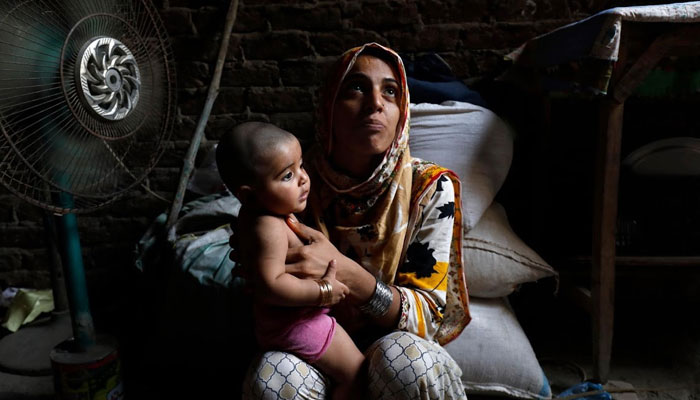
A new mother sits in silence, struggling to understand the overwhelming sadness that lingers after the birth of her child. She tries to voice her feelings, but her feelings are dismissed as exhaustion or temporary mood swings. No one tells her she may be experiencing postpartum depression, a condition affecting thousands of mothers across Pakistan.
Maternal mental health is a critical but often neglected issue in Pakistan, with profound consequences not only for mothers but also for their children and society. Anxiety, depression, and stress are common during and after pregnancy, yet they frequently go undiagnosed. Research shows that 30-40 per cent of women in Pakistan experience postpartum depression, far exceeding the global average of 10-15 per cent. Despite this, the topic remains taboo. Many women are told to simply 'pray more' or 'stay strong' instead of being encouraged to seek professional help.
The effects of untreated maternal mental health conditions extend far beyond the mother. When a mother struggles, it impacts her ability to bond with her baby, which can lead to developmental delays, emotional difficulties, and even poor nutrition in infants. According to Unicef, this has long-term consequences on children's cognitive and emotional development, often affecting their education and social engagement.
The economic impact is just as alarming. The World Bank estimates that Pakistan loses $1.5 billion annually due to untreated mental health disorders and the rising burden on healthcare. Studies also show that children of mothers with untreated mental health issues are 2-3 times more likely to experience developmental delays and academic difficulties, further affecting society's progress.
Addressing maternal mental health requires action at all levels — from policymakers to healthcare providers to communities. Policymakers must integrate mental health programs into maternal healthcare programs and allocate resources to support them. Lady Health Workers (LHWs) can be trained to screen for depression and anxiety during antenatal and postnatal visits. Successful pilots in Sindh (eg in Thatta and Karachi) have shown that LHWs can effectively deliver basic mental health support.
Healthcare providers must prioritise mental health screenings as part of routine maternity care. In Karachi, trials led by Aga Khan University and Grand Challenges Canada used LHWs to deliver cognitive-behavioural therapy (CBT) for postpartum depression. Mothers who received CBT-based support saw a 40-50 per cent reduction in depressive symptoms, highlighting the power of community-based interventions.
As individuals, we all have a role to play. Breaking the silence around maternal mental health can create a culture where mothers feel safe to seek help. No mother should have to endure this struggle alone — every woman deserves support and understanding. By reducing stigma, prioritising mental health screenings, and advocating for national policies, we can ensure every mother gets the support she deserves.
Investing in maternal mental health is not just an act of compassion — it’s a step towards a stronger, healthier future for Pakistan’s mothers, children, and generations to come.
The writer is an assistant professor at the Department of Obstetrics and Gynaecology at the Aga Khan University Hospital, Karachi.







-
 Melania Trump Appears With Humanoid Robot At White House
 -
 ‘Addictive By Design’: Meta, YouTube Found Liable In Historic Verdict
 -
 Bruce Willis' Mom Marlene Makes Another Family Amid Son's Battle With Dementia
 -
 Roblox Safety Warning For Parents: Developer Says Kids Need 24/7 Monitoring
 -
 Chelsea Handler Explains Why She Dates Younger Men
 -
 Chappell Roan's Security Guard Takes 'full Responsibility' For His Interaction With Jorginho's Daughter?
 -
 Rosalía Cuts Concert Short Over Sudden Illness, Fans Shocked
 -
 'Buffy' Star Nicholas Brendon's Death Case Takes Massive Turn
 -
 FKA Twigs Takes Legal Stand Against Ex Shia LaBeouf
 -
 ‘Progressive’ Kate Middleton Snubs Outdated Royal Etiquette
 -
 Kylie Kelce Explains Why She Avoids Raising Kids With 'silver Spoon'
 -
 Meghan Markle Is Above Royal Family ‘empty Threats,’ Says Insider
 -
 Anne Hathaway Opens Up About 'defeated' Feeling As Working Mom
 -
 Shamed Andrew Should Testify In Epstein Case As ‘act Of Service’
 -
 What Really Happened Before Nicholas Brendon Was Found Dead At Home?
 -
 Sarah Ferguson Branded ‘most Famous Missing Person’ In UK Right Now