
May deadline: Will Iran blink or brace for impact?
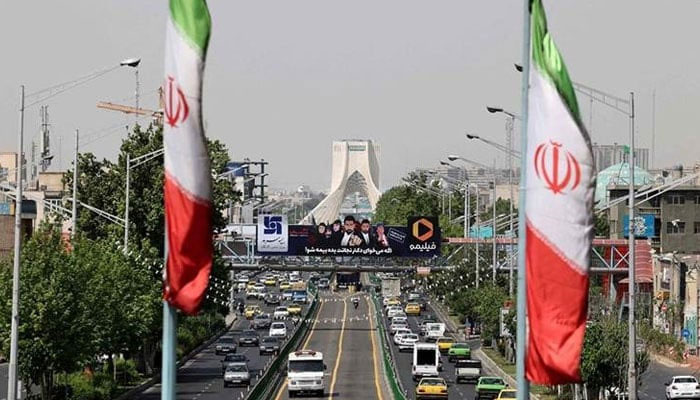
On February 26, the International Atomic Energy Agency (IAEA) released its quarterly report titled ‘Verification and Monitoring in the Islamic Republic of Iran in Light of United Nations Security Council Resolution 2231 (2015)’. The report evaluates Iran’s adherence to the Joint Comprehensive Plan of Action (JCPOA) and its nuclear activities under the framework of the 2015 agreement.
On March 3, the Institute for Science and International Security (ISIS) issued its findings: Iran can convert its current stock of 60 per cent enriched uranium into 174 kg of WGU in three weeks at the Fordow Fuel Enrichment Plant (FFEP), enough for seven nuclear weapons, taken as 25 kg of weapon-grade uranium (WGU) per weapon. Iran could produce its first quantity of 25 kg of WGU in Fordow in less than one week. On March 7, US President Donald Trump announced Saudi Arabia’s commitment to invest $1 trillion into the US economy to bolster American tech and energy sectors. Is Riyadh signalling its intent to deepen economic stakes in and around Washington as Tehran’s centrifuges spin faster?
In the second week of March, President Trump issued a two-month ultimatum to Supreme Leader Ali Hosseini Khamenei, demanding that he halt Iran’s nuclear advancements and restrain his Houthi proxies or face retribution by early May.
On March 20, Prime Minister Shehbaz Sharif met with the Crown Prince and Prime Minister of Saudi Arabia Mohammed bin Salman Al Saud “to discuss strategies for enhancing trade, fostering partnerships in key sectors, and expanding overall economic collaboration.” Five days later, on March 25, the IMF signed a Staff-Level Agreement with Pakistan, which, upon approval, will grant Pakistan access to $1.0 billion immediately, along with a new 28-month arrangement under the IMF’s Resilience and Sustainability Facility (RSF), providing access to an additional $1.3 billion.
On March 26, the US began deploying B-2 Stealth Bombers, KC-135R Stratotanker refuelling aircraft, and C-17 transport planes, all stationed within the 12 square miles of Diego Garcia, located approximately 3,400 miles from Iran and 2,200 miles from Yemen. The USS Harry S Truman (CVN-75), a Nimitz-class aircraft carrier, is currently stationed in the region. The USS Carl Vinson (CVN-70), another Nimitz-class supercarrier, is en route and will soon arrive.
Is this random choreography? Far from it. Iran’s nuclear leap -- reaching 90 per cent enrichment -- could shrink its bomb breakout time to mere weeks. Has this sparked a US-Saudi counter-move? The chessboard is being set. From the Institute for Science and International Security’s March 3 warning to the buzz around Diego Garcia. The Middle East teeters on a razor’s edge. Will Iran blink, or will May bring bombs? The world holds its breath.







-
 Alix Earle And Tom Brady’s Relationship Status Revealed After Cosy Super Bowl 2026 Outing
 -
 Why King Charles Has ‘no Choice’ Over Andrew Problem
 -
 Shamed Andrew Wants ‘grand Coffin’ Despite Tainting Nation
 -
 Keke Palmer Reveals How Motherhood Prepared Her For 'The Burbs' Role
 -
 King Charles Charms Crowds During Lancashire Tour
 -
 ‘Disgraced’ Andrew Still Has Power To Shake King Charles’ Reign: Expert
 -
 Why Prince William Ground Breaking Saudi Tour Is Important
 -
 AOC Blasts Jake Paul Over Bad Bunny Slight: 'He Makes You Look Small'
 -
 At Least 53 Dead After Migrant Boat Capsizes Off Libya
 -
 'God Of War' Announces Casting Major Key Role In Prime Video Show
 -
 Real Reason Prince William, Kate Broke Silence On Andrew Scandal Revealed
 -
 Drew Barrymore Responds To 'Charlie's Angels' Costar's Comments About Her
 -
 Shakira Slips Hard On Stage During Life Show
 -
 King Charles Speaks Out Over Andrew's Scandal: 'Stand Ready To Help Police'
 -
 Dax Shepard Recalls Horrifying Accident That Almost Killed Him
 -
 Logan Paul's Bodyguard Hits Fan On Super Bowl Day