
Root causes
'Grievance component' follows a ‘grievances-frustration-aggression-rebellion’ cycle
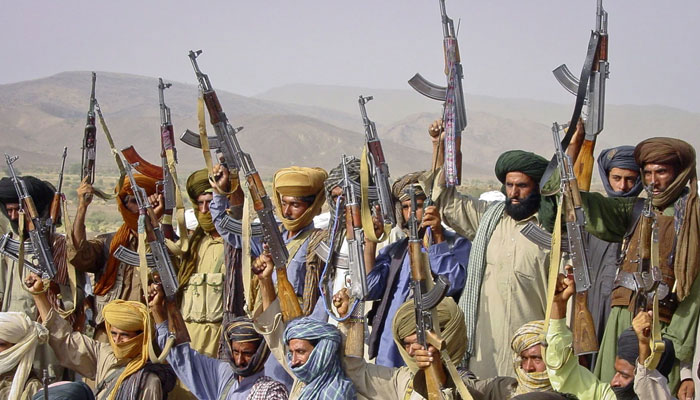
Insurgent violence in Balochistan is a symptom, not the disease. The disease lies in systemic failures -- political, economic and administrative. The state is focused on suppressing the symptom -- which is violence -- with even more violence. The state must seek a cure for the disease. To be certain, the disease -- which is political, economic and administrative in nature -- is fueling the violence (rather than the violence itself being the root cause).
The ‘greed-and-grievance’ framework dissects the structural and proximate causes of the conflict. The ‘greed-and-grievance’ framework identifies key stakeholders, maps conflict dynamics, and evaluates the efficacy of military-centric responses. The central question is: can kinetic solutions address a fundamental political and socio-economic struggle? The other question is: are alternative pathways required to achieve sustainable peace?
The ‘greed component’ of the framework posits that actors engage in violence after conducting an informal cost-benefit analysis, weighing the material and power gains of rebellion against the status quo. There is evidence that Baloch insurgents have secured a robust financial pipeline, stretching from London to Qatar and the UAE, enabling resource mobilisation for sustained operations.
The ‘grievance component’ follows a ‘grievances-frustration-aggression-rebellion’ cycle. Structural grievances -- real or perceived -- fuel individual frustration, which coalesces into collective aggression and, ultimately, armed rebellion.
The cycle of violence in Balochistan rests on four primary grievances: political exclusion, relative deprivation, administrative inefficiency and resource exploitation. Political exclusion stems from a non-representative governance structure. Relative deprivation manifests in stark disparities in education, employment, health, and income. Administrative inefficiency reflects a bureaucratic apparatus that fails to deliver both services and justice. Finally, perceptions of indigenous resource plunder -- whether substantiated or narrative-driven -- intensify tensions.
A secondary grievance narrative, ‘bribing the sardars, marginalising the poor', amplifies perceptions of elite co-optation and grassroots disenfranchisement.
Then there’s the ‘centre-periphery’ framework that frames the conflict in Balochistan as a struggle between Pakistan’s centralised state and Balochistan as a peripheral region. The centre imposes its authority -- for example, through military operations (1958, 1973, 2006) -- but struggles to govern effectively, fostering resentment followed by the ‘frustration-aggression-rebellion’ cycle.
Yes, internal factors ignite the conflict. Yes, external actors -- including the ‘resource curse’ -- serve as catalysts, intensifying and sustaining violence. Multiple foreign intelligence agencies are implicated as having strategic interests in destabilising Balochistan. To be certain, state-backed actors exploit pre-existing fissures, fueling the conflict through funding and intelligence. To be sure, military-centric solutions in Balochistan target the symptom -- violence -- rather than the underlying disease of political exclusion, relative deprivation, administrative inefficiency, and resource exploitation.
Yes, kinetic responses, like the ones in 1958, 1973 and 2006, temporarily disrupt rebel activity. But, purely kinetic responses fail to address systemic grievances, instead deepening alienation and fueling further resistance. Yes, a centre-periphery mismatch, combined with insurgents’ guerrilla tactics and external support, renders military force a short-term fix that intensifies the conflict’s root causes and undermines long-term stability.
In Balochistan, violence is a symptom. In Balochistan, the state misdiagnoses it as the disease. In Balochistan, the state applies force that widens the centre-periphery divide and stokes rebellion. In Balochistan, sustainable peace requires tackling the root causes through inclusion and reform, not suppression. Sustainable peace through reform.
The writer is a columnist based in Islamabad. He tweets/posts @saleemfarrukh and can be reached at: farrukh15@hotmail.com







-
 'Buffy' Star Nicholas Brendon's Death Case Takes Massive Turn
 -
 FKA Twigs Takes Legal Stand Against Ex Shia LaBeouf
 -
 ‘Progressive’ Kate Middleton Snubs Outdated Royal Etiquette
 -
 Kylie Kelce Explains Why She Avoids Raising Kids With 'silver Spoon'
 -
 Meghan Markle Is Above Royal Family ‘empty Threats,’ Says Insider
 -
 Anne Hathaway Opens Up About 'defeated' Feeling As Working Mom
 -
 Shamed Andrew Should Testify In Epstein Case As ‘act Of Service’
 -
 What Really Happened Before Nicholas Brendon Was Found Dead At Home?
 -
 Sarah Ferguson Branded ‘most Famous Missing Person’ In UK Right Now
 -
 Why King Charles Does Not Need A Driving License? Expert Reveals
 -
 Did Graham Norton Really Sign NDAs For Taylor Swift’s Wedding?
 -
 ‘Polite’ King Charles Treats Staff Better Than ‘boorish’ Andrew
 -
 Princess Beatrice's Husband Raises Eyebrows With Deleted Instagram Post
 -
 Dua Lipa 'snubs' Priyanka Chopra
 -
 Will Taylor Frankie Paul Still Get Her 'Bachelorette' Salary?
 -
 'Harry Potter' Returns: First Glimpse Of HBO's New Series