
AGP highlights flaws in govt financial audit system
AGP Ajmal Gondal highlighted that number of pending audit cases with PAC has exceeded 30,000
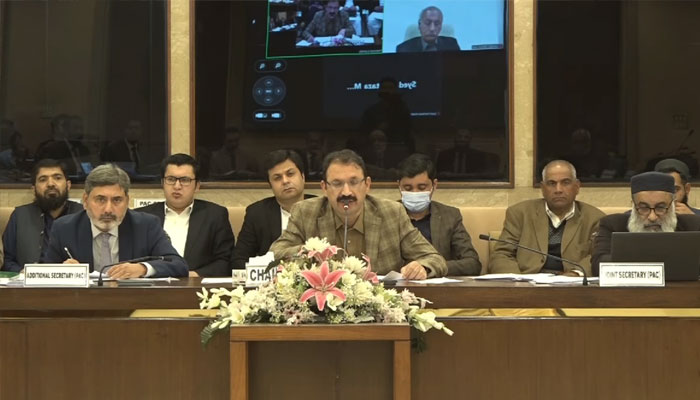
ISLAMABAD: The Auditor General of Pakistan (AGP) informed the Public Accounts Committee (PAC) on Wednesday that the International Monetary Fund (IMF) has expressed concerns over delays in the audit process of ministries and attached departments. He revealed that there are approximately 500,000 to 600,000 pending audit cases related to ministries and institutions.
The PAC meeting, chaired by Chairman Junaid Akbar Khan, reviewed audit reports of the Atomic Energy Commission, Pakistan Nuclear Regulatory Authority and the Federal Board of Revenue (FBR).
AGP Ajmal Gondal highlighted that the number of pending audit cases with the PAC has exceeded 30,000. He raised several key concerns, including the failure to appoint a chief internal accountant despite parliamentary orders, flaws in the financial audit system due to non-implementation of rules and the absence of performance audits for ministries and institutions. He also noted that secretaries and chief financial officers (CFOs) of institutions are not clearing financial audits and 15 ministries still lack CFOs. The PAC directed ministries and institutions to provide details of CFO appointments within a month, emphasising that the failure to appoint a chief internal accountant violates parliamentary orders.
The auditor general noted that since the formation of the current PAC, Rs30 billion has been recovered from various institutions and ministries. Chairman Junaid Akbar highlighted that this recovery was achieved within 30 days, marking a record performance for the PAC.
During the examination of FBR audit paras, it was revealed that out of Rs807 billion in audit objections, only Rs7 billion has been recovered. The FBR chairman clarified that most audit paras relate to routine expenses and highlighted a case where an attempt to commit a Rs340 billion fraud was limited to Rs64 million. The committee also discussed the Common Pool Fund, with FBR officials explaining that 40 percent of the fund is allocated to officers under Section 202B of the Customs Act. Committee members raised concerns about transparency, prompting the FBR chairman to propose a separate account for GD fees and submitting new rules to the committee within a month.
The FBR chairman said that all this money should go to the officers, but along with the officers, 15 percent of the fund goes to the informer. “This is a private fund in which reward money comes on recovery. We will create a separate account for the GD fees so that it can be audited,” he said.
The PAC examined a tax fraud case involving Rs312 billion, which the FBR chairman clarified was actually Rs68 billion. So far, Rs28 billion has been recovered, with Rs40 billion still pending. Committee member Afnanullah said that such huge sales tax frauds happen and the FBR did not know about it. The officials told the committee that an FIR had been registered against two persons -- Kashif and Mohsin Ali -- who committed the fraud. The committee referred the matter back to the departmental accounts committee (DAC) for further review.
The committee also addressed the removal of a female FBR officer for allegedly using inappropriate language regarding the finance minister’s vehicle.
Omar Ayub asked whether a flag was requested on a non-customs paid vehicle, or not. The FBR chairman said that he had not investigated the matter. The FBR chairman defended the decision, while committee members emphasized the importance of protecting honest officers.
The PAC reviewed audit paras related to the Pakistan Atomic Energy Commission (PAEC), including the sale of electricity worth Rs217 billion to the Central Power Purchasing Agency (CPPA). While Rs162 billion has been recovered, Rs340 billion remains outstanding. The committee questioned spot purchases exceeding Rs1 billion by the Atomic Energy Commission, with members criticising the lack of advance planning.
PAEC officials told the committee that the National Command Authority allows such purchases to be made in an emergency. Khawaja Shiraz said that if paint and air conditioners were being purchased in an emergency. Omar Ayub said that this is not a sensitive institution, the nuclear power plant is a facility-like institution. “You should admit that you made a mistake and be careful in the future,” he said. The PAEC chairman acknowledged the issues and assured the committee of improved practices in the future.
The PAC deferred discussion on the non-recovery of Rs62 billion by the CPPA, indicating that a separate meeting would be convened to address the matter.







-
 Epstein Case: Ghislaine Maxwell Invokes Fifth, Refuses To Testify Before US Congress
 -
 Ferrari Luce: First Electric Sports Car Unveiled With Enzo V12 Revival
 -
 Chappell Roan Parts Ways With Wasserman Music Over CEO's Ties With Epstein
 -
 Andrew Mountbatten Windsor Publically Shamed After Brother And Nephew Change Decades Old Royal Rule
 -
 Jon Stewart On Bad Bunny's Super Bowl Performance: 'Killed It''
 -
 Savannah Guthrie Receives Massive Support From Reese Witherspoon, Jennifer Garner After Desperate Plea
 -
 Celebrities Take Sides As Brooklyn Beckham’s Feud With David, Victoria Heats Up
 -
 Prince Harry Reacts As Beatrice, Eugenie's Names Surface In Epstein Emails
 -
 Cyprus Joins European AI Race: What It Means For Greek LLMs And Regional Innovation
 -
 Amazon Soon To Launch 'AI Content' Marketplace, Says Report
 -
 Is AI Reliable For Health Advice? New Study Raises Red Flags
 -
 WhatsApp Web Starts Rolling Out Voice And Video Calling For Beta Users
 -
 Catherine O’Hara’s Cause Of Death Finally Revealed
 -
 Swimmers Gather At Argentina’s Mar Chiquita For World Record Attempt
 -
 Brooklyn Beckham, Nicola New Move Could Leave David, Victoria Reeling
 -
 Anthropic Criticises ChatGPT Ads As OpenAI Begins Testing Advertising In AI Chats