
Pakistan braces for hydropower crunch as reservoirs hit lows
Officials warned that shortfall could force government to rely on costly imported LNG to meet peak electricity demand
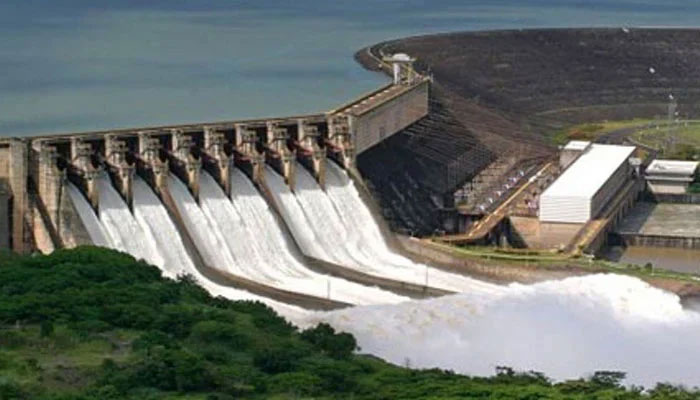
ISLAMABAD: Pakistan may face a potential hydropower shortfall this summer as lower rainfall and snowfall threaten to reduce water levels in reservoirs, the National Electric Power Regulatory Authority (Nepra) was informed Thursday.
Major reservoirs are hovering near their minimum operating levels, raising alarms over potential water shortages in the coming months. According to the Water and Power Development Authority’s (Wapda) daily report on February 21, Tarbela Dam’s water level stood at 1,431.56 feet, only 29.56 feet above its minimum operating level of 1,402 feet. Similarly, Mangla Dam was at 1,106 feet, just 56 feet above its critical limit of 1,050 feet, while Chashma Barrage registered 639.1 feet against a minimum of 638.15 feet.
Officials warned that the shortfall could force the government to rely on costly imported Liquefied Natural Gas (LNG) to meet peak electricity demand.
The concern was raised during a Nepra hearing on the Central Power Purchasing Agency’s (CPPA) request for a monthly Fuel Cost Adjustment (FCA) for January 2025. Nepra Chairman Waseem Mukhtar presided over the session.
They cautioned that reduced hydropower output in the coming months could strain the energy supply and drive-up costs. Officials from the Power Division said that electricity generation in January 2025 declined by 4.4 percent against the reference projection, with a year-on-year drop of 2 percent, raising concerns over future supply constraints. Nepra voiced concerns over the looming crisis and questioned what measures were in place to mitigate the impact. In response, Power Division officials said lower reservoir levels would directly affect hydropower production, leaving LNG as the primary alternative. The regulator decided to summon the Water and Power Development Authority (Wapda) for a briefing on summer water availability.
Meanwhile, the CPPA petitioned for Rs2.0 per unit reduction in electricity bills, citing lower fuel costs in January. If approved, consumers of distribution companies (Discos) could see collective relief of Rs15.65 billion. The Power Division also urged Nepra to extend the FCA reduction to domestic users consuming up to 300 units and the agricultural sector. Nepra has reserved its decision on the FCA adjustment, pending further scrutiny of the data.







-
 'Buffy' Star Nicholas Brendon's Death Case Takes Massive Turn
 -
 FKA Twigs Takes Legal Stand Against Ex Shia LaBeouf
 -
 ‘Progressive’ Kate Middleton Snubs Outdated Royal Etiquette
 -
 Kylie Kelce Explains Why She Avoids Raising Kids With 'silver Spoon'
 -
 Meghan Markle Is Above Royal Family ‘empty Threats,’ Says Insider
 -
 Anne Hathaway Opens Up About 'defeated' Feeling As Working Mom
 -
 Shamed Andrew Should Testify In Epstein Case As ‘act Of Service’
 -
 What Really Happened Before Nicholas Brendon Was Found Dead At Home?
 -
 Sarah Ferguson Branded ‘most Famous Missing Person’ In UK Right Now
 -
 Why King Charles Does Not Need A Driving License? Expert Reveals
 -
 Did Graham Norton Really Sign NDAs For Taylor Swift’s Wedding?
 -
 ‘Polite’ King Charles Treats Staff Better Than ‘boorish’ Andrew
 -
 Princess Beatrice's Husband Raises Eyebrows With Deleted Instagram Post
 -
 Dua Lipa 'snubs' Priyanka Chopra
 -
 Will Taylor Frankie Paul Still Get Her 'Bachelorette' Salary?
 -
 'Harry Potter' Returns: First Glimpse Of HBO's New Series