
World is in transition, insists Thai scholar
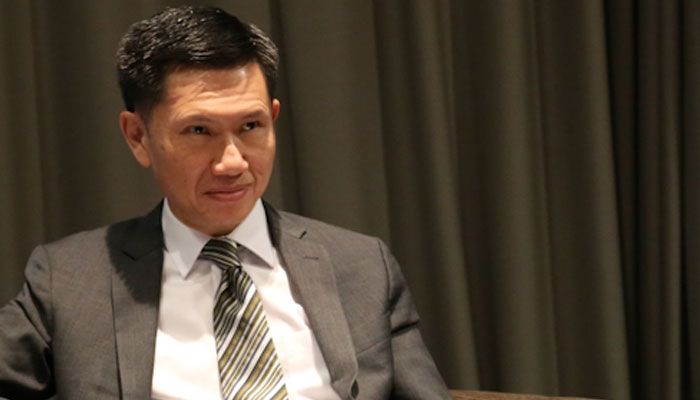
Islamabad : Director at the Institute of Security and International Studies, Chulalongkorn University, Thailand, Dr Thitinan Pongsudhirak emphasised that the world is in transition and it has been even more pronounced since the inauguration of the second term of US President Donald Trump.
"Donald Trump’s policy features two prominent themes: nativism and economic nationalism. This means that the United States shall not be interventionist any more, however, the country shall be increasingly protectionist and adopt policies that put greater onus on US allies," Dr Pongsudhirak said during a function organised by the China Pakistan Study Centre at the Institute of Strategic Studies Islamabad (ISSI).
Dr Pongsudhirak said the country was on a trajectory of “manifest resurgence” due to its historical role in the world and its ongoing geostrategic projects like the Belt and Road Initiative.
He said the so-called “new cold war” was merely a continuity of the Cold War with the difference being economic altercation.
"The pressing question is how long a geoeconomic conflict can last until it transforms into confrontation and hostility." Regarding ASEAN, the Thai scholar said the accentuating major-power competition had led to the organization losing its centrality.
"These developments shall lead to resurgence of Southeast Asia as a region that is not denoted merely by cooperation among ASEAN members. For Southeast Asia and ASEAN, the US-China relationship has been most consequential in the recent years," he said.
Earlier, ISSI DG Sohail Mahmood highlighted Dr. Thitinan’s intellectual and academic contributions to strategic thought in Thailand and ASEAN region and his role in influencing the research and policy discourse.
He said Pakistan-Thailand relations had evolved over decades and embraced myriad sectors such as trade, investment, education, science and technology, culture, and tourism. "Both countries are also bound together by civilisational linkage tracing back to the ancient Buddhist Gandhara heritage of Pakistan. In the past, Pakistan and Thailand worked together in SEATO. Today, Pakistan counts Thailand among steadfast supporters of Pakistan’s elevated partnership with ASEAN."
Mahmood said it was important to understand perspective on contemporary Southeast Asia and ASEAN from Thailand.
He noted that while in previous decades ASEAN’s growth trajectory had benefited from stable major-power relations, the region was facing strong headwinds owing to sharpening contestation between the US and China.
"It remains to be seen how ASEAN would navigate this complex and treacherous geopolitical landscape."
The ISSI DG said there was no better qualified scholar than Dr. Thitinan to speak on that topic with real knowledge and insight.
Director CPSC Dr. Talat Shabbir said ASEAN and the Southeast Asian region were navigating a complex yet promising era in the international order.







-
 'Buffy' Star Nicholas Brendon's Death Case Takes Massive Turn
 -
 FKA Twigs Takes Legal Stand Against Ex Shia LaBeouf
 -
 ‘Progressive’ Kate Middleton Snubs Outdated Royal Etiquette
 -
 Kylie Kelce Explains Why She Avoids Raising Kids With 'silver Spoon'
 -
 Meghan Markle Is Above Royal Family ‘empty Threats,’ Says Insider
 -
 Anne Hathaway Opens Up About 'defeated' Feeling As Working Mom
 -
 Shamed Andrew Should Testify In Epstein Case As ‘act Of Service’
 -
 What Really Happened Before Nicholas Brendon Was Found Dead At Home?
 -
 Sarah Ferguson Branded ‘most Famous Missing Person’ In UK Right Now
 -
 Why King Charles Does Not Need A Driving License? Expert Reveals
 -
 Did Graham Norton Really Sign NDAs For Taylor Swift’s Wedding?
 -
 ‘Polite’ King Charles Treats Staff Better Than ‘boorish’ Andrew
 -
 Princess Beatrice's Husband Raises Eyebrows With Deleted Instagram Post
 -
 Dua Lipa 'snubs' Priyanka Chopra
 -
 Will Taylor Frankie Paul Still Get Her 'Bachelorette' Salary?
 -
 'Harry Potter' Returns: First Glimpse Of HBO's New Series