
‘Chinese investment in AI-driven grid to bring renewable energy revolution’
Islamabad:Experts have stressed the need to take immediate measures for grid modernisation by using Artificial Intelligence (AI) to integrate renewable energy (RE) into Pakistan’s national power infrastructure.
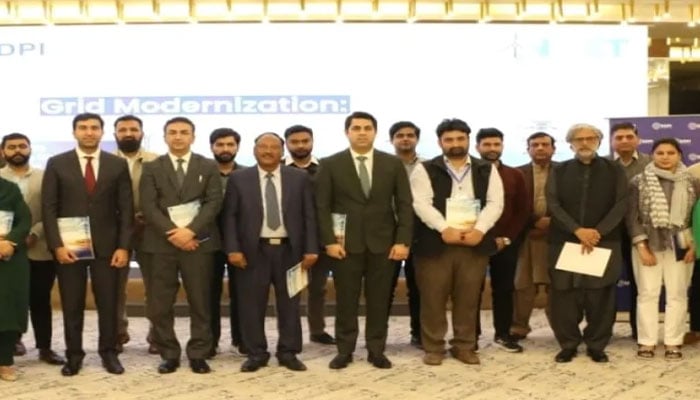
They were expressing their views on "Grid modernisation for RE integration: investment opportunities for the Chinese private sector in Pakistan," at a policy dialogue organised here by Sustainable Development Policy Institute (SDPI) under the auspices of Green CPEC Alliance.
Syed Faizan Ali, a member of the Prime Minister’s Solarisation Committee, said that the challenges posed by distributed energy resources (DERs). Pakistan already has a surplus in solar capacity, but issues like reverse power flow during the day and a lack of quality inverters are hindering progress, he said.
He called for the implementation of smart metres, advanced distribution monitoring systems and enhanced information and communication technology (ICT) in grid systems. Mr Ali also emphasised the need for a comprehensive data strategy and software platforms to integrate network management, outage management and consumer billing systems. Regulatory barriers must be reduced to facilitate this transformation, he added.
Muhammad Ayub, Chief Executive Officer, KPK Transmission and Grid Company, underscored the importance of planning and infrastructure development. Pakistan aims to achieve 30% renewables target by 2030, but infrastructure constraints and a lack of reactive power compensation systems are major hurdles, he said. Highlighting China’s collaboration in developing smart microgrids, he stressed the need for improved public-private partnerships to attract more investors.
Arqam Ilyas, member, Lahore Electric Supply Company (LESCO), said that smart metres and battery energy storage systems are critical for modernising distribution systems. Chinese companies can play a pivotal role in making these technologies financially viable, he stated.
Engineer Ahad Nazir, SDPI, highlighting the critical role of maintaining and upgrading grid infrastructure said that Pakistan must learn from China’s advancements in AI and predictive modeling to enhance grid efficiency and reliability. The national grid’s lifecycle depends on modernisation and China’s expertise can be a gamechanger for Pakistan, he said.
Engineer Ubaid ur Rehman Zia, SDPI, said the energy transition comes with significant costs, so it is essential for Pakistan to reduce its reliance on carbon-intensive energy sources. Energy prices in Pakistan were rising steadily and renewable energy offers a sustainable solution. However, this requires new capital and technological investments, he added.
Muhammad Omar, SDPI, identified Sindh and Balochistan as optimal regions for renewable energy projects, particularly solar and wind. In terms of RE integration potential, he said, Sindh is leading in solar and wind variable renewable energy (VRE) integration, while Balochistan’s wind corridor has the potential to generate VRE.







-
 Murder Suspect Kills Himself After Woman Found Dead In Missouri
 -
 Sarah Ferguson's Plea To Jeffrey Epstein Exposed In New Files
 -
 Prince William Prepares For War Against Prince Harry: Nothing Is Off The Table Not Legal Ways Or His Influence
 -
 'How To Get Away With Murder' Star Karla Souza Is Still Friends With THIS Costar
 -
 Pal Reveals Prince William’s ‘disorienting’ Turmoil Over Kate’s Cancer: ‘You Saw In His Eyes & The Way He Held Himself’
 -
 Poll Reveals Majority Of Americans' Views On Bad Bunny
 -
 Wiz Khalifa Thanks Aimee Aguilar For 'supporting Though Worst' After Dad's Death
 -
 Man Convicted After DNA Links Him To 20-year-old Rape Case
 -
 Royal Expert Shares Update In Kate Middleton's Relationship With Princess Eugenie, Beatrice
 -
 Andrew Mountbatten-Windsor’s Leaves King Charles With No Choice: ‘Its’ Not Business As Usual’
 -
 Dua Lipa Wishes Her 'always And Forever' Callum Turner Happy Birthday
 -
 Police Dressed As Money Heist, Captain America Raid Mobile Theft At Carnival
 -
 Winter Olympics 2026: Top Contenders Poised To Win Gold In Women’s Figure Skating
 -
 Inside The Moment King Charles Put Prince William In His Place For Speaking Against Andrew
 -
 Will AI Take Your Job After Graduation? Here’s What Research Really Says
 -
 California Cop Accused Of Using Bogus 911 Calls To Reach Ex-partner