
Fishing trawlers, not sabotage, behind most undersea cable damage: UN
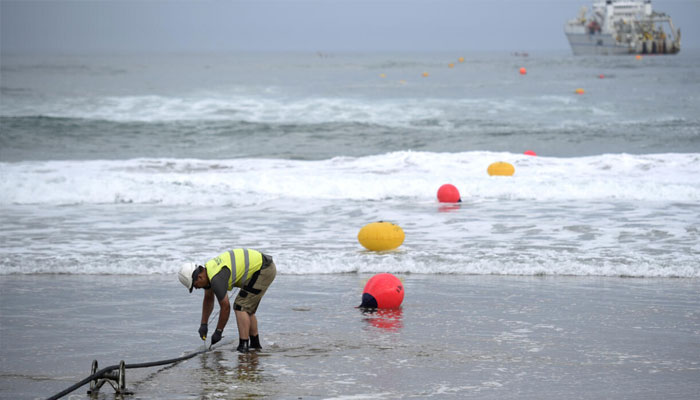
GENEVA: Much has been written about suspected sabotage of undersea cables in the Baltic Sea, but the UN says fishing trawlers are causing the most damage by far, rather than spies.
Western officials have accused Russian vessels of sabotaging undersea communications and power cables in several high-profile incidents in the Baltic Sea in recent months. European leaders and experts suspect acts of “hybrid warfare” against Western countries supporting Ukraine, and are calling for increased maritime security.
“The fact that interest in cable resiliency obviously has increased ... shows the importance of (this) infrastructure that we are so dependent on,” Tomas Lamanauskas, the deputy head of the United Nations´ International Telecommunications Union (ITU), told AFP in an interview.
The laying and operation of underwater cables was long the preserve of a consortium of large telecoms operators, but the internet giants have largely taken over in recent years, as they strive to keep up with ballooning flows of data.
Today, submarine cables form the backbone of global communications, carrying approximately 99 percent of the world´s internet traffic, Lamanauskas said, pointing out that even when traffic goes through satellites, it is bounced to land stations and goes through underwater cables “to reach every corner of the Earth”.
About 1.4 million kilometres of fiberoptic cables are laid on the ocean floor, enabling the provision of essential services such as trade, financial transactions, public services, digital health and education around the world.
Damage to submarine cables is not uncommon. According to the International Cable Protection Committee (ICPC), there are an average of 150 to 200 outages per year worldwide, or around three incidents a week. But while suspected nefarious activities have been in the headlines, Lamanauskas stressed that fishing and anchoring is responsible for 80 percent of all recorded damage.
There are also natural hazards, ageing, abrasions and equipment failures, he added. Given the growing importance of such cables, “every incident and every cut of the cable is much more noticeable”, Lamanauskas said.
And while the undersea cable network is vast, there are actually only around 500 individual cables in the world, meaning that “even when a few of those are cut or ... damaged, the impact” is huge, Lamanauskas said.
That was certainly the case when three submarine cables carrying about a quarter of all internet traffic between Asia and Europe were cut last year in the Red Sea, or when a huge volcanic eruption severed the cable linking the Tonga archipelago to the rest of the world, he said.







-
 'Laguna Beach' Star Lauren Conrad Unveils Biggest Change After Turning 40
 -
 RAYE Gets Candid About The Emotional Toll Of Stepping Into Her 'most Independent' Era
 -
 Dan Levy Confronts 'Schitt's Creek' Glory While Making 'Big Mistakes' On Netflix
 -
 Teens Are Highly Vulnerable To Social Media, Experts Warn
 -
 Prince Harry Fears Losing Meghan Markle After Duchess Major Plans Revealed
 -
 Waitrose Sacks Employee Following ‘altercation’ Over Stolen Easter Eggs
 -
 Your Body’s Real Age May Surprise You, Experts Say
 -
 'TLC Forever' Star Chilli Finally Exposes Her Record Label's Reaction After Grammy Speech
 -
 Inside Gabrielle Union's Father's Death Following Dementia: In Her Own Words
 -
 Genes May Matter More Than Thought In Human Lifespan, Study Finds
 -
 Brad Pitt Delivers Savage Blow To Ex-wife Angelina Jolie Amid Legal Battle: 'It Bugs Her'
 -
 Elon Musk Highlights Neuralink’s Potential For Restoring Vision And Hearing
 -
 Peter Phillips, Harriet Sperling Join Royal Family After Announcing Their Wedding Date
 -
 Edo Issues Ultimate Demand And Sparks ‘resentment’ In Princess Beatrice: Here's What's Happened
 -
 Here's When Poker Tactics Secured Microsoft’s DeepMind Deal
 -
 Trump’s Plan For A Massive Voter Database Sparks Intensifying Debate Among Election Officials