
Silent witness to a changing city
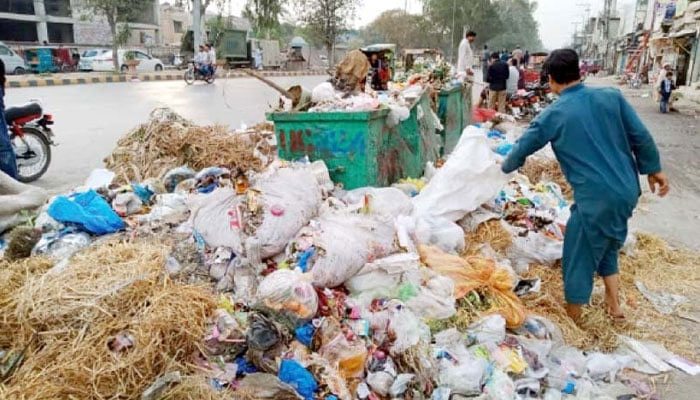
Our city will inevitably be a better place when we all make more sustainable choices daily. The city does not give an eye-catching look. Tonnes of trash is in the crowded areas of Rawalpindi. Streets depict a gloomy picture.
“Riding on a taxicab one day suddenly my attention shifts to my driver. With a swift motion, he crumples a plastic packet and casually tosses it onto the sidewalk. My throat tightens in protest, but I remain silent. The streets are already full of similar debris, what difference could one more piece make,” says Sadiqain Ali.
“In a flash, an undernourished figure dashes out of the street, walks up to the trash, and probes the culprit with fiery eyes. Failing to find my guilty driver, he vents his frustration by promptly disposing of the packet in a dustbin and smirks with satisfaction,” says Gulfam Ali.
“This city is mine too, am I willing to remain a spectator and watch as it is destroyed? We cannot rely on our institutions alone; true change starts with our choices, our actions, and us,” says Zafaryaab Hussain.
“Each plastic bag we haphazardly dispose of clogs up nullahs, makes them stagnant and floods our low-lying streets. Every candy wrapper we carelessly throw upon the road is swept into our nullah,” says Safdar Hasan.
“Let us think twice before throwing something away; perhaps that piece of plastic can be repurposed. Let us ensure our trash reaches the right destination, the landfills,” says Qasim Raza.
“Let us consider the broader consequences of our actions every single day, instead of the usual once-in-a-blue-moon reflection like armchair philosophers,” says Khurram Haider.
“Finding solutions is pointless, however, if we don’t believe in the problem in the first place. Residents of Rawalpindi have become insensitive to their decaying surroundings,” says Dabeer Haider. “We used to have bright green fields in our city, but only gray buildings of concrete stand over them now. While standing in front of Benazir Hospital I could witness the greenery up to Saidpur Road. Keeping the environment clean has become an afterthought because many have grown up in a society that encourages ignorance,” says Aqrab Raza.
“Who has time to think about where my plastics and papers end up? Yet, the climate crisis is as real here as it is anywhere in our dear homeland. You need only walk a hundred meters from any commercial centre to a street occupied by garbage and debris thrown by domestic servants and child laborers,” says Gufran Abbas.
Farman Hussain says, “Rawalpindi had a good state of sanitation. Agriculture fields used to exist here. ”







-
 Suspect Kills Six Across Florida Before Taking His Own Life
 -
 AI Helps Researchers Identify 2,000-year-old Roman Board Game Stone
 -
 Inside Kate Middleton, Prince William’s Nightmare Facing Andrew Mountbatten-Windsor
 -
 Margaret Qualley Shares Heartfelt Confession About Husband Jack Antonoff: 'My Person'
 -
 Savannah Guthrie Shares Sweet Childhood Video With Missing Mom Nancy: Watch
 -
 Over $1.5 Million Raised To Support Van Der Beek's Family
 -
 Paul Anthony Kelly Opens Up On 'nervousness' Of Playing JFK Jr.
 -
 Diana Once Used Salad Dressing As A Weapon Against Charles: Inside Their Fight From A Staffers Eyes
 -
 Video Of Brad Pitt, Tom Cruise 'fighting' Over Epstein Shocks Hollywood Fans
 -
 Jelly Roll's Wife Bunnie Xo Talks About His Huge Weight Loss
 -
 Margot Robbie Reveals Why She Clicked So Fast With Jacob Elordi
 -
 Piers Morgan Praised By Ukrainian President Over 'principled Stance' On Winter Olympics Controversy
 -
 Halsey's Fiance Avan Jogia Shares Rare Update On Wedding Planning
 -
 Instagram Head Adam Mosseri Says Users Cannot Be Clinically Addicted To App
 -
 James Van Der Beek Was Working On THIS Secret Project Before Death
 -
 Las Vegas Father Shoots Daughter's Boyfriend, Then Calls Police Himself