
How a hedge fund exodus reshaped global cocoa markets
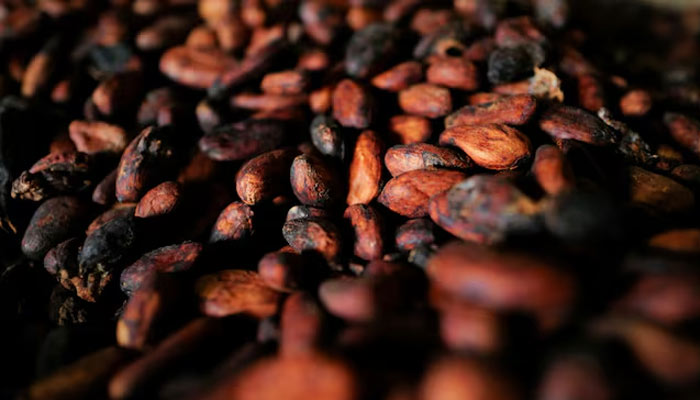
LONDON: Behind a record surge in cocoa prices this year, a corner of financial markets that drives the cost of chocolate underwent a seismic shift: the hedge funds that oiled its workings headed for the exit.
Confectionery prices, from candy bars to hot chocolate, are heavily influenced by futures contracts for cocoa beans. These financial instruments, traded in London and New York, allow cocoa buyers and sellers to determine a price for the commodity, forming a benchmark for sales across the world.
In the middle of last year, hedge funds -- a class of investors that use privately pooled money to make speculative bets -- started pulling back from trading cocoa futures because price swings in the market were raising their cost of trading and making it harder to make profits.
They accelerated their retreat in the first half of this year as cocoa prices hit a record in April, driven by supply issues in West Africa, according to Reuters calculations based on data from the US Commodity Trading Futures Commission (CFTC), which oversees the New York market, and ICE Futures Europe, an exchange that compiles figures for trading in London.
“This market became increasingly volatile,” said Razvan Remsing, director of investment solutions at Aspect Capital, a $9.3 billion London-based fund that uses coding and algorithms to find trades. “Our system’s response was to trim our positions.”
Aspect slashed the exposure to cocoa in its Diversified Fund from nearly 5.0 per cent of its net asset value in January to less than one percent after April, according to a presentation reviewed by Reuters.
The departure of hedge funds and other speculators caused liquidity in the market to slump, making it harder to buy and sell, stoking volatility to record highs and fuelling the price spike still further. Reuters spoke to a dozen fund executives, cocoa market brokers and traders who said the retreat -- described here in detail for the first time -- has left lasting strains on the market. That has resulted in greater gaps between the price at which cocoa can be bought and sold, and has prompted some industry players to seek alternative instruments, leaving a lasting impact on the sector.
This month, the number of futures contracts held globally at the end of a given trading day -- a key indicator of market health known as ‘open interest’ -- hit its lowest since at least 2014, the global figures show, a sign the futures market overall has shrunk significantly. Data prior to 2014 was not available.
On Wednesday, New York cocoa futures prices topped their April peak.The futures market is a crucial cog in the cocoa industry, allowing producers and chocolate companies to hedge their exposure to swings in the price of beans.
Futures dictate income for the farmers and low-income nations that produce the world’s cocoa -- the majority of which comes from Ghana and Ivory Coast in West Africa.
Hedge funds and speculators have become bigger players in commodity markets over the past two decades as the value of their overall assets has grown. But, as purely financial investors, they have no need to remain in the market at times of stress.
The impact of hedge funds’ exit illustrates how reliant trading has become on these lightly regulated funds that increasingly shape financial markets. Reuters has reported this year on how hedge funds are piling into the euro zone’s $10 trillion government bond market, drawing regulatory scrutiny, and on their growing sway in European stock trading.
Contacted by Reuters, the CFTC declined to comment. A representative for Britain’s regulator, the Financial Conduct Authority, said that, in line with its market supervision practice, “we have been working with trading venues and participants to monitor the orderliness of the market.”
Bernhard Troster, an economist at the Austrian Foundation for Development Research (OFSE) in Vienna, who last year co-authored a paper on the growing role of financial actors in commodities derivatives markets, said the withdrawal of hedge funds had helped fuel the crisis in cocoa markets.“When markets became so volatile this year, it was clear how hedge funds and other financial actors have become so important,” he said.


