
Sindh Moorat March to take place in Hyderabad on Nov 24
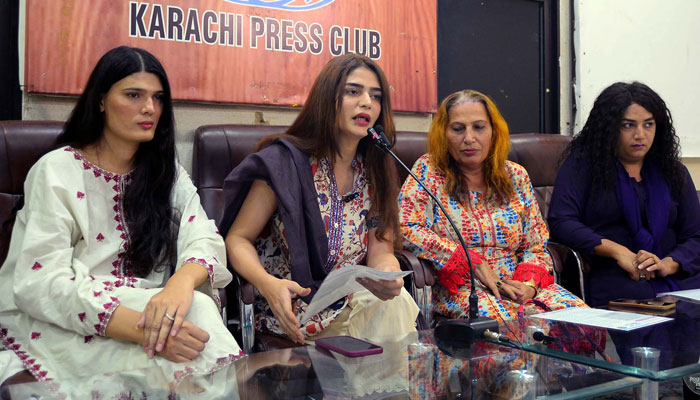
The third Sindh Moorat March will be held in Hyderabad on November 24, organisers announced on Monday. Addressing a press conference at the Karachi Press Club, transgender activist and politician Shahzadi Rai said the march was the transgender community’s first political, independent movement.
“We organised the Sindh Moorat March in Karachi the last two years, but this year we thought that since we are representing all of Sindh, why not choose Hyderabad as the venue?” she said, adding that the march will be held at Hyderabad’s Rani Bagh from 3pm to 9pm.
Shedding light on 12 demands, she said that all forms of discrimination and hate speech based on gender identity, gender expression, and sex characteristics must be criminalised. “We are unable to move forward because of discrimination. Our gender and the way we dress are being made subjects of judgment,” she lamented.
Shahzadi said that murders of khwajasiras must not be condoned as every life was precious and justice must not be compromised. “Transgender people had been demanding for the past three years that this law be changed because, first our families throw us out of their homes, and then, when a transgender person is murdered, these families receive blood money from perpetrators and case is closed. Thousands of transgender people have been killed, but in only one case has justice been achieved.”
She said transgender persons wishing for the X gender marker must never be subjected to medical gatekeeping and that their identity is for them to define and must be respected without unnecessary barriers.
She also demanded that the government address the housing crisis faced by transgender individuals and criminalise charging extra rent or denying housing based on their gender identity. She said there should be designated seating for khwajasira individuals in all public transport within Sindh to reaffirm their right to safety and equality in daily commutes.
She called for strictly enforcing the existing 0.2% employment quota for khwajasira individuals in all public sectors within Sindh and ensuring equal opportunities and representation in public service roles.
Rai demanded a transgender person-specific, government funded HIV programme to be governed or overseen by a body of community-based activists to ensure its effectiveness and relevance. She also stressed the need for revising the educational curriculum to encompass the profound political and cultural history of transgender persons in South Asia, adding that transgender persons should not be denied their lawful rights to assets and inheritance and legislation be made to ensure they are treated equitably in all inheritance matters.
She said her community should be officially recognized as a protected indigenous population with their rights, cultural significance and contributions be acknowledged and preserved through specific legislation.
About the legislation for the rights of transgender persons, Rai said that it was merely an attempt to appease the community. “After 9/11, Muslims who were registered were subjected to harassment in the US. Transgender persons are being meted out similar treatment,” she added. She also lamented police’s treatment of the transgender persons.
Speaking on the occasion, Mariam Shaikh, a transgender activist who is leading the march in Hyderabad, said: “The Sindh Moorat March is the need of the hour because it will create visuals that would counter the folk wisdom and misconceptions about the transgender community in our society.”
She said two demands needed to talked about more often, including the issue of inheritance, which is supposed to be distributed equally among offspring, but transgender individuals are denied that right. Some religious parties don’t want to end this discrimination and would never support equal rights for transgender persons, she opined. “When we talk about HIV testing or fundamental rights for vulnerable community, they claim that Islam is under threat.”







-
 'Trump At Walter Reed Hospital': Health Rumors Prompt White House Reaction
 -
 Blake Lively's Apology To Kate Middleton Resurfaces
 -
 'Vampire Diaries' Star Candice King Marries 'The Originals' Actor Steven Krueger
 -
 JoJo Siwa Gets Candid About Marriage Plans
 -
 Dakota Johnson, 36, Confirms Romance With Role Model, 28, After Breakup With Older Boyfriend
 -
 Shamed Andrew Only Visited By THIS Family Member Amid Exile
 -
 King Charles Could Get ‘golden PR Points’ If He Fixes Harry Issues
 -
 Kristin Cavallari Weighs In On 'silly' Life As The Famous Mum Of Three Kids
 -
 Lauren Conrad Spills The Beans On Sons' Views About Her Fame
 -
 Real Reason King Charles Rejects Reunion With Prince Harry
 -
 Adele To Perform On Major Celebrity's Milestone Birthday In November
 -
 Keith Urban Plans Explosive Tell-all About Nicola Kidman
 -
 'Harry Potter' Star John Lithgow Shares His Two Cents On J.K. Rowling's Controversy
 -
 Tori Spelling Says 'no' To Dating
 -
 Jon Hamm Weighs In On The Surprising Perks Of Working With Wife Anna Osceola
 -
 Taylor Swift Breathes Sigh Of Relief After Blake Lively Legal Setback