
The challenges of family businesses
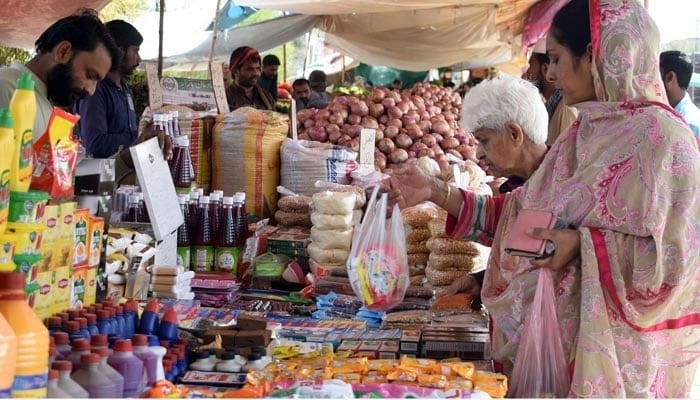
LAHORE: Family businesses form the backbone of many economies, particularly in countries like Pakistan, where a substantial portion of commerce and industry is family-led. However, their long-term sustainability often hinges on succession planning, governance and professional management.
Globally, only about 30 per cent of family businesses survive into the second generation, while just 12 per cent make it to the third. By the fourth generation, the survival rate plummets to around 3.0 per cent.
European family businesses such as BMW and LVMH exemplify successful continuity by integrating professional management with family oversight through governance frameworks. Similarly, in Asia, companies like India’s Tata Group and South Korea’s Samsung have adopted professionalised management while maintaining family influence at the board level. In the US, prominent examples like Walmart and Ford strike a balance between family leadership and public accountability through partial stock market listings. In Pakistan, family businesses face unique challenges.
The absence of structured succession planning often leads to abrupt leadership transitions, resulting in chaos. Successors are frequently inducted without adequate training or exposure to modern management practices. Founder-dominated decision-making creates bottlenecks, and once the founder is gone, the lack of an empowered team or shared vision often sparks conflicts.
Typically, the first generation builds the business, and the second generation expands it, often retaining control through consensus. By the third generation, disengagement or a sense of entitlement may hinder the drive or discipline necessary to sustain the enterprise. Disputes over roles, ownership and vision frequently arise, undermining operational efficiency and stability.
To address these issues, family businesses must:Plan leadership transitions: develop a clear roadmap for succession by identifying and training potential successors early. Mentorship by the outgoing generation is critical to ensure a smooth transition.
Introduce professional management: hiring non-family professionals can help ensure strategic, rather than purely familial, decision-making.
Define roles and responsibilities: clear role definitions for family members prevent interference in day-to-day operations.Create governance structures: establish a family constitution outlining roles, responsibilities, decision-making processes, and conflict-resolution mechanisms. Family councils or boards can mediate disputes and provide strategic direction.
To ensure longevity, businesses should enrol younger family members in business and leadership programmes, offering hands-on experience in lower-level roles to build competence. Exposure to external professional environments before assuming leadership roles is also essential.
Transitioning from family-owned to family-controlled enterprises by offering shares to non-family members or listing on stock exchanges can centralise ownership and reduce disputes. Trusts or holding companies may also help minimise conflict and protect the enterprise’s interests.
While cohesive family operations can enhance decision-making and unity, they also risk delays and resistance to change. Challenges such as dominance by one family member, a lack of innovation, or prioritisation of personal interests over collective goals can erode wealth and stability. Misaligned goals or fragmented ownership often lead to the sale, dissolution, or downsizing of the business.
To thrive, family businesses in Pakistan must adopt merit-based criteria for leadership roles, ensuring that capable and motivated individuals take charge. Regular workshops can align family values with business objectives, while the founder’s vision and operational guidelines serve as a guiding framework for future leaders. Shifting from personality-driven management to system-driven processes is essential for long-term success.By embracing structured succession planning and professional governance, family businesses in Pakistan can navigate generational transitions and sustain their legacy for decades to come.







-
 James Van Der Beek's Friends Helped Fund Ranch Purchase Before His Death At 48
 -
 King Charles ‘very Much’ Wants Andrew To Testify At US Congress
 -
 Rosie O’Donnell Secretly Returned To US To Test Safety
 -
 Meghan Markle, Prince Harry Spotted On Date Night On Valentine’s Day
 -
 King Charles Butler Spills Valentine’s Day Dinner Blunders
 -
 Brooklyn Beckham Hits Back At Gordon Ramsay With Subtle Move Over Remark On His Personal Life
 -
 Meghan Markle Showcases Princess Lilibet Face On Valentine’s Day
 -
 Harry Styles Opens Up About Isolation After One Direction Split
 -
 Shamed Andrew Was ‘face To Face’ With Epstein Files, Mocked For Lying
 -
 Kanye West Projected To Explode Music Charts With 'Bully' After He Apologized Over Antisemitism
 -
 Leighton Meester Reflects On How Valentine’s Day Feels Like Now
 -
 Sarah Ferguson ‘won’t Let Go Without A Fight’ After Royal Exile
 -
 Adam Sandler Makes Brutal Confession: 'I Do Not Love Comedy First'
 -
 'Harry Potter' Star Rupert Grint Shares Where He Stands Politically
 -
 Drama Outside Nancy Guthrie's Home Unfolds Described As 'circus'
 -
 Marco Rubio Sends Message Of Unity To Europe