
Europe in no hurry to loosen antitrust stance
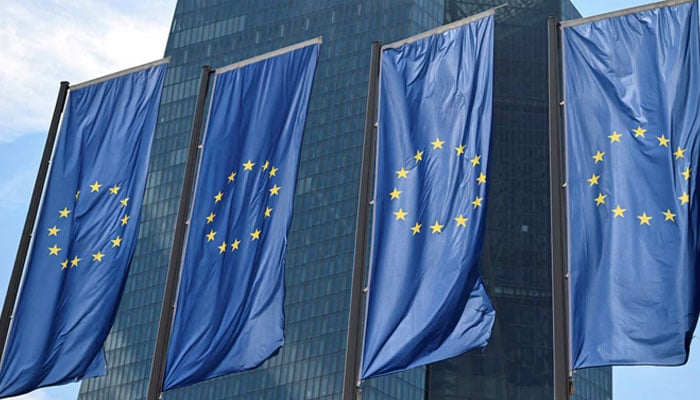
Mario Draghi’s call last week for a revamp of Europe’s tough pro-competition policy rules prompted much speculation that the EU’s next antitrust chief may take a lighter-touch approach to mergers that could yield European industrial ‘champions’.
While that may ultimately depend on the political mood in Brussels and Europe’s national capitals as the bloc’s economy lags behind its global rivals, there is little for now to suggest a more permissive shift, sources and analysts said.
If anything, the EU consensus remains intact that policies that uphold competition, keep down prices and ensure a level playing field across the 27 national markets of the EU are one of the few bright spots in the region’s struggling economy. “If you loosen EU competition rules to build huge companies, create European champions, you will get companies that are French, German and Italian. The smaller countries will wonder ‘What’s in it for us?’,” said one senior euro zone official.
Certain deals -- for example one that helped a green technology player against Chinese competition -- could be politically viable, the official said, but added: “If it were to be across the board, then it is a no-go”.
The EU’s high-profile antitrust chief Margrethe Vestager, who only last week scored two major wins against Big Tech on tax fairness and anticompetitive practices, will soon hand over to her successor in a new European Commission lineup.
Who that is will depend on fraught negotiations between EU Commission chief Ursula von der Leyen and member states to produce a team reflecting the geographic and political balance within the region, as well as gender and other criteria.
But any new arrival will be greeted by a near 900-head Directorate General of Competition which, long-time antitrust watchers say, is institutionally imbued with a belief in the economic benefits of strong competition policy.
“And a new Competition Commissioner is always dependent on their services,” said Umberto Gambini, partner at the Forward Global business consultancy and a former European Parliament lawmaker specialised in antitrust and state aid matters.
HIGH BURDEN OF PROOF
It is far from clear in any case that what Draghi proposed last week would be a radical departure from the current line.
In his long-awaited 400-page report, the former European Central Bank noted “there is a question” about whether vigorous competition policy prevented European companies reaching the scale needed to compete with Chinese or American giants.
In particular he proposed that future antitrust rulings take more into account factors such as whether a merger might give the new entity more investment clout to innovate.But asked if that meant any Commission acting on his proposals today would likely rubber-stamp the Alstom-Siemens engineering mega-merger it blocked in 2019, he only said “some of the reasons for blocking that merger would not be there”.“Let me be very clear: we start from a common condition ... Competition is good. It is good for investment, good for productivity and good for income distribution,” he said.
Indeed, the Draghi report put the burden on the merging parties to justify why any “innovation defence” should override other concerns about their link-up -- with an especially high bar for companies that are already dominant market players.
That reassured supporters of the strong pro-competition policy promoted by Europe and which the Biden administration has sought to take on board with Lina Kahn as chair of the US Federal Trade Commission.
“A lot of people in Europe were telling me the (Draghi) report was going to say we needed less competition enforcement... That is not what he said,” Fiona Scott Morton, senior fellow at the EU economic think tank Bruegel said.
Instead she pointed to his proposals on new tools to boost antitrust enforcement; to force firms to make their networks and products interoperable with others’; and how to judge risks such as future product shortages in any merger decision.“There are some nice new ideas as well as a doubling-down to make sure we have productivity in the economy and not a bunch of lazy monopolists who charge high prices and don’t deliver,” she said.







-
 King Charles ‘very Much’ Wants Andrew To Testify At US Congress
 -
 Rosie O’Donnell Secretly Returned To US To Test Safety
 -
 Meghan Markle, Prince Harry Spotted On Date Night On Valentine’s Day
 -
 King Charles Butler Spills Valentine’s Day Dinner Blunders
 -
 Brooklyn Beckham Hits Back At Gordon Ramsay With Subtle Move Over Remark On His Personal Life
 -
 Meghan Markle Showcases Princess Lilibet Face On Valentine’s Day
 -
 Harry Styles Opens Up About Isolation After One Direction Split
 -
 Shamed Andrew Was ‘face To Face’ With Epstein Files, Mocked For Lying
 -
 Kanye West Projected To Explode Music Charts With 'Bully' After He Apologized Over Antisemitism
 -
 Leighton Meester Reflects On How Valentine’s Day Feels Like Now
 -
 Sarah Ferguson ‘won’t Let Go Without A Fight’ After Royal Exile
 -
 Adam Sandler Makes Brutal Confession: 'I Do Not Love Comedy First'
 -
 'Harry Potter' Star Rupert Grint Shares Where He Stands Politically
 -
 Drama Outside Nancy Guthrie's Home Unfolds Described As 'circus'
 -
 Marco Rubio Sends Message Of Unity To Europe
 -
 Savannah's Interview With Epstein Victim, Who Sued UK's Andrew, Surfaces Amid Guthrie Abduction