
Pakistani singles defy tradition, search for spouses in person
Other smaller events are also emerging in the country to challenge traditional matchmaking norms
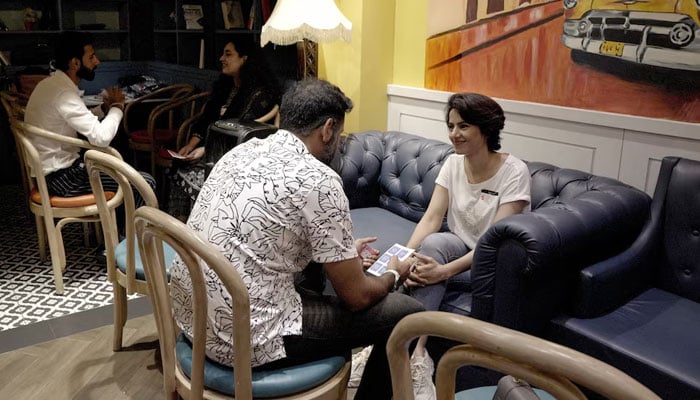
LAHORE: Dozens of young singles gathered this week to meet potential marriage partners in Pakistan’s eastern city of Lahore, the first attempt by a UK-based matrimonial app to help people find spouses in person in the conservative Islamic country.
Typically, marriages in Pakistan are arranged by parents who look for suitable matches for their children from within their communities or the extended family. Dating apps are generally stigmatised and gender segregation socially and at work remains common in the country of 240 million people.
The Lahore event was organised by Muzz, formerly Muzzmatch, which says its app is based on Islamic etiquette. The app is restricted to Muslim users, and, in a nod to traditional values, gives the option of blurring pictures except for specific matches and allows for chaperones to oversee meetings.
Other smaller events are also emerging in the country to challenge traditional matchmaking norms.
Despite criticism online in the past for the app, the Muzz event was attended by about 100 people.
Aimen, a 31-year-old woman who did not want to be further identified, said she used the app on the recommendation of her US-based brother.
“I used the app for two weeks, but then I saw an ad for this event and thought, why not meet people in person?” she said.
She said that her mother would have accompanied her as a chaperone but couldn’t attend because of ill-health.
Muzz, launched in 2015 in the Britain, which also has a sizeable Muslim population, has over 1.5 million users in Pakistan, its second-largest market after Morocco.
Moaz, a 27-year-old man, said he has been using Muzz for a year and that he was hopeful of finding a wife through the app.
“I do get matches, but they have different priorities,” he said adding that girls on the app expect him to involve his parents from the beginning.
“That is not (immediately) possible,” he said, stressing the need of getting to know someone before taking the next big step. Annie’s Matchmaking Party, another Lahore event last week, used an algorithm to match 20 young professionals after a selection process and invited them to the meet.
Noor ul Ain Choudhary, the 30-year-old organizer, faced criticism online that her event promoted a “hookup culture”. She countered that it aimed to provide a safe space for singles to meet and connect.
“In Pakistan, we’ve had two options: biased arranged marriages or time-consuming dating apps with no guarantees. Safety during meetings is also a concern,” she said.
Abdullah Ahmed, 22, was bullish about in person events and said he was convinced he may have found his perfect match at the Muzz gathering.
“The highlight was meeting an amazing girl,” he said, beaming with excitement, adding that they instantly clicked and swapped social media handles.
“We’re both Marvel fans! We’re already planning to catch the new Deadpool & Wolverine together,” he said.







-
 AI Breakthrough Slashes Quantum Computing Errors—study Finds
 -
 Lena Dunham Shares 'shocking' Advice From Her Plastic Surgeon: 'Let's Call It What It Is'
 -
 Ralph Fiennes Backs Shocking Female Voldemort In 'Harry Potter' Reboot
 -
 What Is Mental Wellbeing, Really? New Study Offers A Clear Answer
 -
 Kate Middleton Makes Heartfelt Plea To Prince Harry As New Fear Grows
 -
 NASA Artemis II Mission: Real Or Fake Conspiracys Spread Online
 -
 ‘Howl At The Moon’: NASA’s New Strategy For Cosmic Curiosity
 -
 North West Goes All-in On Goth Glam For Coachella 2026
 -
 Sabrina Carpenter Fans Get 'now Or Never' Warning Ahead Of 2026 Coachella
 -
 Anyma Issues Apology After Coachella Cancelled His Set
 -
 UK Halts Chagos Islands Handover Plan After US Opposition
 -
 Halle Berry Vows To Return Back To Her Past Music Era: 'I Do Miss Our Home Studio'
 -
 Microsoft Clarifies Copilot Is Not Just For Entertainment Use
 -
 Meagan Good Reveals Beloved Thing She Sacrificed For Husband Jonathan Majors
 -
 White House Shares Prince William, Kate Middleton's Photo
 -
 Does Being Married Lower Cancer Risk? Here’s What Research Reveals