‘Howl at the Moon’: NASA’s new strategy for cosmic curiosity
The Artemis mission garnered millions of views through social media clips and celestial photography
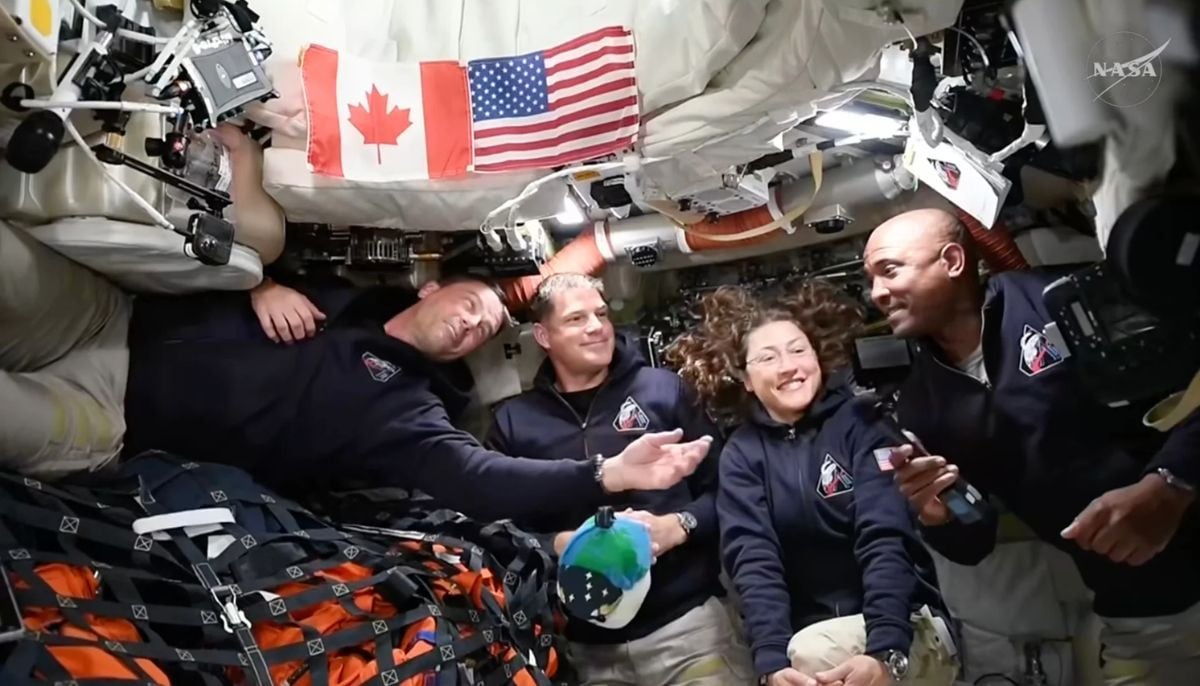
For NASA, the success of the Artemis II mission wasn’t just measured in orbital mechanics or heat shield integrity, but in likes, shares, and live views. Following a successful splashdown off the California coast last Friday, the agency is celebrating a communications victory that turned a nine-day lunar flyby into a high-definition digital spectacle.
Following the 200 uncrewed mission, Scoville told AFP that he spent two years working across the agency to better involve the public in NASA’s new moon missions. Viewers have since caught the enchanting glimpses of the journey, ranging from livestreamed events with the astronauts to an extraordinary portfolio of celestial photographs.
“I love having the livestream available, and I also think it's cool that they use Twitch," Roethler said, referring to a video streamer site favored by gamers. "That is a platform more of our students use.”
With Artemis II, there have been "just smiles and actually showing emotion through NASA, where we have sometimes had a history of being a little bit dry," Scoville said.
"It's okay to jump up and down and howl at the moon," he added.
A new era of lunar engagement
Unlike the Apollo missions of the 1960s, which aired on only a few television channels, Artemis II had to compete in a fractured digital landscape. Despite the challenge, the mission garnered millions of views through social media clips and celestial photography. During the lunar flyby, astronauts Christina Koch, Victor Glover, Jeremy Hansen and Reid Wiseman provided near-literary descriptions of the moon’s surface that captivated both scientists and the general public.
The “Apollo” comparison: Reaching to a new generation
While some analysts, like Jack Kiraly of the Planetary Society, argue that this moment hasn't quite reached the mythical hype of the Apollo landing-which was watched by 20% of the global population-the Artemis team believes their mission serves a different purpose. In a politically fractured world, mission commander Reid Wiseman hoped the sight of a “unified Earth” from afar would offer the public a moment to pause. As Scoville noted, the mission allowed people to tap into their “inner rocket nerds,” signaling a new chapter where NASA is as much a media powerhouse as it is a space exploration agency.


-
 A ‘neglected’ neutrino may hold the key to why the Universe exists
 -
 Can cancer drugs be made in space? Here’s what the new mission aims to find out
 -
 SpaceX Falcon 9 successfully launches Bandwagon-5 mission with 32 payloads
 -
 Europe launched 8 orbital rockets last year, can it rival Starlink?
 -
 Japan launches world’s first mission to bring sample back from phobos
 -
 Orionid meteor shower 2026: Peak date, viewing tips and what to expect
 -
 Why Mars looks blue in NASA’s unedited curiosity panorama?
 -
 Blue Origin upgrades new Glenn rocket launch infrastructure to take on SpaceX