Inside deadly chimp ‘civil war’ in Uganda—What they reveal about human nature
Since 2018 , researchers have recorded 24 killings, including 17 infants
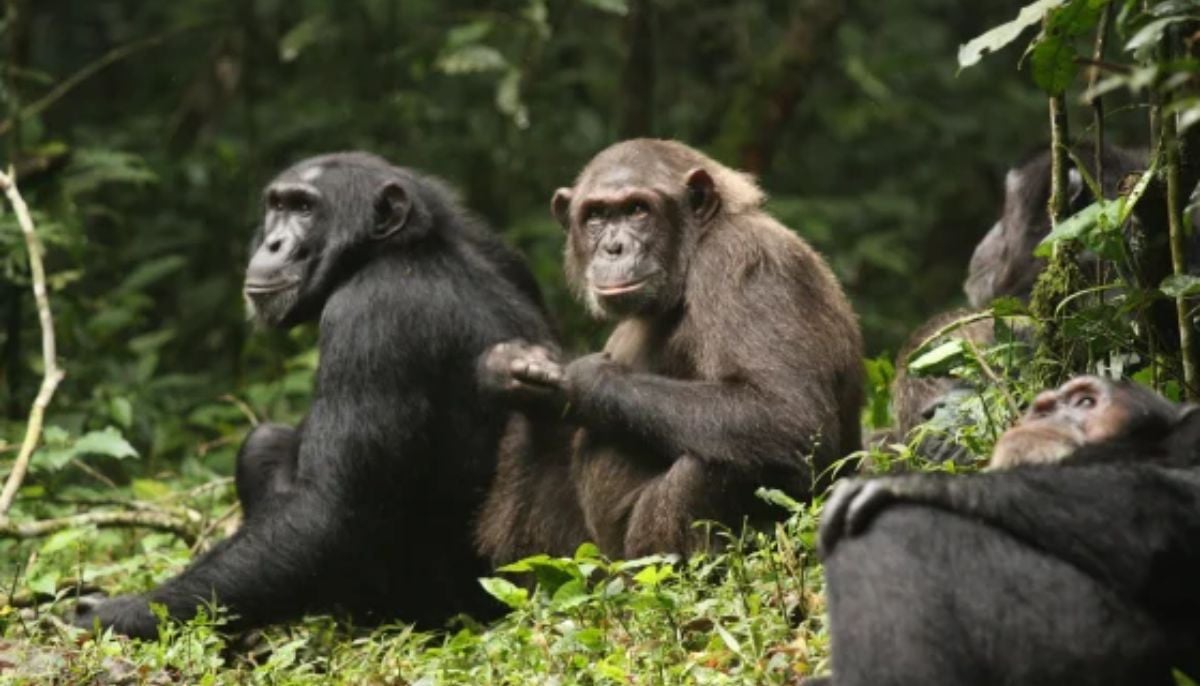
Deep in the lush canopy of Uganda’s Kibale National Park, a decades-long peace has shattered, giving way to a brutal and vicious “civil war” that mirrors the darkest chapters of human history.
For over 20 years, the Ngogo chimpanzees, the largest community of wild chimps ever recorded, flourished as a close-knit community.
Now, the researchers have officially documented the first clear yet unsettling struggles of power and survival ongoing among this community. As a result, two warring factions, Western and Central, have emerged, locking in a brutal civil war for 8 years.
What makes the scientist surprised is the intensity and frequency of conflicts. This is no longer a brawl or a simple split; it has turned into a series of coordinated and lethal raids in which one group targeted the other, resulting in deaths of males and infants.
As per researchers, since 2018 they have recorded 24 killings, including 17 infants. But, they are clueless about the reason behind the ongoing chip conflict.
"Biting, pounding the victim with their hands, dragging them, kicking them - mostly adult males, but sometimes adult females participate in the attacks," said University of Texas primatologist Aaron Sandel, lead author of the study published in the journal Science.
“These were chimps that would hold hands. Now they're trying to kill each other,” Sandel added.
‘Yesterday's friend turned into today's foe’
According to Sandel, everyone knows about the territorial and competitive nature of chimpanzees driven by the fear of strangers.
But here the situation is worse. The groups involved in vicious conflict are the ones who grew up with each other, knew each other their entire lives and cooperated and collaborated with each other, now they are at loggerheads.
Sandel said he first noticed them polarising in June 2015, when the Western chimpanzees ran away and were chased by the Central group.
What’s driving the chimp civil war?
According to researchers, many factors, such as group size, and resource competition could be responsible for threatening harmony among chimps.
Moreover, “male-male competition” for reproducing and mating with females is also destabilizing the society.
Primatologist and study senior author John Mitani, a University of Michigan professor emeritus, “Perhaps they became a victim of their own success when the group grew to an intolerably large size.”
Here are the other key catalysts documented by researchers:
Social destabilization (2014): The unexplained deaths of six adults weakened the social "glue" and communication networks between subgroups.
Leadership turnover (2015): A shift in the alpha male position triggered a period of heightened aggression and avoidance, leading to the initial physical separation of the Western and Central groups.
Demographic collapse (2017): A massive respiratory epidemic killed 25 chimps. Crucially, this took out the final "bridge" individuals, specific males who maintained social ties between the fracturing factions.
Us vs. them mentality & human nature
According to researchers, the ongoing conflict shed light on how early human conflict developed over time.
It is often perceived that human conflicts stem from ethnicity, religion and political differences. This study counters this prevailing perspective by proving that relational dynamics can trigger wars without cultural frameworks. The behavior of the Ngogo chimps serves as a biological reminder of how easily group divisions can destabilize societies.
While our evolutionary history predisposes us to group-based conflict, researchers emphasize that humans are not "hard-wired" for war; our past informs our behavior but does not have to dictate our future.


-
 Draconid meteor shower tonight: Best time and places to see it
 -
 ‘A dream for 50 years’: Why world’s first nuclear clock could change timekeeping
 -
 NASA Curiosity captures strange ‘wind-carved’ Mars landscape in dawn image
 -
 NASA's Crew-12 Dragon begins return trip from space station
 -
 Mysterious ‘phoenix planet’ found around the remains of a dying star
 -
 First possible evidence of Planet Nine found in infrared data
 -
 Elon Musk announces SpaceXAI rebrand to SpaceXSI following presidential order on 'Super Intelligence'
 -
 ISS Command changes hands in emotional ceremony