Is this Earth 2.0? NASA’s James Webb telescope spots ‘rare’ giant exoplanet
TOI-199b orbits a star located more than 330 light years from Earth
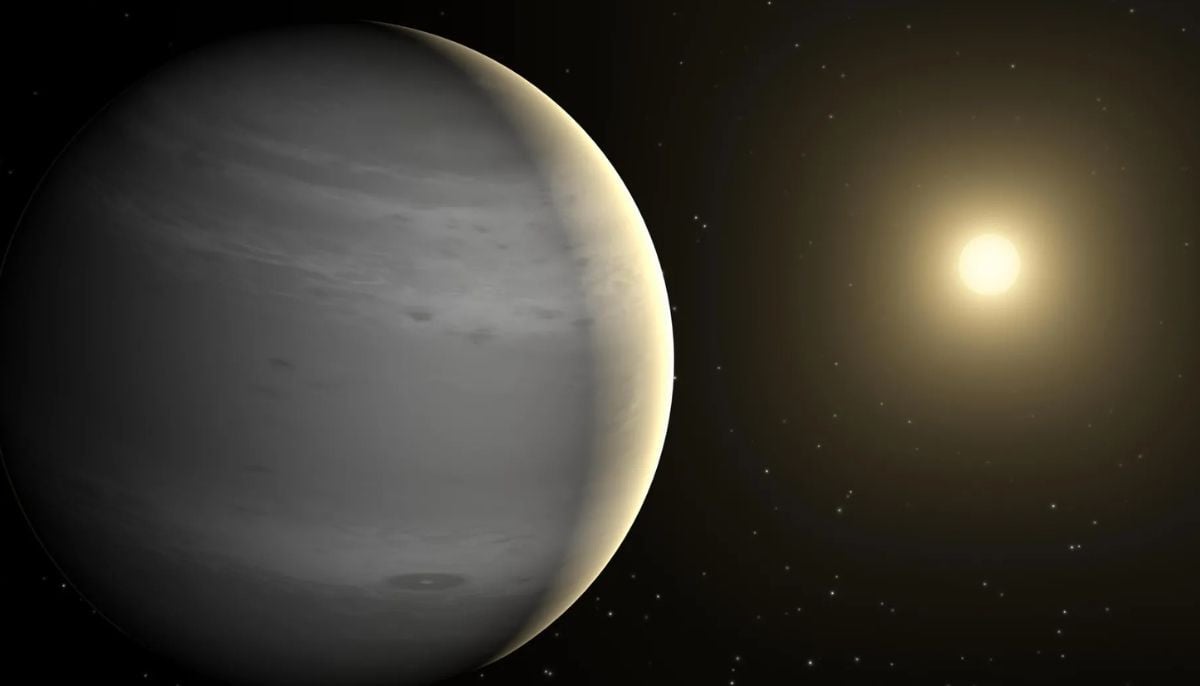
In a recent breakthrough, astronomers have discovered a rare giant exoplanet, showing closer similarity with Earth.
Known as TOI-199b, the Saturn sized planet possesses temperatures closer to Earth.
The temperate planet is located over 330 light-years away. With an estimated temperature of roughly 175°F, it sits in a middle ground between the scorching "hot Jupiters" and the freezing gas giants of our own solar system.
The study, led by scientists from Penn State and NASA's Jet Propulsion Laboratory (JPL) at the California Institute of Technology, was published in the Astronomical Journal.
"Since the first exoplanet was discovered in 1992 by a team that included Aleksander Wolszczan at Penn State, astronomers have found thousands of exoplanets. But only a few giant, temperate exoplanets are known and this is the first time that we have been able to study the atmosphere of one of them in detail,” Renyu Hu, associate professor of astronomy and astrophysics in the Penn State Eberly College of Science and leader of the research team said.
The study also confirmed the presence of methane in the planet's atmosphere, confirming the existing theoretical models for temperate gas giants.
The analysis also provided hints of ammonia and carbon dioxide. Future observations are needed to establish the relative abundance of these gases.
"With additional observations of this planet, we could establish the relative abundance of these various gases in its atmosphere," Hu confirmed.
The success of this study provides a framework for future research, helping researchers determine if TOI-199b has unique characteristics or if these traits are common among other temperate giants.






-
 US finally confirms weapons in orbit: What it means for space warfare
 -
 How China's FAST telescope is mapping the cosmic gas behind star birth
 -
 Did Sun eat super-Earth? New study says maybe
 -
 Did Sun swallow a super-Earth? Scientists search for its ‘fingerprints’
 -
 Blue Origin sets sights on Mars with new NASA network
 -
 NASA, IBM launch open-source lunar foundation AI model to help map ice, craters on moon
 -
 Bacteria can remember without brain, new study finds
 -
 Fast radio bursts may unlock secrets of dark matter, energy and neutrinos