Did NASA just uncover evidence of ancient life on Mars? Key discoveries explained
Nasa’s Perseverance highlights the presence of carbon in rocks from stream flows that flowed billions of years ago
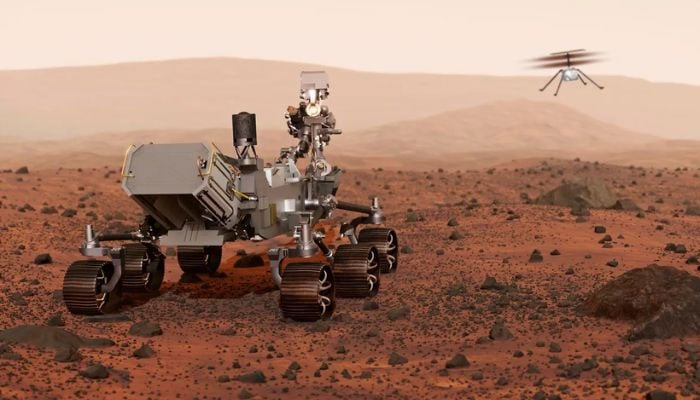
Nasa’s Perseverance has achieved a major breakthrough in detecting complex carbon molecules in Martian rocks that are already in the limelight for showing signs of ancient microbial life.
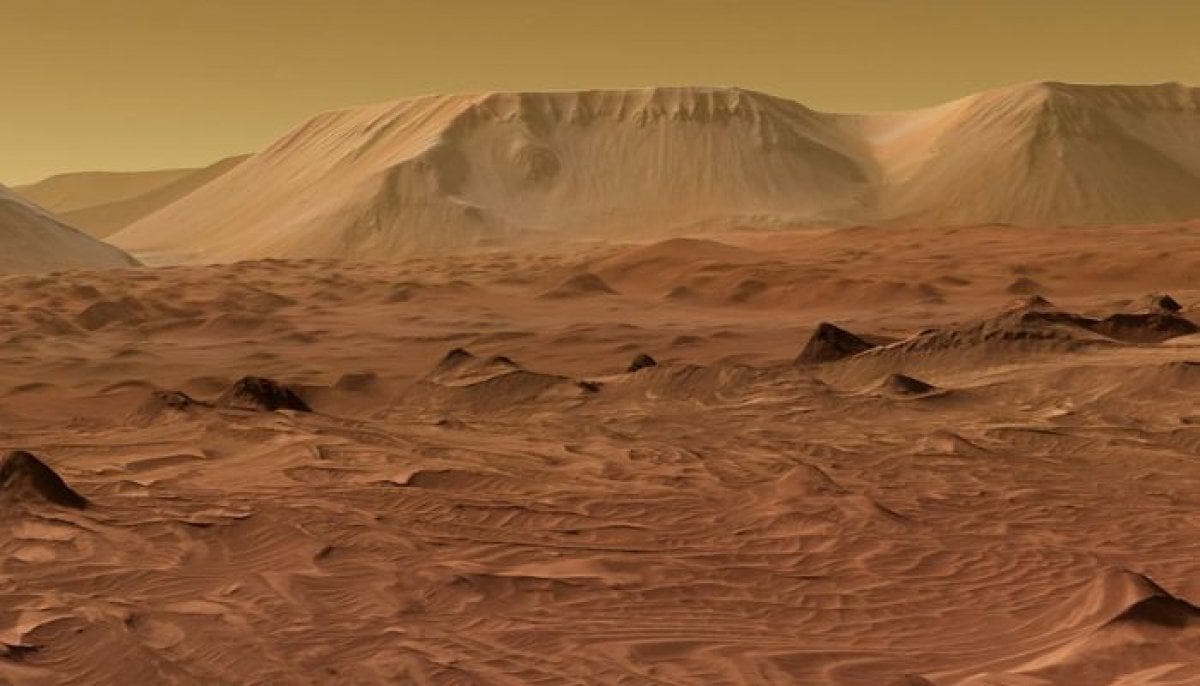
In line with measurements taken by the rover’s Sherloc instrument, Perseverance detected organic carbon in mudstones from the Bright Angel outcrop as it trundled along Neretva Vallis-a dried-up river that carried water into the planet’s Jezero crater billions of years ago.
In this connection, Dr Ashley at the Planetary Science Institution said: “It may originate from biological sources such as fossilized organic matter found in microbial mats and coal but could also form in reactions between rocks and water or arrive on impacting meteorites.”
Discussing the latest work achievements, Dr Ashley Murphy at the Planetary Science Institute in Arizona said that she and her colleagues detected complex carbon after shining Sherloc’s ultraviolet laser at the mysterious rocks and measuring the scattered light.
The intriguing discovery means NASA rovers may have now found carbonaceous mudstone more than 2,000 miles apart on Mars. The authors write in Science Advances: “It indicates that the habitability of Mars, and the availability of organics, may have been widespread across the planet billions of years ago”.
According to an organic geochemist at Imperial College London, macromolecular carbon is a significant component of both fossilized biological carbon on Earth and abiotic carbon in the solar system.
“These treasure troves of information are puzzles that need to be solved,” he said.






-
 US finally confirms weapons in orbit: What it means for space warfare
 -
 How China's FAST telescope is mapping the cosmic gas behind star birth
 -
 Did Sun eat super-Earth? New study says maybe
 -
 Did Sun swallow a super-Earth? Scientists search for its ‘fingerprints’
 -
 Blue Origin sets sights on Mars with new NASA network
 -
 NASA, IBM launch open-source lunar foundation AI model to help map ice, craters on moon
 -
 Bacteria can remember without brain, new study finds
 -
 Fast radio bursts may unlock secrets of dark matter, energy and neutrinos