Scientists discover tiny Antarctic sea creature that could help fight melanoma
Antarctic organisms naturally produce toxins to deter predators, holding key to treat aggressive skin cancer
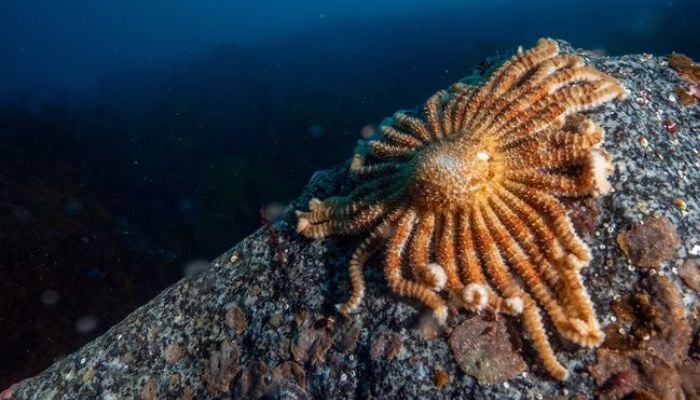
Scientists in a recent breakthrough have discovered a tiny Antarctic sea creature that could help in fighting against melanoma, the deadliest form of skin cancer.
Researchers at a Florida University have identified that bacterial toxins produced by ascidians (sea squirts) found in icy waters of Antarctica show promising remedy for skin cancer.
A team from the University of South Florida (USF) collected these marine invertebrates during a 6-week expedition to remote Antarctic regions.
Brian Baker, professor of chemistry at USF, said these organisms naturally produce toxins to deter predators. The research team is working to "repurpose" these toxins for medical use.
The researchers have conducted an experimental trial on mice and it has killed "melanoma cells in mice,” thereby showing promising opportunity for human-based trials.
“The good news is it didn’t kill the mice. It did kill their cancer, so we know it has the physiological properties to act like a drug. We need grams of material to do a bigger study in mice, perhaps go into other animal models, and if we can prove the safety, we can actually start some human trials,” Baker said.
However, it would take a long time to produce a safe and effective anti-melanoma drug for humans to use and it would require a “succession of strictly regulated and ever-expanding trials even after a drug was formulated.”
“You need hundreds of milligrams to grams of this metabolite, and from a basketball size collection of ascidians we might get one-thousandth of that,” the lead author said.
“Obviously we cannot collect 1,000 basketball quantities from the Antarctic, that would destroy the ecology, so one of the things we have to do is figure out how to make this stuff in the lab.”
The melanoma discovery is a “sort of a career pinnacle”.
“Killing cancer cells in a petri dish is one thing, but going beyond that is much harder, and the fact that we’ve cleared some of those higher hurdles is really exciting for me. Now we’ve got to make the next hurdle,” he added.


-
 OpenAI agents uncover brain disease leads: Here’s how
 -
 AI tool can now predict cancer survival by a single patient selfie: Find out how
 -
 Scientists identify a new type of depression affecting 1 in 4 patients
 -
 Everything to know about US FDA’s new guidance on apps used with prescription drugs
 -
 ‘Immortal’ jellyfish could hold clues to slowing human ageing
 -
 Ebola crisis worsens in DR Congo as virus reaches eighth province with over 4,500 dead
 -
 Study finds eating blueberries every day can surprisingly boost your mood
 -
 Eli Lilly’s Foundayo weight-loss pill gets European approval recommendation
-
 What is BPC-157? Trump administration considers easing rules on popular peptide injections
 -
West Nile virus: Europe reports 141 deaths as human cases rise in 2026
-
Health Canada reviewing new mRNA flu vaccine that could prevent more hospitalisations
-
Scientists discover hidden drainage route at the back of the eye