SpaceX Starship launch delayed again: Here’s what went wrong
Starship rocket was set to take off from its launchpad in southern Texas on May 21, 2026
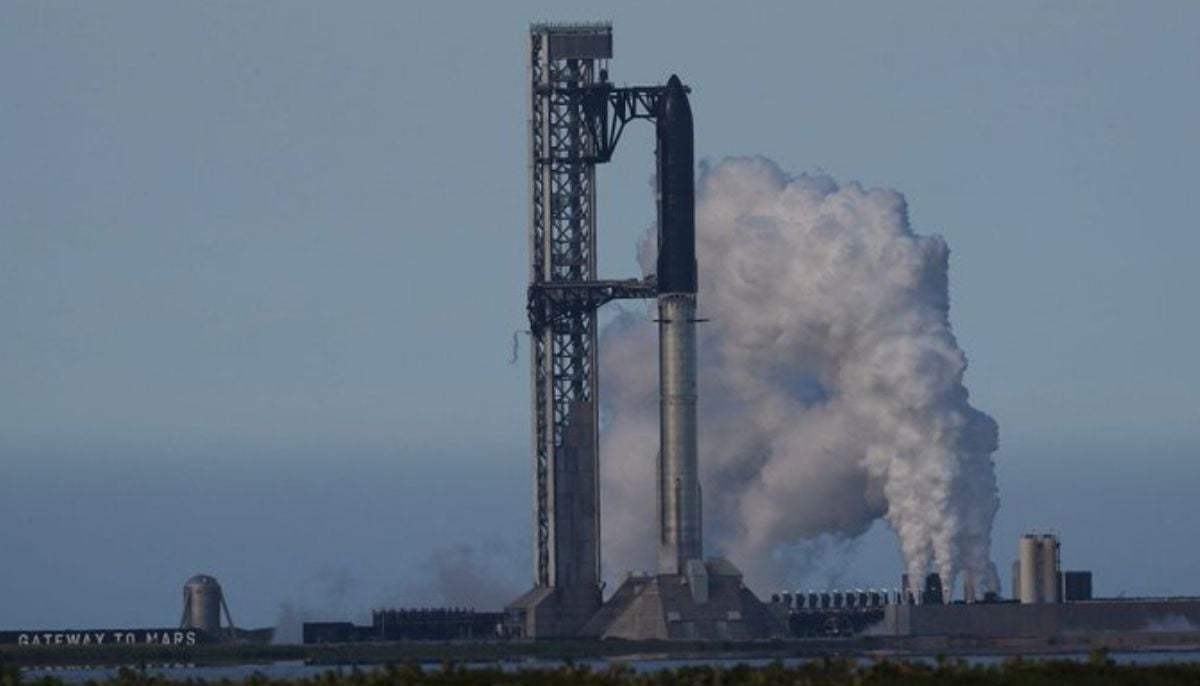
Elon Musk’s aerospace company has once delayed the long-awaited launch of its upgraded Version 3 of Starship, scheduled on Thursday.
The next-generation Starship rocket was set to take off from its launchpad in southern Texas on May 21, 2026, from Starbase, Texas. The launch window opened at 6:30 p.m. EDT (10:30 p.m. GMT).
But the last-minute technical glitch postponed the debut flight of its upgraded system.
The issue was found in a hydraulic pin on the launch tower that did not retract properly, as announced by the SpaceX CEO Elon Musk on X.
The company’s spokesperson also explained the issue faced by this massive 408-foot-tall rocket.
“New rocket, new pad. We’re learning a lot about these systems as we execute them for the first time and we’re not able to troubleshoot all of these issues in the final seconds to get to launch.”
"If that can be fixed tonight, there will be another launch attempt tomorrow," Musk said of the faulty arm.
According to the new timeline, SpaceX said it will launch Starship during a 90-minute launch window which opens at 5:30 p.m. Central Time (2230 GMT) on Friday.
Ahead of Thursday’s launch, Musk managed expectations regarding a potential failure by highlighting the "large pipeline of V3 ships and boosters" currently in production.
He noted that any setback would likely delay the cadence of future Starship test flights by no more than a month.
The highly-awaiting test flight comes a day after SpaceX filed with US financial regulators to go public, which will be a record-breaking IPO ranging between $1.5 trillion and $1.75 trillion.
To develop this fully reusable Starship, SpaceX spent more than $15 billion. The upgraded system lies at the heart of Musk's ambitions ranging from deep-space exploration to orbital data centers.
The launch, if successful, will mark the vehicle’s 12th test flight and its first in seven months. The test flight is also important for pursuing NASA's Artemis mission where Starship is expected to serve as the Human Landing System for future Moon missions.


-
 UAE builds asteroid lander designed to crash into its target
 -
 SpaceX Falcon 9 launches 21 military satellites into orbit
 -
 Could a newly engineered microbe help humanity survive on Mars?
 -
 Astronomers find most distant fast radio burst ever recorded
 -
 Draconid meteor shower tonight: Best time and places to see it
 -
 ‘A dream for 50 years’: Why world’s first nuclear clock could change timekeeping
 -
 NASA Curiosity captures strange ‘wind-carved’ Mars landscape in dawn image
 -
 NASA's Crew-12 Dragon begins return trip from space station