Asteroid 2026 JH2 to pass extremely close to Earth on May 18: Should we be concerned?
2026 JHA is 20 meters in diameter which is nearly the size of Chicago’s Cloud Gate
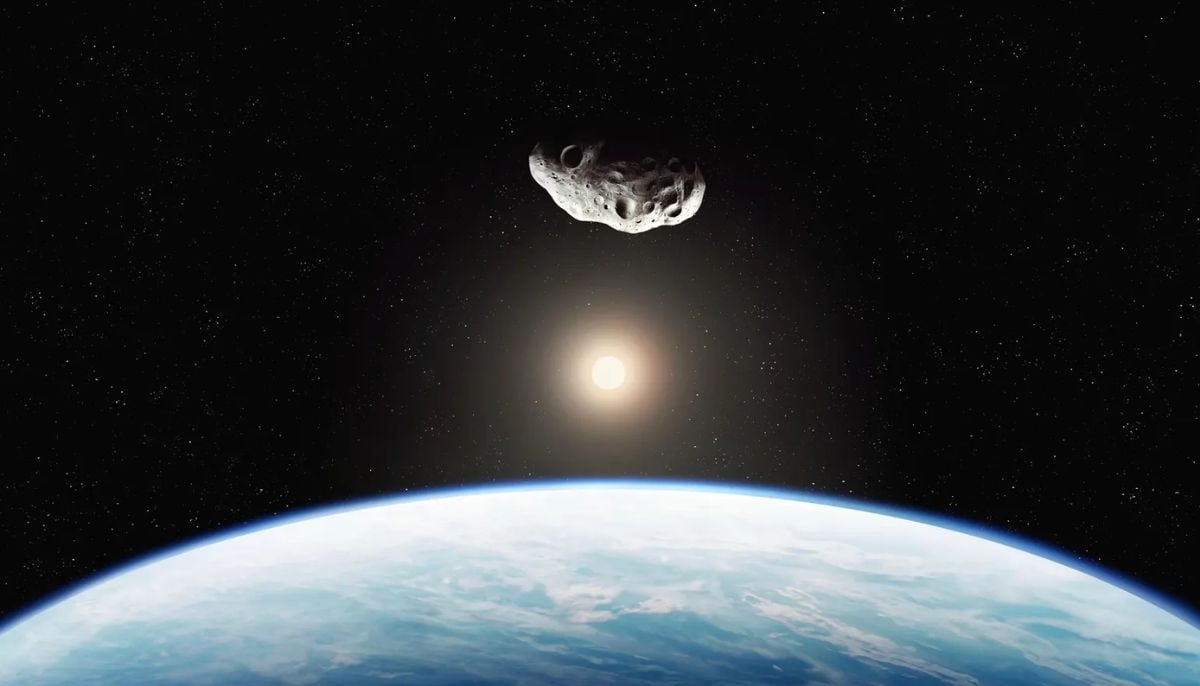
A recently discovered asteroid, 2026 JH2, will make a very close flyby of Earth, four times closer to it this week on May, 18.
The asteroid will pass within a minimum distance of 57,000 miles of Earth, closer than some high-orbit satellites and even much closer than the moon.
Talking about its size, 2026 JHA is 20 meters in diameter which is nearly the size of Chicago’s Cloud Gate.
The Virtual Telescope Project will livestream the event on Monday, May 18, starting at 3:45 p.m. EDT. But some space enthusiasts can see the asteroid by using a telescope.
Through livestreaming, the viewers around the world can watch the asteroid only hours before its closest approach, when it is expected to reach peak brightness.
The asteroid was discovered by astronomers at the Mount Lemmon Survey in Tucson, Arizona and Farpoint Observatory in Eskridge, Kansas. Later it was added to the Minor Planet Center’s database.
Having been classified as an Apollo-class asteroid, 2026 JH2 belongs to a group of space rocks whose orbits intersect Earth's trajectory around the sun.
The asteroid travels along an elongated path. The path stretches from the Earth neighborhood toward the outer solar system. It is not quite far from Jupiter’s orbit.
Astronomers have constantly been watching 2026 JH2 due to its proximity to Earth. Despite its closest passing, scientists highlight that the asteroid poses no risk of impacting Earth.
Such closest flybys are not uncommon. Such incidents happen every year, for instance, in 2025 a smaller asteroid 2025 TF passed within just 260 miles of Earth’s surface.


-
 UAE builds asteroid lander designed to crash into its target
 -
 SpaceX Falcon 9 launches 21 military satellites into orbit
 -
 Could a newly engineered microbe help humanity survive on Mars?
 -
 Astronomers find most distant fast radio burst ever recorded
 -
 Draconid meteor shower tonight: Best time and places to see it
 -
 ‘A dream for 50 years’: Why world’s first nuclear clock could change timekeeping
 -
 NASA Curiosity captures strange ‘wind-carved’ Mars landscape in dawn image
 -
 NASA's Crew-12 Dragon begins return trip from space station