Emperor penguins on verge of extinction: ‘A grim story shaped by climate change’
Currently, the emperor penguin population is estimated at 595,000 adults
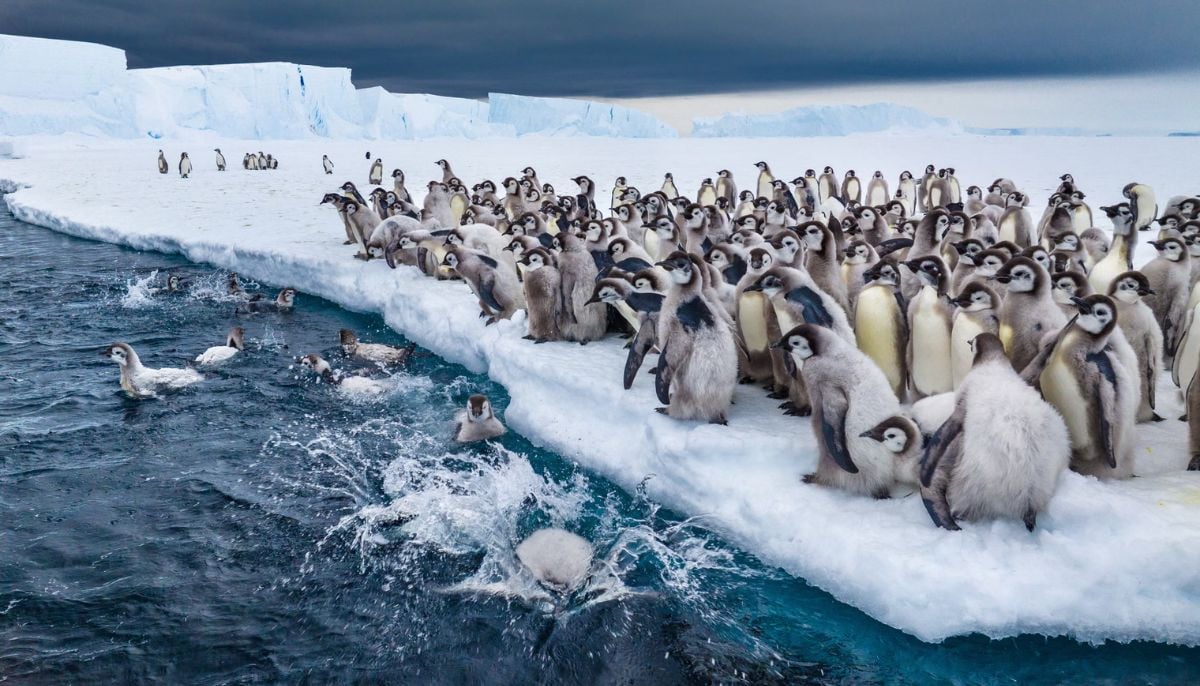
The climate change crisis is pushing emperor penguins towards the life-threatening danger of extinction.
According to the International Union for Conservation of Nature (IUCN), the mass drowning of emperor penguin chicks due to melting of ice will turn the species into extinct ones.
For nine months of the year, emperor penguins depend on “fast ice” that is anchored to shoreline. The ice also acts as a breeding ground for their chicks, providing them a safe place to be hatched and grown until they develop their waterproof plumage.
For a decade, Antarctica has witnessed a massive shrinkage in ice mass due to global heating.
Unfortunately, global warming driven by climate change is pushing these penguin colonies closer to death. When the melted ice breaks, entire colonies can fall into the ocean.
The chicks without waterproof feathers are more prone to this disaster. Those who do not drown immediately often succumb to hypothermia, freezing to death once they emerge from the water with waterlogged feathers.
Emperor penguin colonies at risk: Future projections
For instance, in 2022 four of the five known emperor penguin breeding sites in the Bellingshuasen collapsed, leading to the death of thousands of chicks. Similarly, in 2016, another colony in Weddell Sea suffered the same grim and distressing fate.
Given the frequency of ice melting events, the IUCN assessment has projected that the population will halve by 2080s. Currently, the population is estimated at 595,000 adults, having already fallen by 10 percent between 2009 and 2018.
Now, the largest penguin species, the emperors have moved from “near threatened” to “endangered” in the new IUCN analysis.
“The emperor penguin’s move to extinction is a stark warning: climate change is accelerating the extinction crisis before our eyes,” said Martin Harper, the chief executive of BirdLife International.
What needs to be done?
According to experts and environmentalists, the first and foremost step is to decarbonise the economies responsible for global heating.
Achieving net-zero carbon emissions is the singular physical requirement for stabilizing global temperatures and preventing further atmospheric warming.
WWF is also making efforts to put emperor penguins in the list of “specially protected species” at the Antarctica treaty meeting in May in Japan. The move will protect penguins’ habitat from other pressures, such as shipping and tourism.


-
 ISS Command changes hands in emotional ceremony
 -
 Moon water acts nothing like it does on Earth, study finds
 -
 Hawaii’s Hōlei sea arch collapses after centuries on Big Island: What happened
 -
 Solar system may have a much shorter lifespan than we thought
 -
 Singapore builds world’s ultra-precise clock outperforming US, China
 -
 NASA expands Moon base research with three new investigations
 -
 Are Europe's data centres hiding their water use?
 -
 SpaceX set to send Google AI chips into space for data centers