
Killing of two key terrorists weakens TTP, exposes rift in outfit
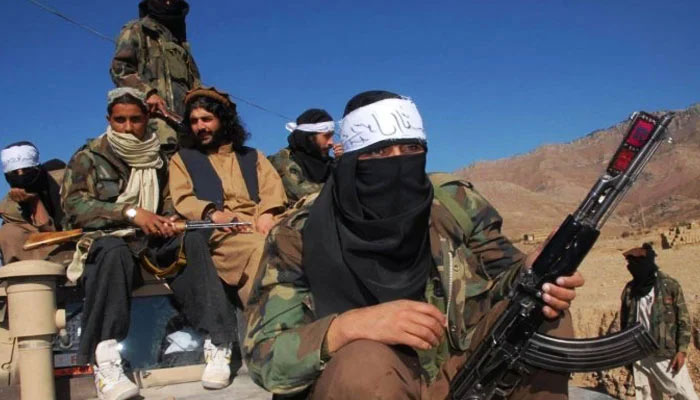
LAHORE : The banned Tehreek-e-Taliban Pakistan (TTP) is experiencing a significant weakening in its operational capabilities following the deaths of two prominent commanders, Abdul Manan, known as Hakeemullah, and Talha Swati.
These recent losses underscore the internal strife and fragmentation within the militant organisation, offering a potential opportunity for regional security forces to counter the threat posed by the TTP more effectively. Abdul Manan, also known as Hakeemullah, was killed in the Chaghasarai area of Asadabad district in Afghanistan’s Kunar province. His death marks a substantial blow to the TTP, disrupting its command structure and weakening its operations. Hakeemullah was closely associated with the TTP Malakand Shura and served as an aide to Wali, orchestrating terrorist activities in Bajaur. His criminal activities included targeted assassinations, landmine explosions, attacks on security checkpoints, and extortion.
A security expert explained that Hakeemullah's strategies involved eliminating individuals deemed threats to the TTP, planting and detonating landmines to spread fear, and directly assaulting military checkpoints to undermine security operations. His methods of extortion were used to fund the group's activities. The loss of such a crucial leader impacts the TTP's ability to plan and execute coordinated attacks, significantly reducing their operational effectiveness. The death of Talha Swati, another significant TTP commander, further exacerbates the group's weakening. Swati, a member of the Fazlullah group from Swat, was killed under mysterious circumstances in broad daylight after Friday prayers in Kunar province last April. Serving as an intelligence chief in the Barikot area, Swati was involved in reporting on the activities of rival militant factions like Jammatul Ahrar to the South District Taliban and the Islamic State Khorasan Province (ISKP), he added.
Another security expert said that the exact circumstances of Swati’s death remain unclear, with reports suggesting he may have been targeted by ISKP or fallen victim to an internal dispute within the TTP. Following his death, members of the Swati group demanded retribution, indicating deeper rifts within the militant landscape in Afghanistan. These internal conflicts further destabilise the TTP, making it harder for the organisation to maintain a unified front.
The recent deaths of Hakeemullah and Swati highlight the volatile and fragmented nature of militant leadership within the TTP, he added.
Another security expert pointed out that these fatalities could lead to further fragmentation and weakening of the TTP and other militant factions.
The disruption in leadership and the loss of experienced commanders like Hakeemullah and Swati are likely to impact the TTP's ability to coordinate and execute attacks. These developments have broader implications for regional stability. Weakened militant groups may struggle to maintain control and influence, potentially leading to reduced violence and improved security in affected areas. The internal conflicts within the TTP may provide an opening for regional security forces to enhance their counter-terrorism efforts, contributing to the stabilisation of the region. The deaths of Abdul Manan and Talha Swati signify a critical juncture for the TTP. As the organisation grapples with the loss of key leaders and internal strife, its operational capabilities are diminishing. This weakening of the TTP offers a glimmer of hope for peace and stability in the region, presenting an opportunity for security forces to intensify their efforts against the militant group. The ongoing fragmentation within the TTP underscores the challenges faced by militant organisations in maintaining cohesion and effectiveness amidst internal and external pressures. TTP did many terrorists activities in Pakistan as well, a security expert said.
Pakistan's intelligence agencies, employ a range of professional capabilities and strategic measures to effectively combat terrorist organisations like the Tehrik-i-Taliban Pakistan (TTP). Pakistan's intelligence agencies possess a range of professional capabilities and employ a comprehensive strategy to defeat terrorists, including groups like the TTP, he added.
By leveraging human intelligence, advanced technology, specialised operations, and international cooperation, these agencies continue to play a critical role in safeguarding national security and countering the menace of terrorism. Adaptability and community engagement remain key pillars in their ongoing efforts to maintain stability and security within the region, the expert said.


