
Pakistan’s shadow economy exceeds $450 billion, study shows
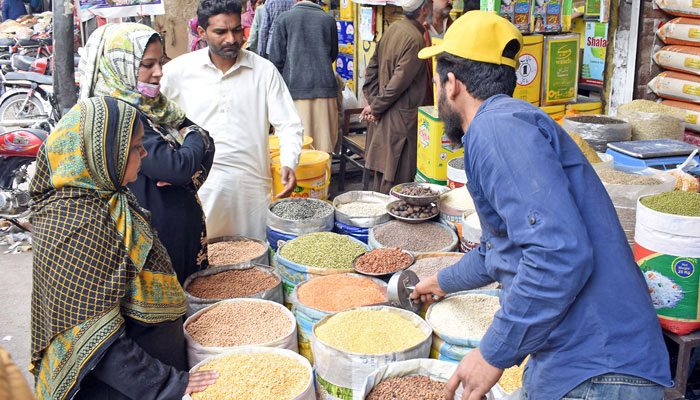
LAHORE: Pakistan's informal economy is valued at around $457 billion, equivalent to 40 percent of the country's gross domestic product, with 72.5 percent of the labor force outside agriculture employed by the informal sector, according to a joint study by the Small and Medium Enterprises Development Authority (SMEDA) and the International Labour Organization (ILO).
The report, “Mapping of Barriers and Opportunities to Reduce the Informality of Enterprises in Pakistan,” was launched at a consultative workshop held to lay down the national action plan for the formalization of SMEs.
The workshop was addressed by top officials, including the federal additional secretary of Industries and Production, Asad Islam Mahni; CEO of SMEDA, Socrat Aman Rana; and Judith Van Doorn, Enterprise Specialist of ILO.
"A conservative estimate shows that the total size of the informal economy in Pakistan is around $457 billion, whereas around 72.5 percent of the labor force, outside of agriculture, is employed by the informal sector, also covering a market share of over 40 percent in the GDP," Mahni said.
He said the Ministry of Industries & Production is in the process of developing a National Industrial Policy to provide a comprehensive roadmap for re-industrialization in Pakistan, considering the regulatory and taxation regimes, as well as incentivizing investments in key sectors of the economy.
"Our focus is also on integrating SMEs into local, regional, and global value chains," he added.Rana said there are an estimated 5.24 million SMEs driving the economic engine. "Exports of the sector are estimated at 30 percent. In terms of employment, 70 percent of the non-agricultural labor force is associated with the sector. The majority of SMEs, around 53 percent, operate in wholesale and retail trade, hotels, and restaurants, followed by community, social, and personal services at 22 percent, and manufacturing at 20 percent," he added.
Rana stated that the study on barriers to the formalization of enterprises and the consultative workshop to develop a National Action Plan for SME Formalization is a crucial first step toward recognizing that informality exists in the economy and that supporting SME formalization can have a significant impact on key development indicators.
He informed that despite being the 43rd largest economy globally in terms of GDP, a significant portion of Pakistan's economy remains undocumented, resulting in a low tax contribution, with the tax-to-GDP ratio never exceeding 13 percent, clocking in at 10.2 percent, only better than Laos PDR, according to a recent OECD-commissioned study on the Asia & Pacific region.
Rana further said that SMEDA, over the years, has been tirelessly engaged in supporting the growth of SMEs in Pakistan."Its services, ranging from over-the-counter business tools and resources, such as pre-feasibility studies, business guides, templates, to its physical footprint through common facility centers established in key SME clusters and research and advocacy with policymakers, continue to gather strength."He said the study provides a basis for designing a comprehensive program to support the transition of informal enterprises towards formality.
"SMEDA is committed to strengthening collaboration with our international development partners, public sector organizations, SMEs, and other stakeholders, in order to build an atmosphere that supports the growth of enterprises, makes a significant economic contribution, encourages innovation and entrepreneurship, and contributes towards achieving the Sustainable Development Goals (SDGs)."
Doorn of ILO highlighted the multi-pronged approach of ILO business formalization, emphasizing how it can be made easier, more attractive, and beneficial for both businesses and workers. She also pointed out that the formalization process in Pakistan would promote the simplification of business procedures, productivity, and development of SMEs.


