
Economic empowerment
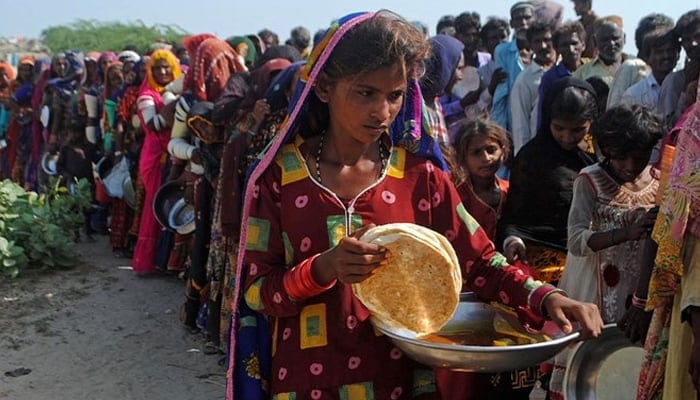
LAHORE: We understate poverty and overlook the misery that people are passing through. Not that highlighting the actual plight of the poor would reduce their gloom, but actual statistics help planners allocate resources to redress the issue.
The planners place people they rate above poverty as economically included. Poverty is usually expressed in monetary terms, such as whether people have enough money to meet their basic needs. It’s frequently calculated by looking at income, consumption, or both. However, the criteria in Pakistan are based on their ability to fulfill their basic subsistence needs. Moreover, it also includes those living above poverty who are productive and fully empowered to make choices about their lives.
Economic inclusion is a concept that has always been tied to the reduction of poverty. Officially, economic inclusion happens when someone moves out of poverty, but it is not as simple as that.
Economic inclusion also means moving toward adequate health and well-being, education, affordable essentials, and sustainable communities. The greatest victims of poverty are women and children. Poor children are deprived of essential food ingredients necessary for their physical and mental development from infancy to childhood. Their growth remains stunted. Pakistan has the highest number of stunted and wasted children. It has been established that the poverty rate among women is highest.
This is because, as household managers, women make efforts to feed the men and children better. Women spend more of their lives in poor health and with degrees of disability compared with men. Recent studies have shown that 25 percent more women live in poverty than men.
There is a thin line between those living in poverty and those living just above it. People living in extreme poverty are deprived of basic human needs, including quality food, safe drinking water, sanitation facilities, healthcare, and shelter.
However, that does not mean that those living just above the poverty line have guaranteed access to the most basic physiological human needs. Unfortunately, our planners have not made concerted efforts to reduce poverty in the last 15 years. They allocate hundreds of billions to the Benazir Income Support Program, under which a small monthly amount is distributed to supplement the poor's needs.
The size and beneficiaries of the BISP have increased every year in the last one and a half decades. This monetary support is not a replica for pro-poor efforts that require job creation and robust growth.
The efforts of private sector philanthropic activities are mostly similar to BISP. In fact, the charities granted are lopsided because there is no reliable data available in BISP. The private sector should join to provide solar energy to communities, install pure water plants in slums, offer free healthcare facilities, and establish small, quality free community schools.
The amount the private sector spends yearly on charity is enough to sustain these activities, but proper organization for execution is needed. Such efforts could guarantee a set of human needs that go beyond basic subsistence, including good nutrition, decent housing, adequate healthcare, quality education, energy, transportation, and more.
According to McKinsey, once this basic sufficiency is reached, people can begin to save money, minimizing the risk of slipping back into poverty. This starts to look like not just economic inclusion—but economic empowerment.
Development economist Lant Pritchett proposes using the high-income poverty threshold universally. He argues that there is a basic unfairness in setting lower living standards in some countries and higher standards in others.







-
 Royal Family's Approach To Deal With Andrew Finally Revealed
 -
 Super Bowl Weekend Deals Blow To 'Melania' Documentary's Box Office
 -
 Meghan Markle Shares Glitzy Clips From Fifteen Percent Pledge Gala
 -
 Melissa Jon Hart Explains Rare Reason Behind Not Revisting Old Roles
 -
 Meghan Markle Eyeing On ‘Queen’ As Ultimate Goal
 -
 Japan Elects Takaichi As First Woman Prime Minister After Sweeping Vote
 -
 Kate Middleton Insists She Would Never Undermine Queen Camilla
 -
 King Charles 'terrified' Andrew's Scandal Will End His Reign
 -
 Winter Olympics 2026: Lindsey Vonn’s Olympic Comeback Ends In Devastating Downhill Crash
 -
 Adrien Brody Opens Up About His Football Fandom Amid '2026 Super Bowl'
 -
 Barbra Streisand's Obsession With Cloning Revealed
 -
 What Did Olivia Colman Tell Her Husband About Her Gender?
 -
 'We Were Deceived': Noam Chomsky's Wife Regrets Epstein Association
 -
 Patriots' WAGs Slam Cardi B Amid Plans For Super Bowl Party: She Is 'attention-seeker'
 -
 Martha Stewart On Surviving Rigorous Times Amid Upcoming Memoir Release
 -
 Prince Harry Seen As Crucial To Monarchy’s Future Amid Andrew, Fergie Scandal