
Call for keeping interest rate high to maintain price stability
The State Bank of Pakistan has continued to increase the policy rate
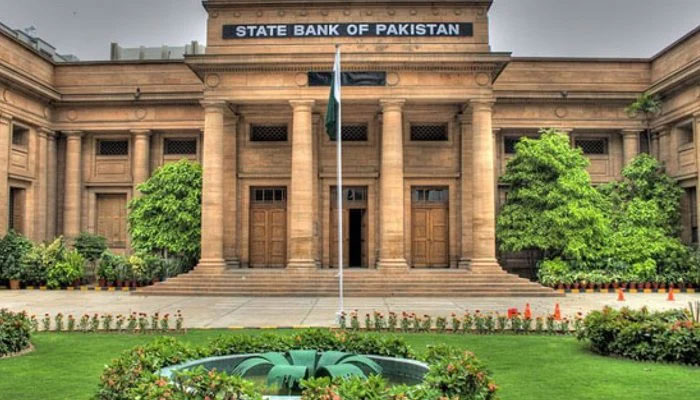
ISLAMABAD: The Economic Advisory Group (EAG) of PRIME, a research institute, on Saturday said that there was a need to keep the interest rate high in order to keep price stability.
“Given the risks that Pakistan faces with respect to external stability, and at a time when global central banks have expressed their willingness to keep rates high for longer, it is important to strengthen the Central Bank’s independence, and to allow it to work on its primary objective, as defined by the SBP Act, to achieve and maintain domestic price stability,” it said. The Monetary Policy Committee (MPC) of the State Bank of Pakistan (SBP) has its next regularly scheduled meeting on Monday, March 18, 2024. The MPC meeting is always eagerly watched for its interest rate decisions which have direct and pervasive implications for all economic activity in the country. In its last meeting on January 29, the MPC maintained the policy rate at 22 percent. The MPC stated: “On balance, the Committee viewed that the real interest rate remained significantly positive on 12-month forward looking basis.”
The research institute said that at a time when inflation continues to remain high, and the burden of external debt servicing over the next 12 months has deteriorated further, maintaining a positive real rate is important for preventing another round of economic instability. “This is especially important when borrowing costs for the government have already come down and are lower than the policy rate. Thus, in effect, the real rate on forward looking basis may not be positive, contrary to the SBP’s previous assessment.”
As the inflation has taken an upward trajectory in Pakistan since mid-2021, the SBP has continued to increase the policy rate. The current cycle started in earnest in April 2022 when the rate was raised by 2.5 percent in one step from 9.75 to 12.25 percent. There were regular rate hikes subsequently until a peak of 22 percent was reached in June 2023. Since then, it has been maintained at this level. The general consensus is that rates have peaked for the foreseeable future.
It said that the caution must be exercised by the SBP, adding that since the inflation depends, in part, on what households and firms expect inflation to be in future, central banks have to take tough measures on a sustained basis to be credible in their fight against the inflation. The January MPC lapsed into unwarranted optimism by saying that the State Bank’s continued tight monetary policy stance, along with continued fiscal consolidation and timely realisation of planned external inflows, will help achieve the inflation target of 5-7 percent by September 2025.
This is a target that has been mentioned repeatedly in the past MPCs but that has eluded the country, it said, adding that the bond markets concur with this assessment, pricing in a figure much higher than the State Bank’s inflation projection. The SBP held a Pakistan Investment Bond (PIB) auction on March 13, 2024. The government issued three-year PIBs at 16.78 percent, five-year PIBs at 15.4899 percent and 10-year PIBs at 14.35 percent.
In recent days, reports and articles in the media have made the case for lower rates. These demands typically come from the business community which includes potential borrowers who would benefit from lower rates. In addition, the government itself has become the largest borrower in the economy, and also has a vested interest in lower rates.
It said that while lower interest rates would allow both the government and business community to increase spending in the short term, they would result in greater demand in the economy, and consequently, a larger current account deficit. At a time when the government is struggling to arrange financing for meeting its external obligations, any additional pressure on the external account can prove destabilising, causing greater harm to the country in the medium term, it added.
The research institute said that the governments always face a trade-off between short-term expediency and long-term discipline, adding that even the most mature political systems have various constraints and compulsions that tend to make them lose sight of the need for discipline sooner or later. “It is this time inconsistency problem that makes it important to strengthen the credibility and independence of the Central Bank to take care of its own mandate, including the monetary policy.”







-
 Kate Middleton Proves She's True 'children's Princess' With THIS Move
 -
 Paul Anka Reveals How He Raised Son Ethan Differently From His Daughters
 -
 'A Very Special Visitor' Meets Queen Camilla At Clarence House
 -
 Jodie Turner Smith Shares One Strict Rule She Follows As A Mom
 -
 Hailey Bieber Reveals KEY To Balancing Motherhood With Career
 -
 Photo Of Jay-Z, Other Prominent Figures With Jeffrey Epstein Proven To Be Fake
 -
 Hillary Clinton's Munich Train Video Sparks Conspiracy Theories
 -
 Fans Slam Talk Show Host For 'cringe' Behavior In Chris Hemsworth Interview
 -
 Woman Jailed Over False 'crime In Space' Claim Against NASA Astronaut
 -
 James Van Der Beek’s Close Pal Reveals Family's Dire Need Of Donations
 -
 Prince William And Harry's Cousins Attend 'Wuthering Heights' Event
 -
 Hailey Bieber Turns Heads Just Hours After Major Business Win
 -
 King Charles' Andrew Decision Labelled 'long Overdue'
 -
 Timothee Chalamet 'forever Indebted' To Fan Over Kind Gesture
 -
 Columbia University Sacks Staff Over Epstein Partner's ‘backdoor’ Admission
 -
 Ozzy Osbourne's Family Struggles Behind Closed Doors