
RDA scheme attracts $7.3bn in 40 months, eases forex pressure
KARACHI: Foreign currency inflows through Roshan Digital Account (RDA) reached $7.337 billion by the end of January 2024, data from the State Bank of Pakistan showed on Tuesday.
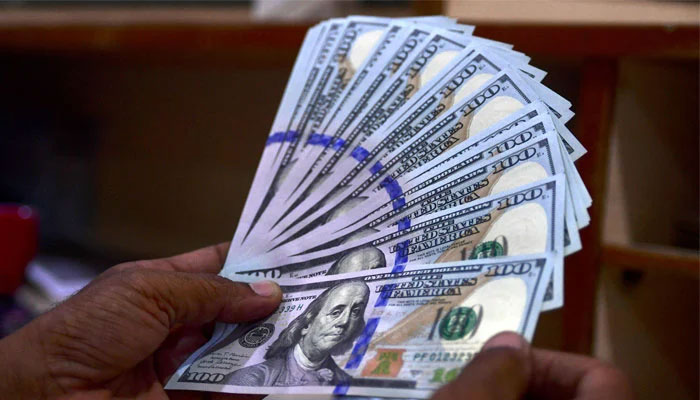
RDA inflows were $142 million in January, which was a decline from the month before when it performed better. These inflows came to a total of $160 million in December.
Since its launch in September 2020, the RDA initiative has become a noteworthy source of inflows for Pakistan, despite a monthly decline. This helps Pakistan's foreign exchange reserves, which are currently at $8 billion, not much more than two months' worth of essential imports, but it's still better than the $3.1 billion they were at just over a year ago.
Of the total amount received, $4.556 billion has been used locally and $1.550 billion has been repatriated. The SBP data showed that after this, the net repatriable liabilities stood at $1.231 billion.
Non-resident Pakistanis (NRPs) can use the RDA facility to remotely open accounts with specific Pakistani banks and conduct banking activities like money transfers, utility, education, and other service payments, as well as investments in Pakistan, through an online system.
Every RDA inflow and outflow is recorded in Pakistan's balance of payments statement, and it affects the foreign exchange reserves of the nation. The SBP data revealed that between September 2020 and January 2024, net investments through RDA totaled $830 million. $302 million was invested in conventional NPCs and $498 million went to Naya Pakistan Certificates (NPCs) (Islamic). $30 million was invested in the stock market. There were additional liabilities of $21 million. There was a $380 million account balance and $1.231 billion in net repatriable liabilities.
Pakistanis living abroad find it more appealing to invest in dollar-denominated NPCs since the yield on their US dollar investment is higher than that of holding their money in any foreign bank.
Amidst political turmoil following the contentious and inconclusive nationwide elections on February 8, international rating agencies have expressed concern regarding Pakistan's vulnerable external position.
The current International Monetary Fund's $3 billion loan programme expires next month, and getting a new, much larger one is regarded as the incoming administration's top priority. Though, the nation receives the IMF funding, a $1 billion bond payment in two months will severely deplete the country’s foreign reserves.
Analysts believe that, in light of Pakistan's low foreign exchange reserves relative to its significant and imminent external debt repayment obligations, it is vital to enter another IMF programme.







-
 'Mortified' Princess Eugenie, Beatrice Plan Interview To Finally Speak Truth In Sarah Ferguson, Andrew-Epstein Scandal
 -
 Lewis Hamilton Spent Years Trying To Catch Kim Kardashian's Attention?
 -
 Royal Strategy Revealed As King Charles, Prince William Issue Statements On Andrew Row
 -
 Inside Will Smith's Struggle To Revive His Career After Infamous Oscar Incident
 -
 What’s Coming Out Of Meghan Markle’s War Against Prince William? Inside People’s Unease
 -
 Australia Seeks Urgent Meeting With Roblox Over 'Disturbing' Content Complaints
 -
 Epstein Case: Ghislaine Maxwell Invokes Fifth, Refuses To Testify Before US Congress
 -
 Ferrari Luce: First Electric Sports Car Unveiled With Enzo V12 Revival
 -
 Chappell Roan Parts Ways With Wasserman Music Over CEO's Ties With Epstein
 -
 Andrew Mountbatten Windsor Publically Shamed After Brother And Nephew Change Decades Old Royal Rule
 -
 Jon Stewart On Bad Bunny's Super Bowl Performance: 'Killed It''
 -
 Savannah Guthrie Receives Massive Support From Reese Witherspoon, Jennifer Garner After Desperate Plea
 -
 Celebrities Take Sides As Brooklyn Beckham’s Feud With David, Victoria Heats Up
 -
 Prince Harry Reacts As Beatrice, Eugenie's Names Surface In Epstein Emails
 -
 Cyprus Joins European AI Race: What It Means For Greek LLMs And Regional Innovation
 -
 Amazon Soon To Launch 'AI Content' Marketplace, Says Report