
Women in the house
Women’s participation in political process is generally lower than men’s in most parts of world
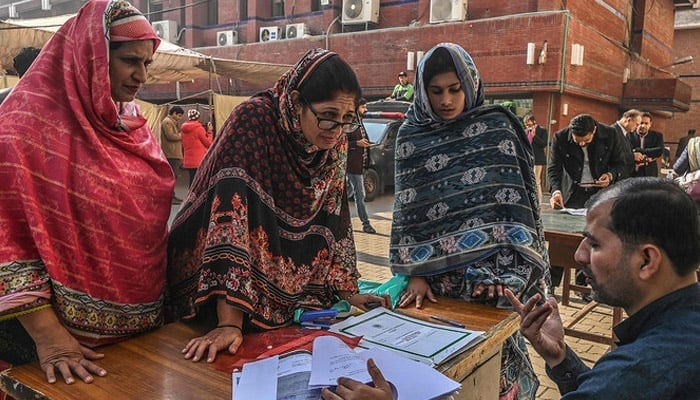
The long-awaited and controversy-marred elections were finally held on February 8. All eyes were on this important exercise, where over 120 million registered voters were supposed to participate. Although the voter turnout fell to 47.6 per cent (from the previous 52.1 per cent in 2018), there were some refreshing changes in voting patterns. At least eight women contesting general seats were able to get over 0.1 million votes, and PTI-backed independent candidate Aniqa Mehdi became the only woman to secure over 0.2 million votes. It is good to note that more women are coming forward and contesting general seats – not relying on general seats. Their campaigning also shows that they are interested in understanding the issues of their constituents and are willing to fight against other established mostly male candidates. At least 12 women successfully defeated their male rivals and grabbed a seat in the National Assembly. Women’s participation in the political process is generally lower than men’s in most parts of the world. But in Pakistan, women are rarely seen as an integral part of a constituency. Leaders know that if the head of the family (a man) is convinced, others in his family will follow suit. This time, however, things changed. Many girls also shared on social media that they and their elders chose different parties.
For years, men in Pakistan enjoyed the power of taking decisions on women-specific issues without the contribution of women’s voices. However, there has been a significant change in how women are treated in the political landscape over the last few years. During the election campaign, we saw most parties staying away from the character assassination of women candidates. It is also important to note that when women candidates come out to ask for votes, they inspire a number of women who show interest in participating in the electoral process. And their role does not remain limited to voting; they also follow up on how these women behave in parliament and what new laws they bring to make the country safer for women.
While this improvement is commendable, it is also important to understand that a woman’s entry into the National Assembly does not guarantee the fact that women’s voices will be heard. The voices of women at the grassroots level often remain ignored. That a certain position is filled by a woman does not mean that women across the country can expect any improvements in their current state. For the change to happen, women in politics also have to take a disruptive approach, confidently putting their demands forward. Women who have won the latest elections should pledge to raise their voices for all women.






-
 Alix Earle And Tom Brady’s Relationship Status Revealed After Cosy Super Bowl 2026 Outing
 -
 Why King Charles Has ‘no Choice’ Over Andrew Problem
 -
 Shamed Andrew Wants ‘grand Coffin’ Despite Tainting Nation
 -
 Keke Palmer Reveals How Motherhood Prepared Her For 'The Burbs' Role
 -
 King Charles Charms Crowds During Lancashire Tour
 -
 ‘Disgraced’ Andrew Still Has Power To Shake King Charles’ Reign: Expert
 -
 Why Prince William Ground Breaking Saudi Tour Is Important
 -
 AOC Blasts Jake Paul Over Bad Bunny Slight: 'He Makes You Look Small'
 -
 At Least 53 Dead After Migrant Boat Capsizes Off Libya
 -
 'God Of War' Announces Casting Major Key Role In Prime Video Show
 -
 Real Reason Prince William, Kate Broke Silence On Andrew Scandal Revealed
 -
 Drew Barrymore Responds To 'Charlie's Angels' Costar's Comments About Her
 -
 Shakira Slips Hard On Stage During Life Show
 -
 King Charles Speaks Out Over Andrew's Scandal: 'Stand Ready To Help Police'
 -
 Dax Shepard Recalls Horrifying Accident That Almost Killed Him
 -
 Logan Paul's Bodyguard Hits Fan On Super Bowl Day