
Embracing Quaid’s vision crucial for strong Pakistan
Islamabad:As the nation would observe the 147th birth anniversary of Pakistan’s founder Quaid-e-Azam Muhammad Ali Jinnah, on December 25, echoes of his visionary ideals resonate.
The call to uphold his principles of democracy, equality, and unity remains pertinent. Embracing his vision promises a path toward a genuine and democratic Pakistan, steering the nation through contemporary challenges with unwavering commitment.
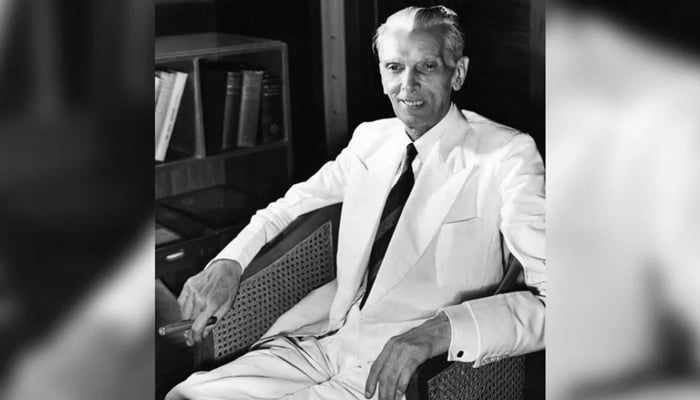
The journey towards Pakistan’s independence was nothing short of a revolution, marked by the Muslims’ unwavering determination to carve out their sovereign state amidst a complex political landscape.
This pursuit was championed by none other than Muhammad Ali Jinnah, whose visionary outlook laid the foundation for an independent Pakistan. Despite facing numerous challenges, Pakistan emerged as a distinct nation-state, guided by Quaid’s principles.
However, the nation’s journey post-independence has been fraught with challenges that continue to shape its course. The inception of Pakistan was the culmination of decades of struggle.
The Lahore Resolution of March 1940, which advocated for a separate homeland based on the Two-Nation Theory, marked a turning point. Jinnah’s vision echoed the ideas of Allama Iqbal, emphasising a separate state for Muslims to safeguard their identity and ideals.
The Muslim-majority areas in the northwest and northeast of British India were to form the cradle of this new nation. The road to independence was riddled with challenges that tested the resolve of the Pakistani people.
The partition of India resulted in widespread violence and displacement, as Hindus and Sikhs clashed with Muslims during the mass migration. The newly formed state faced the daunting task of managing communal tensions and healing wounds.
Building a nation from the ground up requires establishing institutions, infrastructure, and governance systems. The diversity within Pakistan’s population presented the challenge of fostering a unified national identity.
Economic development was hindered by limited resources and a need to establish a stable economic foundation. The underprivileged classes, who had hoped for better opportunities in the new state, needed attention.
The unresolved Kashmir conflict with India added a geopolitical dimension to Pakistan’s challenges, straining relations and triggering conflicts over the years. Jinnah’s vision for Pakistan was rooted in democratic principles, equality, and religious freedom.
He aimed to create a modern Islamic state where all citizens, regardless of their backgrounds, would enjoy equal rights. His charismatic leadership united various stakeholders and galvanised support from the Muslim masses, mobilising individuals from educational institutions to political leaders.
As Pakistanis would observe the 147th birth anniversary of Quaid-e-Azam, there is a pressing need to tread his path in confronting a new array of challenges.
Concerns have arisen about the nation’s autonomy and long-term sustainability due to the influence of international financial institutions on Pakistan’s economic policies.
The establishment of a consistent democratic governance system has been impeded by periods of political instability and interventions.
Challenges in education, healthcare, and social services persist, limiting the nation’s progress and human development.
The country grapples with extremism and security threats, necessitating efforts to counter radicalisation and ensure the safety of citizens.
Complex relationships with neighbouring and other countries continue to impact Pakistan’s strategic positioning and stability. Pakistan’s evolution from a revolutionary struggle for independence to the complexities of nation-building and development reflects a resilient spirit.
Quaid’s vision for a democratic, equal, and prosperous nation remains a guiding force. As the nation charts its course, addressing contemporary challenges with unity and resolve is crucial to fulfilling the aspirations that led to its creation and realising the motto set by its founder.







-
 Fukushima Decommissioning: Japan Deploys Snake-like Robot To Remove Nuclear Debris
 -
 Brenda Song Turns Macaulay Culkin's 'Home Alone' Into 'terrible' Lesson: 'Children Have To Be A Little Scared'
 -
 MrBeast Vows To Book Only Starlink-equipped Flights As Global Airline Adoption Surges
 -
 Kim Jong Un Says North Korea Ready To ‘get Along’ With US But Sets Key Condition
 -
 Andrew Fears What Comes Next As Jeffrey Epstein Scandal Deepens
 -
 Inside Meghan Markle's 'scary' Postpartum Preeclampsia Journey
 -
 'Sinners' Creator Ryan Coogler's Bombshell Statement Comes To Light After Oscar Nomination
 -
 Teddi Mellencamp Pens Sweet Message As Daughter Dove Turns 6: 'Love You So Much'
 -
 James Hetfield's Health Struggle Amid His 2026 Las Vegas Sphere Residency
 -
 Princess Beatrice, Eugenie Are Now Facing The Same Wait As Their Parents: ‘Their Future Has To Be Decided’
 -
 Trump’s Tariff Turmoil Yet To Significantly Dent Growth In Emerging Economies, Despite Raising Trade Tensions
 -
 Will There Be 'Smiling Friends' Season 4? Animated Series' Creators Make Big Announcement
 -
 Jennifer Aniston, Boyfriend Jim Curtis Prepare To Move In After 'hard Launching' Their Relationship?
 -
 Lamar Odom Details Struggle With Addiction And ‘amazing’ Rehab Experience
 -
 Nvidia Vs Intel: Jensen Huang Braces Investors For Renewed Battle As Chip Wars Reignite
 -
 Heidi Montag Reveals Why She Felt 'robbed' On 'The Masked Singer' After Her Elimination