
Too poor for work
For many Pakistani women, regardless of their choice, life is confined to house work and raising children and, sadly, many people in the country, including some in positions of power, want things to stay this way. This is despite the fact that the country has made significant strides in raising the participation of women in education, the economy, government and politics in recent decades. We are one of the few countries that boasts a former female prime minister.
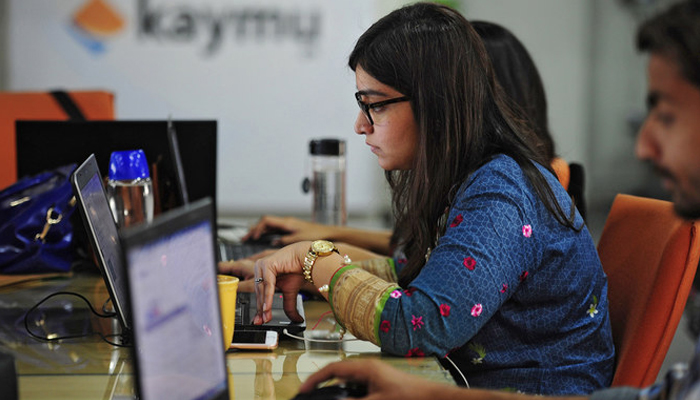
And yet, the prejudice against women in the workplace and public life, though weakened, is yet to be vanquished and the role it plays in the lives of women tends to get bigger as one goes down the ladder of wealth and privilege. According to a study by the Asian Development Bank (ADB), the demand-side constraints in terms of employment play a bigger role in the employment of women at lower education levels. In short, many employers appear less willing to hire women for blue-collar jobs.
The ADB study finds that, when it comes to less educated job seekers, women are 53 per cent less likely than men to satisfy the explicit gender requirements for a given job opportunity. This gap shrinks by 70 per cent for women who have cleared secondary school and mostly disappears for college-educated women. These findings are not all that surprising and partly explain why Pakistan’s female labour force participation rate is 21 per cent as opposed to a 78 per cent labour force participation rate for men, as of 2020. When we think of blue-collar jobs such as drivers, street sweepers or construction workers in Pakistan, one rarely, if ever, sees a woman in these roles. To be fair, this is a gap that exists in most countries but for less educated Pakistani women, who lack the extensive social welfare available to women in advanced countries, this can become an obstacle to feeding their families.
Ironically, it is the women that need employment the most who appear to be facing the most exclusion in the labour force. This not only makes it more difficult for these women and their families to survive but also impedes them from attaining financial independence. Women financially dependent on their husbands will have a tougher time leaving an abusive relationship or exercising their independence in general. The idea that women are unsuited for blue-collar work is a dated stereotype that should not guide employment decisions in the 21st century. Those who argue that women would be less safe in such jobs and more exposed to violence or harassment are, obviously, missing the point. Women are entitled to feel safe regardless of the kind of job or level of education that they have.







-
 Gabourey Sidibe Gets Candid About Balancing Motherhood And Career
 -
 Katherine Schwarzenegger Shares Sweet Detail From Early Romance Days With Chris Pratt
 -
 Jennifer Hudson Gets Candid About Kelly Clarkson Calling It Day From Her Show
 -
 Princess Diana, Sarah Ferguson Intense Rivalry Laid Bare
 -
 Shamed Andrew Was With Jeffrey Epstein Night Of Virginia Giuffre Assault
 -
 Shamed Andrew’s Finances Predicted As King ‘will Not Leave Him Alone’
 -
 Expert Reveals Sarah Ferguson’s Tendencies After Reckless Behavior Over Eugenie ‘comes Home To Roost’
 -
 Bad Bunny Faces Major Rumour About Personal Life Ahead Of Super Bowl Performance
 -
 Sarah Ferguson’s Links To Jeffrey Epstein Get More Entangled As Expert Talks Of A Testimony Call
 -
 France Opens Probe Against Former Minister Lang After Epstein File Dump
 -
 Last Part Of Lil Jon Statement On Son's Death Melts Hearts, Police Suggest Mental Health Issues
 -
 Leonardo DiCaprio's Girlfriend Vittoria Ceretti Given 'greatest Honor Of Her Life'
 -
 Beatrice, Eugenie’s Reaction Comes Out After Epstein Files Expose Their Personal Lives Even More
 -
 Will Smith Couldn't Make This Dog Part Of His Family: Here's Why
 -
 Kylie Jenner In Full Nesting Mode With Timothee Chalamet: ‘Pregnancy No Surprise Now’
 -
 Laura Dern Reflects On Being Rejected Due To Something She Can't Help