
Stakeholders want end to political engineering to ensure free, fair elections
PTI pointed out that trust and faith in system were diminishing, and heightened political polarisation had led to violence
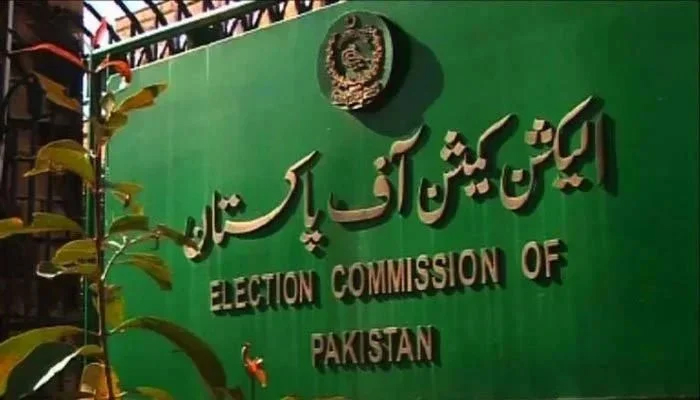
ISLAMABAD: Casting doubt on the possibility of general elections in January next year, Pakistan Peoples Party senior leader Farhatullah Babar has urged the Election Commission of Pakistan (ECP) to immediately announce the schedule for holding the general elections.
Expressing his views during a consultative session in Islamabad organized by Pakistan Institute of Legislative Development and Transparency (PILDAT) on “How to Ensure Free and Fair General Elections”, Farhatullah Babar said prospects of holding the general election by the last week of January 2024 appear to be probable and not certain. He called for exploring the implementation of compulsory voting and introducing a “none of the above” option to enhance the democratic process. He emphasized on ending the role of the military establishment in the political and electoral sphere.
“We must demand immediate cessation of political engineering and reverse engineering in run up to polls and independent investigations in the recent disappearances of political activists for weeks and reappearance only to denounce their previous political leaders,” he said.
While lawlessness must be condemned, an impartial investigation is needed into the May 09 incidents so that it does not result in blatant poll manipulation, said Babar.
He said linking CNIC with the voters list has changed the definition of ‘resident’ and in some constituencies, the voters are only 30 percent of the population. “Karachi’s demography has changed but not its political power equation, which needs to be looked into,” he added.
Shoaib Shaheen of Pakistan Tehreek-e-Insaf (PTI) pointed out that trust and faith in the system were diminishing, and heightened political polarization had led to violence.
He also emphasized the importance of granting voting rights to overseas Pakistanis and highlighted its significance in the upcoming election.
Pakistan Muslim League (N) leader Tariq Fazal Chaudhry emphasized that elections should not be further delayed. He commended the parliament’s electoral reforms committee for producing commendable recommendations but urged the continued progress of the process.
Tariq Fazal pointed to lingering issues such as election expenses and called for concerned individuals to take up their roles and responsibilities.
Istehkam-e-Pakistan Party leader Ishaq Khan Khaqwani highlighted the potential for political engineering, particularly in the formation of governments and the intricate vote-counting methodologies. He expressed concerns about the vulnerability of election officials to manipulation and stressed the importance of proper training and diversity in their recruitment.
Muhammad Ali Durrani called for simultaneous elections at the federal, provincial and local government levels. Rasheed Chaudhry from Free and Fair Election Network (FAFEN) provided valuable insights into the lessons learnt from delimitation and emphasized the need for an independent delimitation commission.
He pointed out the importance of separating the Election Commission of Pakistan’s (ECP) powers from judicial authority.
He also raised concerns about the lack of right to appeal in delimitation matters and ECP’s deviation from the parliament-defined criteria for demarcating districts.
He further highlighted the urgency of electoral reforms, including the allocation of reserved seats for women, suggesting the exploration of a divisional quota to ensure a more representative system.
Chaudhry stressed the need for close monitoring of election expenditures by the ECP.
Bilal Gilani from Gallup Pakistan highlighted the reservations held by the majority of the population about the election’s fairness. Gilani said while the election is a significant issue, inflation has now taken center stage, impacting 50 percent of the population who believe democracy is falling short of delivering. He cautioned against holding just one or two stakeholders responsible for this predicament.
Hafiz Tahir Khalil, Bureau Chief-Islamabad, Jang, emphasized that parliament seemed to be surrendering its powers and urged politicians to unite in forming a national agenda to address Pakistan’s most pressing concerns.
Senior journalist Mujib-ur-Rehman Shami maintained that the culture of acknowledging electoral outcomes needed to become a norm in Pakistani politics while the constant challenge to the legitimacy of election results must be addressed.
He also highlighted the issue of institutional interference as a significant obstacle to a smooth electoral process.


