
News Analysis: KSA-Iran thaw gives new twist to Israel’s Arab outreach
The China-brokered deal provoked sharp criticism within Israel of Prime Minister Benjamin Netanyahu
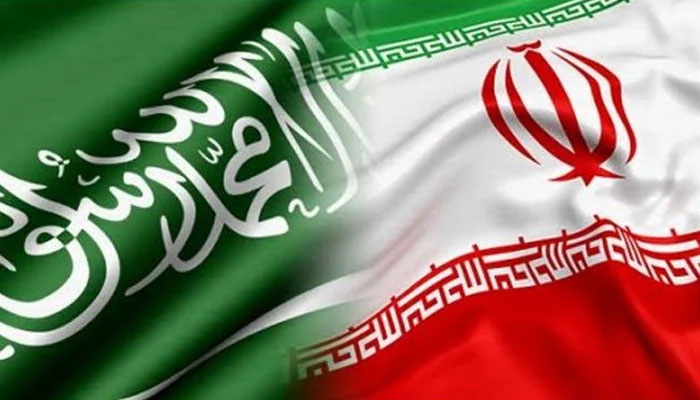
RIYADH: Saudi Arabia’s surprise move to restore ties with Iran adds a new, complicated layer to its delicate diplomatic dance with Israel, which craves a breakthrough normalisation deal of its own, analysts said.
Riyadh and Tehran announced on Friday that after seven years of severed ties they would reopen embassies and missions within two months and implement security and economic cooperation agreements signed more than 20 years ago.
The China-brokered deal provoked sharp criticism within Israel of Prime Minister Benjamin Netanyahu, who has made clear his focus on bringing Saudi Arabia on board as part of a regional alliance against Iran. Israeli opposition leader Yair Lapid said it represented “a total and dangerous foreign policy failure of the Israeli government”.
Yet regional observers cautioned that the actual implications of the deal are far from clear — both in terms of future Saudi-Iran cooperation and Israel’s relationship with Riyadh. The notion that Saudi Arabia was exclusively interested in Israel as part of a potential front against Iran was always “superficial”, said Saudi analyst Aziz Alghashian. “This idea of ‘the enemy of my enemy is my friend’ -- Saudi has seldom operated in that way, especially not strategically,” he said.
With Friday’s news, “you clearly see that Saudi Arabia has prioritised a rapprochement with Iran over an overt rapprochement with Israel”, he added. But “this doesn’t mean very quiet relations with Israel are going to cease... Now the relationship with Iran is a variable that is part of the calculation.” Saudi Arabia has long said its recognition of Israel hinges on a two-state solution with the Palestinians. It did not join the 2020 US-brokered Abraham Accords that saw the Jewish state establish ties with two of the kingdom’s neighbours, the United Arab Emirates and Bahrain.
Yet there have been subtler signs of potential cooperation.
Several Israeli journalists who hold foreign passports were able to visit Saudi Arabia both before and during US President Joe Biden’s tour of the Middle East last year.
The Saudi civil aviation authority announced during that trip that it was lifting overflight restrictions on “all carriers”, paving the way for Israeli planes to use Saudi airspace. And in October the Arab-Israeli head of an Israeli bank appeared at a Saudi investor forum, hailing the “amazing” opportunities in the kingdom.
This week, the Wall Street Journal and the New York Times reported that Riyadh has been privately lobbying for security guarantees from the United States and assistance with a civilian nuclear programme in exchange for a deal with Israel. But surging Israeli-Palestinian violence this year has made public progress unlikely in the short term, said Umar Karim, an expert on Saudi politics at the University of Birmingham. “The Saudis have no incentive right now to quickly normalise with Israel,” he said.
And the new Saudi-Iran deal “could lead to a wider gap between Israel and Saudi Arabia if this yields a wider diplomatic opening between the kingdom and Iran”, said Brian Katulis of the Middle East Institute in Washington. “Israel is sceptical of any diplomacy with the regime in Tehran.”
That makes the Saudi-Iran deal “a clear diplomatic victory for Iran” and “a blow” to Netanyahu, said Nicholas Heras of the New Lines Institute of Strategy and Policy. “Saudi Arabia, which is being heavily courted by Israel, just sent a big signal to the current Israeli government that the Israelis cannot count on Riyadh to support Israeli military action against Iran, anywhere in the region,” he said.
Not everyone thinks the ramifications are so obvious, however. “The Iran/Saudi deal is a relatively narrow one, focusing on specific issues such as the reopening of embassies and the resumption of trade relations as well as security from attacks,” said Fatima Abo Alasrar, non-resident scholar at the Middle East Institute. “While these steps are essential for improving economic ties and reducing tensions between the two countries, they do not address the broader ideological and political differences that have driven their long-standing rivalry.” Saudi Arabia’s openness to re-engaging with Iran can also be seen as part of a bigger diplomatic push that has involved mending rifts with Qatar and Turkey.







-
 Prince William, Kate Middleton Camp Reacts To Meghan's Friend Remarks On Harry 'secret Olive Branch'
 -
 Daniel Radcliffe Opens Up About 'The Wizard Of Oz' Offer
 -
 Channing Tatum Reacts To UK's Action Against Andrew Mountbatten-Windsor
 -
 Brooke Candy Announces Divorce From Kyle England After Seven Years Of Marriage
 -
 Piers Morgan Makes Meaningful Plea To King Charles After Andrew Arrest
 -
 Sir Elton John Details Struggle With Loss Of Vision: 'I Can't See'
 -
 Epstein Estate To Pay $35M To Victims In Major Class Action Settlement
 -
 Virginia Giuffre’s Brother Speaks Directly To King Charles In An Emotional Message About Andrew
 -
 Reddit Tests AI-powered Shopping Results In Search
 -
 Winter Olympics 2026: Everything To Know About The USA Vs Slovakia Men’s Hockey Game Today
 -
 'Euphoria' Star Eric Made Deliberate Decision To Go Public With His ALS Diagnosis: 'Life Isn't About Me Anymore'
 -
 Toy Story 5 Trailer Out: Woody And Buzz Faces Digital Age
 -
 Andrew’s Predicament Grows As Royal Lodge Lands In The Middle Of The Epstein Investigation
 -
 Rebecca Gayheart Unveils What Actually Happened When Ex-husband Eric Dane Called Her To Reveal His ALS Diagnosis
 -
 What We Know About Chris Cornell's Final Hours
 -
 Scientists Uncover Surprising Link Between 2.7 Million-year-old Climate Tipping Point & Human Evolution