
SC rules Raheel Sharif to lose foreign job sans cabinet nod
The judgment also said that vide order dated August 7, 2018, the court granted time to the Attorney General and the Additional Secretary, Ministry of Defence, time to look into the matter and apply to the federal government for an ex-post facto NOC/permission for Raheel Sharif.
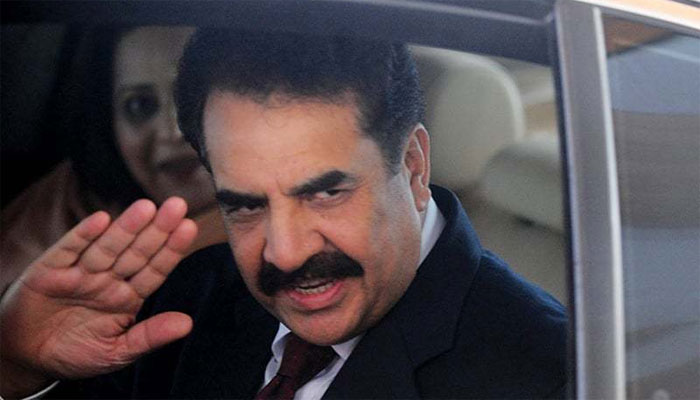
ISLAMABAD: Former army chief General (R) Raheel Sharif will lose his foreign job if the federal cabinet did not grant him permission to get it within one month, the Supreme Court rules.
The direction was contained in the judgment in the dual nationality of judges and officials of courts and government.
After his retirement as the army chief, Raheel Sharif was made the leader of Saudi-led 41-nation military alliance.
The verdict said: Let the Secretary, Ministry of Defence, file a report in this regard within one month from the issuance of this judgment and in case the requisite NOC is not granted by the federal government within such time, the foreign employment of Raheel Sharif shall cease with immediate effect.
The judgment also said that vide order dated August 7, 2018, the court granted time to the Attorney General and the Additional Secretary, Ministry of Defence, time to look into the matter and apply to the federal government for an ex-post facto NOC/permission for Raheel Sharif.
It said that with respect to the former general, documents were filed showing No Objection Certificates (NOC) from the General Headquarters (GHQ) and the Ministry of Defence, but according to Section 3 of the Act of 1966 [Ex-Government Servants (Employment with Foreign Governments) (Prohibition) Act, 1966], it is in fact the federal government (or a person or authority authorised by it in this behalf) which can grant permission to an ex-government servant to seek or take up employment as an officer or servant of a foreign government or a foreign agency; and according to the law laid down by the Supreme Court in the judgment reported as Messrs Mustafa Impex, Karachi and others Vs. The Government of Pakistan through Secretary Finance, Islamabad and others (PLD 2016 SC 808) the federal government means the cabinet and this verdict was in the field when the NOCs (by the GHQ and defence ministry) were granted.
According to the ruling, as far as the armed forces (military, naval and air forces and their allied departments) are concerned, the defence secretary said that recruitment of dual nationals is not permitted as there exist relevant instructions/policies of the army, air force and navy; and any dual nationals are required to surrender their foreign nationality prior to enrolment for induction in the armed forces of Pakistan.
The defence secretary also told the court that this position is reflected in the advertisements for recruitment and presently, there are no dual nationals recruited in the armed forces. However, as directed by the court vide order August 1, 2018, the defence secretary is required to continue the exercise to ascertain whether any dual nationals have been recruited in the armed forces on the basis of mis-declaration, concealment or non-disclosure and requisite action be taken in accordance with law by the concerned authority. The judgment also noted that former Inter-Services Intelligence (ISI) chief Lt-Gen (R) Ahmad Shuja Pasha filed a duly signed certificate dated September 25, 2018, in which he certified that he did not take any foreign employment/assignment in the UAE or elsewhere abroad after retirement.
Regarding the appointment of the judges of the Supreme Court and high courts, the judgment reproduced the relevant parts of articles 177 and 193 of the Constitution, which said a person shall not be appointed a justice unless he is a citizen of Pakistan.
The provisions of Section 3 of the Ex-Government Servants (Employment with Foreign Governments) (Prohibition) Act, 1966 referred in Raheel Sharif’s case says no ex-government servant shall, except with the previous permission in writing of the federal government, or a person or authority authorised by it in this behalf seek or take up employment as an officer or servant of a foreign government or a foreign agency.
No ex-government servant who is, at the commencement of this Act, in the service of a foreign government or a foreign agency shall, except with the permission in writing of the federal government, continue in such service after the expiry of three months from such commencement.
Ex-government servant has been defined in Section 2(a) of the Act of 1966 to mean any person who was, at any time, appointed or employed as an officer or servant of the federal or provincial government and has ceased to be so appointed or employed.
The penalty for contravention of Section 3 is provided in Section 4 which says imprisonment for a term which may extend to seven years or with fine which may extend to Rs15,000, or with forfeiture of property, or with any two or more of these punishments.







-
 King Charles Is ‘clearly Worried’ Andrew Has Tarnished Royal Image
 -
 Royal Family Loses 'loyal' Worker After King Charles Disliked His Work?
 -
 James Van Der Beek's Quiet Sacrifice Before Death Comes To Light
 -
 Suspect Kills Six Across Florida Before Taking His Own Life
 -
 AI Helps Researchers Identify 2,000-year-old Roman Board Game Stone
 -
 Inside Kate Middleton, Prince William’s Nightmare Facing Andrew Mountbatten-Windsor
 -
 Margaret Qualley Shares Heartfelt Confession About Husband Jack Antonoff: 'My Person'
 -
 Savannah Guthrie Shares Sweet Childhood Video With Missing Mom Nancy: Watch
 -
 Over $1.5 Million Raised To Support Van Der Beek's Family
 -
 Paul Anthony Kelly Opens Up On 'nervousness' Of Playing JFK Jr.
 -
 Diana Once Used Salad Dressing As A Weapon Against Charles: Inside Their Fight From A Staffers Eyes
 -
 Video Of Brad Pitt, Tom Cruise 'fighting' Over Epstein Shocks Hollywood Fans
 -
 Jelly Roll's Wife Bunnie Xo Talks About His Huge Weight Loss
 -
 Margot Robbie Reveals Why She Clicked So Fast With Jacob Elordi
 -
 Piers Morgan Praised By Ukrainian President Over 'principled Stance' On Winter Olympics Controversy
 -
 Halsey's Fiance Avan Jogia Shares Rare Update On Wedding Planning