
Flour crisis on the cards
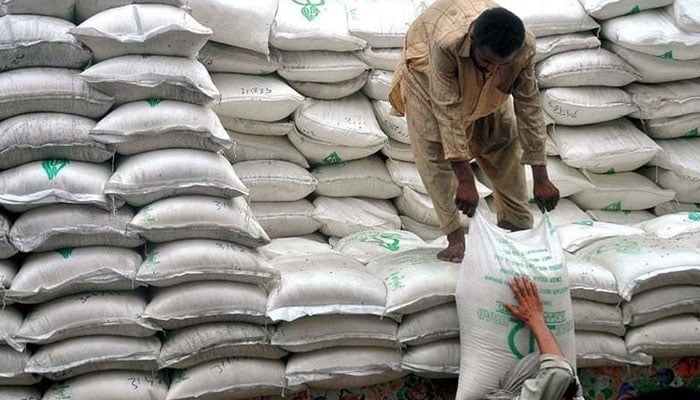
FAISALABAD: The failure to increase wheat production per acre and alleged corruption and mismanagement in wheat procurement and storage at the government level has raised fears of another flour crisis in the country.
At present, the Food Department in most districts of Punjab, including Faisalabad, has run out of wheat stocks, while the new crop is still four to five months away. In addition to the reduction in the supply of wheat to flour mills by the government and the reduction in the grinding charges, the owners of flour mills have been shutting down their mills indefinitely due to the rising cost of rent because of procurement of government wheat from other districts. Consideration has begun.
It should be noted that the average production of wheat per acre in Pakistan has been limited to 30-33 maund per acre for the last three decades while in India and other countries, this rate is more than 60-70 maund per acre.
Agricultural experts believe that it is not possible to overcome the flour crisis in the country without increasing acreage and subsidizing farmers.
In addition, if the government wants the welfare of farmers and the common man, the Food Department should be abolished and a regulatory body should be set up to allow the flour mills to buy and store wheat directly from the farmers. In this way, the corruption of billions of rupees every year in the name of wheat procurement will be curbed.
It may be recalled that the Punjab government borrows Rs 200-250 billion annually from commercial banks for the purchase of wheat on which people have to bear the burden of paying interest. Besides, Rs 30-40 billion are paid separately in form of subsidy.
Apart from this, there is corruption in the procurement of sacks and other expenses incurred by the Food Department for the storage of wheat. In this regard, the United Nations Food and Agriculture Organization, the World Bank and the Asian Development Bank have been proposing to the government for many years that the Food and Market Committees be abolished as they are a burden on the national exchequer.
Therefore, like other countries in the world, the government in Pakistan should purchase two to three million tons of wheat as per the strategic need and allow the rest of production to be purchased directly from the flour mills. In this regard, loans should be given to flour mills at low-interest rates so that they can build warehouses for the storage of purchased wheat.
In this regard, the SBP has suggested to the government that commercial banks could provide loans at 6% interest rate to flour mills to make storage centres for wheat. Chaudhry Shafiq Anjum, president of Faisalabad Flour Mills Association, said that by allowing flour mills to purchase wheat directly from farmers, the government could save Rs 300 billion annually. He said even the wheat procured by flour mills is in fact under the control of the government as its complete record through information technology is still under the direct supervision of the government. According to Chaudhry Shafiq, 60% of flour mills in the country have already closed due to inconsistency in government policies. He said if the government allows flour mills to buy wheat from the open market, farmers could get good prices for their crops.
In addition, flour mills can earn foreign exchange by buying cheap wheat from Russia’s neighbouring states and export it to Afghanistan, Bangladesh, Iran, Sri Lanka, Nepal, Maldives and the Middle East because these countries do not produce wheat. Shafiq said Pakistan’s wheat is considered to be the best in the world and if the government pays attention, there are so many flour mills in Pakistan that flour can be exported to all over Asia including China. He said the reason for the current crisis is that the Food Department is not providing an adequate quantity of wheat to flour mills and at present no flour mill is operating for more than a few hours a day. He said that by implementing a quota system earlier, 14 sacks of wheat per body were being given to each flour mill which has been reduced to 12 sacks per body. Similarly, the grinding charges have been reduced from Rs 6 per kg to Rs 4, although the grinding charges have gone up to Rs 8. Similarly, the earlier wheat threshing ratio is 60:40 which has been changed to 65:35.
In addition, due to the depletion of wheat stock in Faisalabad, flour mills are being forced to pick wheat from the warehouses of Jhang and Toba Tek Singh due to which the rent per sack has increased from Rs 35 to Rs 135. He said that in the talks held two months ago, the government had promised to resolve these issues but so far no progress has been made. He said if the government does not respond positively in the next one week, all flour mills across Punjab would be closed indefinitely and stage protests.


